

How to Prep Your Home Before the Renovation Crew Arrives
DECEMBER 01, 2025
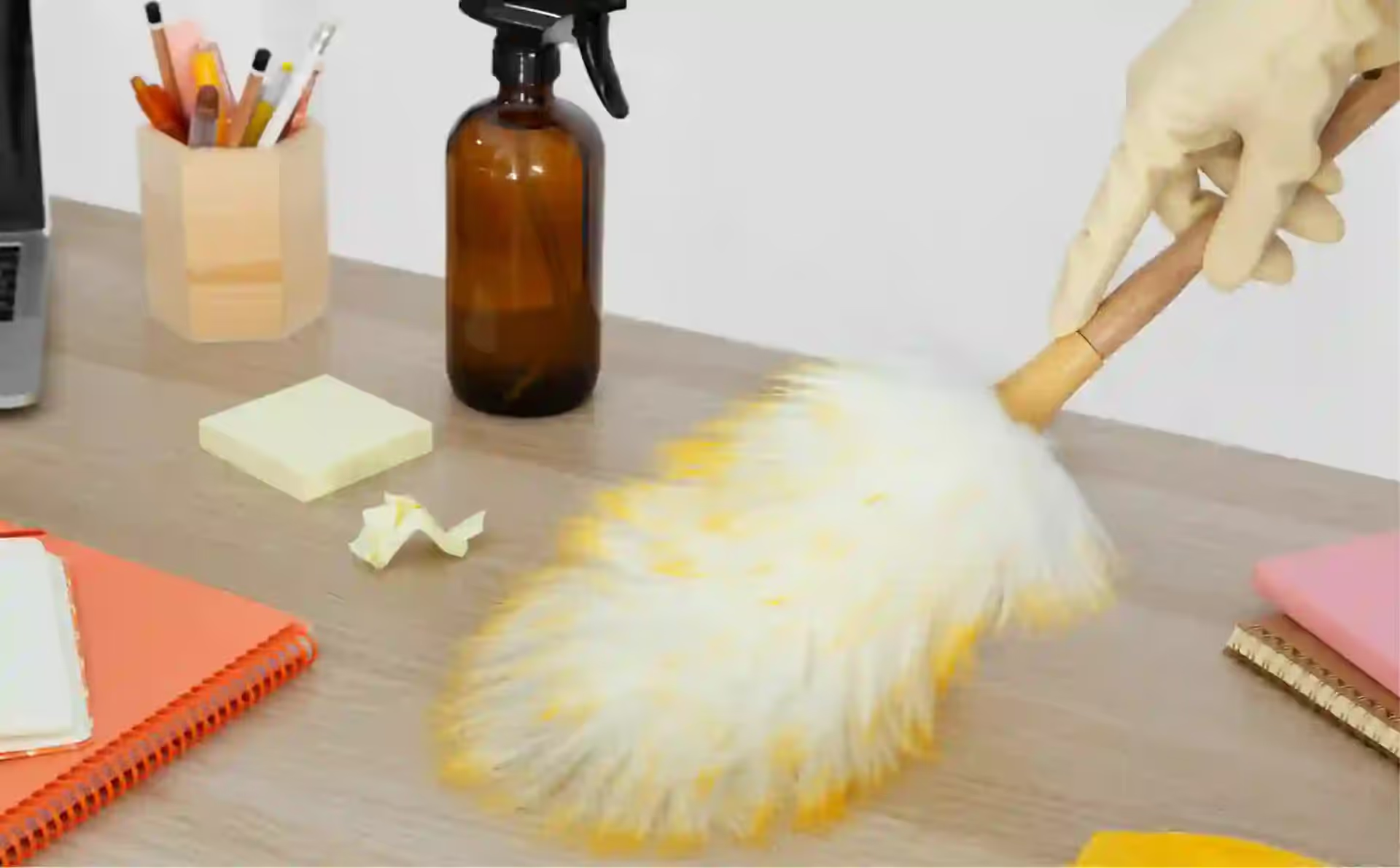
The demolition started at 8 AM on a Tuesday. By noon, a fine gray film covered everything in the adjacent living room—despite the closed door. By the end of the first week, the homeowners were coughing, their toddler had developed a persistent wheeze, and a fine layer of grit had infiltrated every surface in the house, including inside closed cabinets three rooms away from the work zone.
This scenario plays out in homes across America with depressing regularity. Renovation dust isn't just an inconvenience that requires extra cleaning. It's a genuine health hazard that can cause respiratory distress, trigger allergies, contaminate HVAC systems, and deposit harmful particles on surfaces that will continue off-gassing and redistributing for months after construction ends.
The scale of the problem is significant. Indoor air quality during active renovation work can deteriorate to levels that exceed outdoor pollution standards by factors of ten or more. Particulate matter that would trigger health advisories if measured outdoors becomes the air families breathe inside their own homes. And because renovation projects typically last weeks or months rather than hours, the cumulative exposure adds up.
What makes renovation dust particularly insidious is its invisibility in the quantities that matter most. The visible clouds that billow during demolition represent only part of the problem—and not necessarily the most dangerous part. The finest particles, small enough to penetrate deep into lung tissue, are often invisible to the naked eye. You can't see the silica dust liberated when cutting tile. You can't see the PM2.5 particles that bypass your body's filtering mechanisms. You can't see the lead paint particles released when disturbing old surfaces.
The good news: effective dust control is achievable. Professional remediation contractors, healthcare facility renovators, and clean-room construction specialists have developed techniques that contain dust effectively even during the most intensive work. These techniques can be adapted for residential renovation at various levels of investment and complexity.
This article provides the comprehensive guidance homeowners need to protect their families and belongings during renovation. From understanding what's actually in renovation dust to implementing professional-grade containment strategies to cleaning up effectively afterward, you'll have the knowledge to make dust control a non-negotiable part of your renovation planning.
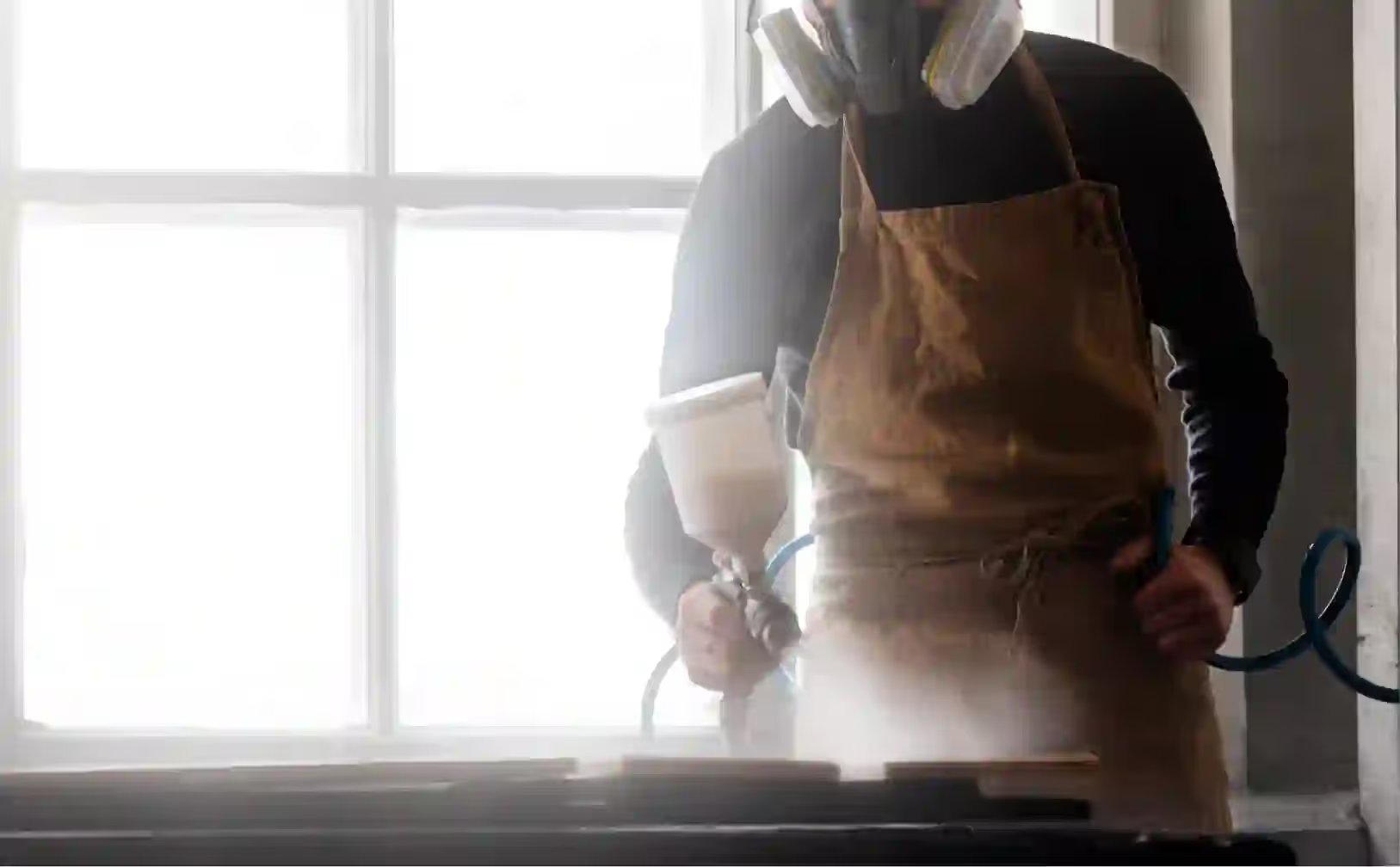
Renovation dust isn't a single substance—it's a complex mixture of particulates whose composition varies based on what's being demolished, cut, sanded, or disturbed. Understanding this composition helps explain why dust control matters and which protective measures apply to different situations.
The Environmental Protection Agency (EPA) classifies airborne particulates by size, measured in micrometers (μm). PM10 particles—those smaller than 10 micrometers—are small enough to be inhaled into the respiratory system. PM2.5 particles—smaller than 2.5 micrometers—penetrate deeper, reaching the lungs' smallest airways and even entering the bloodstream. For context, a human hair is approximately 70 micrometers in diameter; PM2.5 particles are thirty times smaller.
Beyond these primary hazards, renovation dust accumulates biological contamination. Mold spores from behind walls, bacterial residue from old building materials, pest debris from hidden infestations—all become airborne when construction disturbs previously sealed spaces. The dust itself serves as a transport medium, carrying these biological agents throughout the home.
Volatile organic compounds (VOCs) add a chemical dimension to renovation air quality concerns. New materials—paints, adhesives, sealants, flooring—off-gas chemical compounds that affect air quality independent of particulate matter. While VOCs aren't "dust" in the traditional sense, they compound the air quality challenges that renovation creates.
The health effects of renovation dust exposure extend far beyond the temporary irritation of coughing and sneezing. Understanding these impacts provides the motivation for taking dust control seriously.
The American Lung Association documents how particulate matter exposure affects respiratory health. Short-term exposure to elevated particulate levels can trigger asthma attacks, aggravate existing respiratory conditions, and cause acute respiratory distress even in healthy individuals. The inflammation response to inhaled particles creates immediate symptoms but also contributes to longer-term damage.
Chronic exposure compounds these effects. Renovation projects that last weeks or months subject household members to sustained elevated particulate levels. This duration matters—the body's repair mechanisms can handle occasional insults but become overwhelmed by continuous exposure. The cumulative dose of particles inhaled over a multi-month renovation may exceed what the same individual would inhale over years of normal indoor living.
Silicosis, the lung disease caused by silica exposure, develops progressively. Initial exposure may produce no obvious symptoms, but continued exposure or heavy acute exposure causes scar tissue formation in the lungs that reduces breathing capacity. There is no cure; once lung tissue is scarred, the damage is permanent. While silicosis is primarily an occupational disease affecting workers with heavy industrial exposure, renovation without proper controls can generate silica levels that create meaningful risk.
Respiratory sensitization from wood dust and other allergens can develop following renovation exposure. Individuals who were previously non-allergic may develop persistent sensitivity that triggers symptoms whenever they encounter the allergen thereafter. This acquired sensitivity doesn't resolve when the renovation ends—it becomes a permanent vulnerability.
Cardiovascular effects of particulate exposure are well-documented in research. Fine particles that enter the bloodstream trigger inflammatory responses that affect blood vessels and cardiac function. The Centers for Disease Control and Prevention (CDC) notes that particulate matter exposure is associated with increased risk of heart attack, stroke, and cardiac arrhythmia, particularly in individuals with existing cardiovascular conditions.
Children face heightened vulnerability. Their respiratory systems are still developing, they breathe faster than adults relative to body weight (inhaling more particles per pound), and they spend more time at floor level where settled dust is more easily disturbed and re-inhaled. The developing brain is particularly vulnerable to neurotoxic particles like lead. The CDC emphasizes that there is no safe blood lead level in children—any exposure carries risk.
Elderly household members similarly face elevated risk. Aging reduces respiratory reserve and the body's ability to clear inhaled particles. Pre-existing conditions common in older adults—COPD, heart disease, compromised immune function—amplify vulnerability to particulate exposure.
Pets experience dust exposure effects as well. Dogs and cats breathe the same air as their owners, and their proximity to floor level exposes them to higher concentrations of settled and disturbed particles. Respiratory distress, eye irritation, and skin problems in pets during renovation often indicate air quality problems that are also affecting human household members.
The exposure-duration relationship matters for risk assessment. Brief exposure to moderately elevated dust levels during a quick project presents limited risk to healthy adults. Prolonged exposure to heavily contaminated air during an extensive renovation presents meaningful risk even to healthy individuals, and serious risk to vulnerable household members.
Effective dust control begins before the first hammer swings. Preparation work establishes the containment framework that will protect living areas throughout the project.
Document the pre-renovation condition. Photograph rooms, surfaces, and items before work begins. This documentation supports claims if contractor practices result in damage and helps identify what needs cleaning afterward.
The barrier between work zones and living areas is the primary defense against dust migration. Professional-grade containment systems provide far better protection than improvised solutions.
ZipWall systems use spring-loaded poles that extend from floor to ceiling, supporting plastic barrier sheets that create dust-tight walls anywhere they're needed. The poles create tension that holds plastic taut, and zipper access doors allow passage without opening the entire barrier. A ZipWall installation can seal off a room in minutes and can be repositioned as work zones change.
Magnetic door barrier systems seal doorways without permanent installation. Magnetic strips attach to the door frame (or temporary frame members), and plastic sheeting with corresponding magnetic edges adheres to create a seal that can be broken and resealed repeatedly as workers pass through.
Negative air pressure systems provide active contamination control beyond passive barriers. A negative air machine—essentially a powerful HEPA-filtered fan—draws air from the work zone and exhausts it outdoors (or through filtration back into the house), creating lower pressure in the work zone than in adjacent areas. This pressure differential means that any air leakage across barriers flows into the work zone rather than out of it—contaminated air can't escape to living areas because air flows the wrong direction for escape.
The OSHA silica dust guidelines emphasize negative pressure containment as a critical control for respirable silica. While these are occupational standards, the principles apply equally to protecting residential occupants.
HEPA filtration units provide air cleaning within contained zones and can help clean air in living areas if contamination has occurred. HEPA (High-Efficiency Particulate Air) filters capture 99.97% of particles 0.3 micrometers and larger—including the fine particles that pose the greatest health risks. Air scrubbers that combine HEPA filtration with activated carbon can address both particulates and VOCs.
Professional containment installations typically combine multiple elements: physical barriers isolate the work zone; negative air machines maintain pressure differential; HEPA air scrubbers clean air within the contained area; and entry/exit protocols prevent contamination transport on workers and materials.
For homeowners managing their own containment, the minimum effective setup includes solid barrier construction across all openings between work and living zones using heavy-gauge plastic sheeting (6 mil minimum), all seams and edges taped with appropriate tape (not standard masking tape, which fails in dusty conditions), HVAC registers in the work zone sealed to prevent system contamination, a HEPA air filtration unit running continuously in the work zone, and controlled entry points with zipper doors or overlapping flaps rather than open gaps.
The investment in proper containment pays returns in reduced cleaning, protected belongings, better air quality, and avoided health impacts. Professional containment materials cost hundreds of dollars; the damage from uncontrolled dust easily runs to thousands.
Filtration provides the active air cleaning that complements physical barriers. Understanding filtration options enables selecting appropriate equipment for your situation.
Filter efficiency ratings indicate what percentage of particles a filter captures at what sizes. MERV (Minimum Efficiency Reporting Value) ratings, developed by ASHRAE, range from 1 to 16 for residential and commercial filters, with higher numbers indicating greater efficiency. MERV 13 filters capture approximately 85% of particles in the 1.0-3.0 micrometer range—adequate for most renovation dust concerns. MERV 16 filters capture over 95% of particles in this range.
HEPA filters meet a more stringent standard: 99.97% capture efficiency for particles 0.3 micrometers in diameter—the size at which particles are most difficult to capture. HEPA filtration provides the highest commonly available level of particulate removal.
The EPA's guidance on air filtration emphasizes that filter efficiency alone doesn't determine air cleaning effectiveness. The quantity of air moved through the filter matters equally. A highly efficient filter moving small volumes of air cleans less effectively than a moderately efficient filter moving large volumes. Air changes per hour (ACH)—how many times the unit filters the entire room volume—indicates practical cleaning capacity.
For renovation dust control, target 4-6 air changes per hour in work zones and 2-4 ACH in living areas if contamination has occurred. Calculate required capacity by multiplying room volume (length × width × height) by target ACH to determine cubic feet per hour of filtration needed.
HEPA filtration alone isn't sufficient without proper containment. If contaminated air continuously enters a space faster than filtration can clean it, particulate levels remain elevated. Filtration works with containment, not as a substitute for it.
Portable HEPA air purifiers range from consumer units suitable for bedrooms to professional air scrubbers capable of filtering thousands of cubic feet per minute. For active construction, professional-grade equipment provides necessary capacity. Consumer units may suffice for living areas distant from work zones or for post-construction air cleaning.
Activated carbon filtration addresses VOCs that HEPA filters don't capture. Combination units that include both HEPA media and activated carbon beds provide more complete air cleaning than particulate filtration alone. Carbon requires periodic replacement as adsorption capacity exhausts.
Central air system filtration can provide whole-house air cleaning if the system can be isolated from work zone contamination. Upgrading central system filters to MERV 13 or higher during renovation improves particulate removal from circulated air. However, if the work zone shares ductwork with living areas, running the central system may spread more contamination than it removes—isolation from work zones is essential before relying on central filtration.
Physical protection for belongings that can't be removed from work zones or adjacent areas requires more than throwing plastic over furniture. Professional approaches prevent the damage that inadequate protection allows.
The layering principle that professionals use recognizes that plastic sheeting alone has limitations. Plastic can trap moisture against surfaces, causing damage to wood finishes. Plastic can shift and expose surfaces to dust infiltration at edges. Plastic provides no padding against impact damage if workers or materials contact protected items.
What professional contractors use on high-value items reveals what truly works. For grand pianos, they create rigid enclosures from cardboard or plywood, sealed with plastic, that prevent any contact with the instrument. For fine antiques, they build custom crates on-site or relocate items to climate-controlled storage. For built-in cabinetry, they remove doors and drawers for off-site storage while sealing cabinet boxes with taped plastic.
The investment of time in proper protection is minimal compared to restoration costs if protection fails. A few hours of careful covering prevents hundreds or thousands of dollars in cleaning and damage repair.
Even with excellent containment, some dust escapes. Daily cleaning prevents accumulation that becomes progressively harder to remove and maintains air quality in living areas.
The cleaning principle for renovation dust differs from normal housekeeping. Normal cleaning often relies on agitation that lifts dirt for removal—sweeping, dusting with dry cloths, running vacuum cleaners with standard filters. Renovation dust requires capture without redistribution; aggressive agitation simply puts particles back into the air.
HEPA vacuum cleaning should be the primary dust removal method. Standard vacuum cleaners lack filtration to capture fine particles—they exhaust significant quantities of what they pick up back into the room air. HEPA vacuums capture and retain fine particles that standard vacuums redistribute. For renovation cleaning, a HEPA vacuum isn't a luxury; it's the minimum effective tool.
Vacuum before wiping. Contrary to intuition, wiping surfaces first can grind particles into finish surfaces and spread contamination. Vacuuming first removes the bulk of particles; wiping afterward captures what vacuuming missed without the grinding effect of wiping through heavy dust.
Damp wiping captures particles that vacuuming leaves behind. Microfiber cloths dampened with plain water capture fine particles effectively through electrostatic attraction and physical trapping in the fiber matrix. Work from top to bottom, from clean areas toward dirty areas, and change or rinse cloths frequently to avoid spreading contamination.
The misting technique settles airborne dust before cleaning. A light mist of water into the air—not enough to wet surfaces significantly, just enough to add weight to suspended particles—causes dust to settle rather than remaining airborne where it escapes capture. Mist, wait fifteen to twenty minutes for settling, then vacuum and wipe.
Mopping hard floors follows vacuuming, using damp mops rather than wet mopping that can spread contaminated water. Microfiber flat mops capture particles effectively; traditional string mops tend to redistribute rather than capture. Change mop heads frequently and clean the water bucket between rooms to avoid spreading contamination.
Avoid dry sweeping entirely. Brooms push fine particles into the air far more than they capture. Even with dustpans, sweeping sends dust airborne that then settles on surfaces you've already cleaned—or that you inhale.
Cleaning frequency during active construction should be daily for living areas adjacent to work zones, with spot cleaning more frequently if visible dust appears. Allow settled dust to accumulate for vacuuming rather than constantly disturbing it with ineffective cleaning attempts.
The cleaning agents that work best are generally the simplest. Plain water effectively captures most dust. For surfaces that need cleaning rather than just dust removal, mild dish soap in water handles most needs. Avoid oil-based or leave-behind products that can trap particles in sticky residue. Avoid harsh chemicals that may react with construction materials to create additional air quality problems.
When construction ends, comprehensive cleaning removes accumulated contamination and restores normal indoor air quality. This final cleanup is more extensive than normal cleaning and may warrant professional assistance for thorough results.
The timeline for post-renovation air quality recovery extends beyond the last day of construction. Fine particles remain suspended for hours or days after the dust-generating activity stops. Settling occurs gradually, with the finest particles—the ones that penetrate deepest into lungs—settling last. Plan for several days of enhanced filtration and cleaning after work concludes.
Air scrubbing with HEPA filtration should continue for forty-eight to seventy-two hours after construction ends. This extended filtration captures the fine particles that remain airborne after visible dust has settled. Running the HVAC system with high-efficiency filters (assuming the system wasn't contaminated) assists whole-house air cleaning.
Top-down cleaning moves contamination downward rather than spreading it to already-cleaned areas. Start with ceilings and light fixtures. Clean walls and wall-mounted items. Clean furniture surfaces. Clean floors last. This sequence prevents recontamination from dust falling on cleaned lower surfaces.
HVAC duct inspection and cleaning may be necessary if contamination entered the duct system during construction. The National Air Duct Cleaners Association (NADCA) provides guidance on when duct cleaning is warranted and how to select qualified contractors. Signs that duct cleaning is needed include visible dust deposits at supply registers, noticeable dust emission when the system starts, or awareness that the system operated during dusty construction phases without proper isolation.
Don't just clean—inspect. After initial cleaning, inspect all surfaces in good light, looking for areas where dust accumulated in hidden locations: top surfaces of door casings, upper cabinet surfaces, inside closets, behind furniture. These missed areas become ongoing dust reservoirs that contaminate the cleaned space over time.
Fabric items warrant special attention. Curtains, upholstery, bedding, and clothing that remained in the space during construction may contain embedded dust that routine cleaning doesn't remove. Washable items should be laundered; non-washable items may need professional cleaning.
The question of professional remediation arises when contamination is extensive, when hazardous materials were involved (lead, asbestos), or when household members with health vulnerabilities will occupy the space. Professional remediation companies have equipment, expertise, and protocols that exceed what homeowners can achieve with consumer equipment. For significant contamination situations, professional cleaning may be the only approach that adequately protects occupant health.
Testing air quality post-construction provides objective verification that remediation was successful. Home air quality test kits provide basic particulate measurement. Professional testing provides more detailed analysis including specific particle sizes and identification of any remaining hazardous materials.
When household members must enter contaminated areas or remain in the home during dusty work phases, respiratory protection provides a critical last line of defense.
The OSHA respiratory protection standards establish requirements for workplace respirator use that inform best practices for residential applications. While OSHA standards apply to workers rather than homeowners, the principles of respiratory protection apply equally.
Children present particular challenges for respiratory protection. Respirators designed for adult faces don't fit children properly, and the fit-testing procedures that ensure adequate protection for adults aren't validated for children. The most reliable protection for children is keeping them out of contaminated environments entirely rather than relying on respiratory equipment that may not protect them effectively.
Duration limitations apply to filtering respirators. Prolonged use leads to filter loading that increases breathing resistance, moisture accumulation inside the mask, and eventual seal degradation. Take breaks in clean air areas, replace filters according to manufacturer recommendations, and replace disposable masks when they become moist or damaged.
Respiratory protection is a last resort, not a first-line defense. The hierarchy of controls places elimination and containment ahead of personal protective equipment. Proper containment that keeps dust in the work zone protects better than respirators that attempt to filter air the wearer has already inhaled. Use respiratory protection when you must enter contaminated areas, not as a substitute for preventing contamination of living areas.
Vulnerable household members require additional protection beyond what healthy adults need. Planning for these vulnerabilities ensures that renovation doesn't create health crises.
The CDC provides guidance on protecting vulnerable populations from indoor air hazards. This guidance emphasizes that standard precautions adequate for healthy adults may be insufficient for children, elderly individuals, and those with respiratory or immune conditions.
Relocation is the most reliable protection for vulnerable individuals. Children, especially young children, elderly household members with health conditions, pregnant women, and anyone with respiratory illness benefit from temporary housing elsewhere during dusty phases of construction. This isn't always practical or affordable, but when it's possible, it eliminates exposure more reliably than any containment system.
Zone-based isolation creates multiple barriers between work areas and spaces where vulnerable individuals spend time. If the work zone is Zone 1 (highest contamination), establish Zone 2 buffer areas adjacent to the work zone with enhanced air filtration, and designate Zone 3 living spaces as far as possible from the work zone for vulnerable individuals. Air should flow from Zone 3 toward Zone 1, not the reverse.
Timing strategies reduce exposure even without relocation. Schedule the dustiest work phases—demolition, drywall sanding, cutting—when vulnerable individuals can be out of the home for the day. Use evenings and nights for air clearing after dusty work rather than having vulnerable individuals return immediately when work stops.
Enhanced air filtration in sleeping areas provides additional protection during the extended hours household members spend in these spaces. A bedroom HEPA air purifier providing 4+ air changes per hour significantly improves the air quality vulnerable individuals breathe during sleep, even if daytime exposure in common areas is less controlled.
Medical consultation before renovation helps individuals with existing respiratory conditions prepare appropriately. Physicians may recommend temporary medication adjustments, provide emergency inhalers, or advise on exposure limits and warning signs that indicate need for medical attention.
Pet considerations include that pets can't wear respirators and don't understand why they're being kept in limited spaces. Dogs and cats should relocate with human family members when possible. If pets must remain in the home, confine them to zones far from construction and ensure those zones receive enhanced air filtration. Watch for signs of respiratory distress: coughing, wheezing, labored breathing, discharge from nose or eyes.
Documentation of health symptoms during renovation establishes records that may be important for future medical care or contractor claims. Note dates when symptoms appeared, their severity, and their correlation with construction activities. This documentation helps healthcare providers assess exposure effects and supports any claims against contractors who failed to maintain contracted dust control standards.
Real-world examples illustrate how dust control decisions play out in practice.
The HVAC contamination story involves a family who undertook a kitchen and bathroom renovation without proper containment. The contractor hung plastic over doorways—single sheets, taped loosely—and proceeded with demolition and drywall work. The central HVAC system continued operating throughout, drawing contaminated air through the return register in the hallway outside the kitchen, through the ductwork, and distributing it to every room in the house.
By week three, family members were experiencing persistent coughs, their toddler had developed breathing difficulties severe enough to warrant a pediatrician visit, and visible dust coated surfaces throughout the house despite daily cleaning. The visible dust was only the indicator of the fine particulates that weren't visible but were causing symptoms.
The remediation cost $4,200: professional duct cleaning, replacement of all HVAC filters, professional deep cleaning throughout the house, and two weeks of air scrubber rental to restore indoor air quality. The pediatrician visits, medication, and anxiety about long-term effects weren't captured in that number. The contractor, when confronted, disclaimed responsibility—the contract hadn't specified dust control standards, and the loose plastic sheets met the contractor's interpretation of "containing" the work area.
The successful dust-controlled renovation involves a family who prioritized dust control from the start. Their extensive whole-house renovation included full kitchen demolition, bathroom gutting, and hardwood floor refinishing—all activities with high dust generation potential.
The contract specified ZipWall containment for all work zones, negative air machines maintaining pressure differential, HEPA air scrubbers running continuously in work zones, daily HEPA vacuum cleaning of the work zone, weekly HEPA vacuum cleaning of buffer zones by contractor, and HVAC shutdown during dusty phases with portable heating and cooling for living areas.
The contractor, a NARI-certified firm experienced with dust-controlled work, implemented these measures from day one. Containment barriers with zipper doors separated the work zones from living areas. A negative air machine exhausted contaminated air through a window, maintaining slight negative pressure that prevented dust migration. The HVAC system remained sealed with filters removed and openings covered until work completed and final cleaning occurred.
The family lived in the home throughout the four-month project, including two young children. Air quality testing mid-project and post-project showed particulate levels within normal ranges in living areas. The children experienced no respiratory symptoms. Post-construction cleaning was manageable rather than overwhelming.
The cost premium for this dust-controlled approach was approximately $3,800 over what a less careful contractor had bid—containment materials, equipment rental, additional cleaning time, and the HVAC precautions. The family spent roughly $600 on additional air purifiers for living areas and $400 on professional post-construction air quality testing. Total additional investment: approximately $4,800.
Compare this to the $4,200 remediation cost (plus health care costs, plus lost work time) for the failed dust control case—and the successful case achieved protection rather than remediation. The economics favor prevention over cure, even before considering the health impacts that proper protection avoided.
This comprehensive checklist organizes dust control planning into the phases of a renovation project.
The choice to control renovation dust isn't a luxury upgrade or an excessive precaution. It's a fundamental protection for health, belongings, and the home systems that serve you for decades.
The particulates that renovation liberates don't disappear when you stop looking at them. They settle into ductwork, embed in fabrics, and accumulate in hidden spaces where they continue affecting air quality long after construction ends. They enter lungs where the body's defenses can't fully remove them. They damage surfaces and belongings in ways that may not become apparent until restoration is prohibitively expensive.
The investment in proper dust control—typically a few thousand dollars for professional-grade containment on a significant project—prevents consequences that cost far more to address after the fact. This is the rare renovation decision where the protective option costs less than the alternative, when all costs are honestly counted.
Make dust control a non-negotiable requirement in contractor selection. Write specific provisions into contracts. Verify implementation throughout the project. Hold contractors accountable for the standards they agreed to meet. Your leverage is greatest before you sign the contract and diminishes progressively thereafter—use that leverage for something that actually matters.
For vulnerable household members—children, elderly, anyone with respiratory conditions—dust control isn't just about protecting property or avoiding cleaning hassle. It's about protecting health in ways that may have lifelong consequences. The cough that develops during renovation may resolve when construction ends. Or it may become chronic sensitivity triggered for years afterward by exposures that wouldn't have mattered before sensitization occurred. The price of finding out which outcome you'll experience is too high to accept when prevention is available.
The renovation you're planning can improve your home without harming your health. The techniques exist. The equipment is available. The knowledge is now in your hands. What remains is the decision to make dust control a priority rather than an afterthought—and to insist that everyone involved in your project shares that priority.
DECEMBER 01, 2025
DECEMBER 01, 2025
NOVEMBER 28, 2025
NOVEMBER 28, 2025
NOVEMBER 28, 2025