

How to Prep Your Home Before the Renovation Crew Arrives
DECEMBER 01, 2025
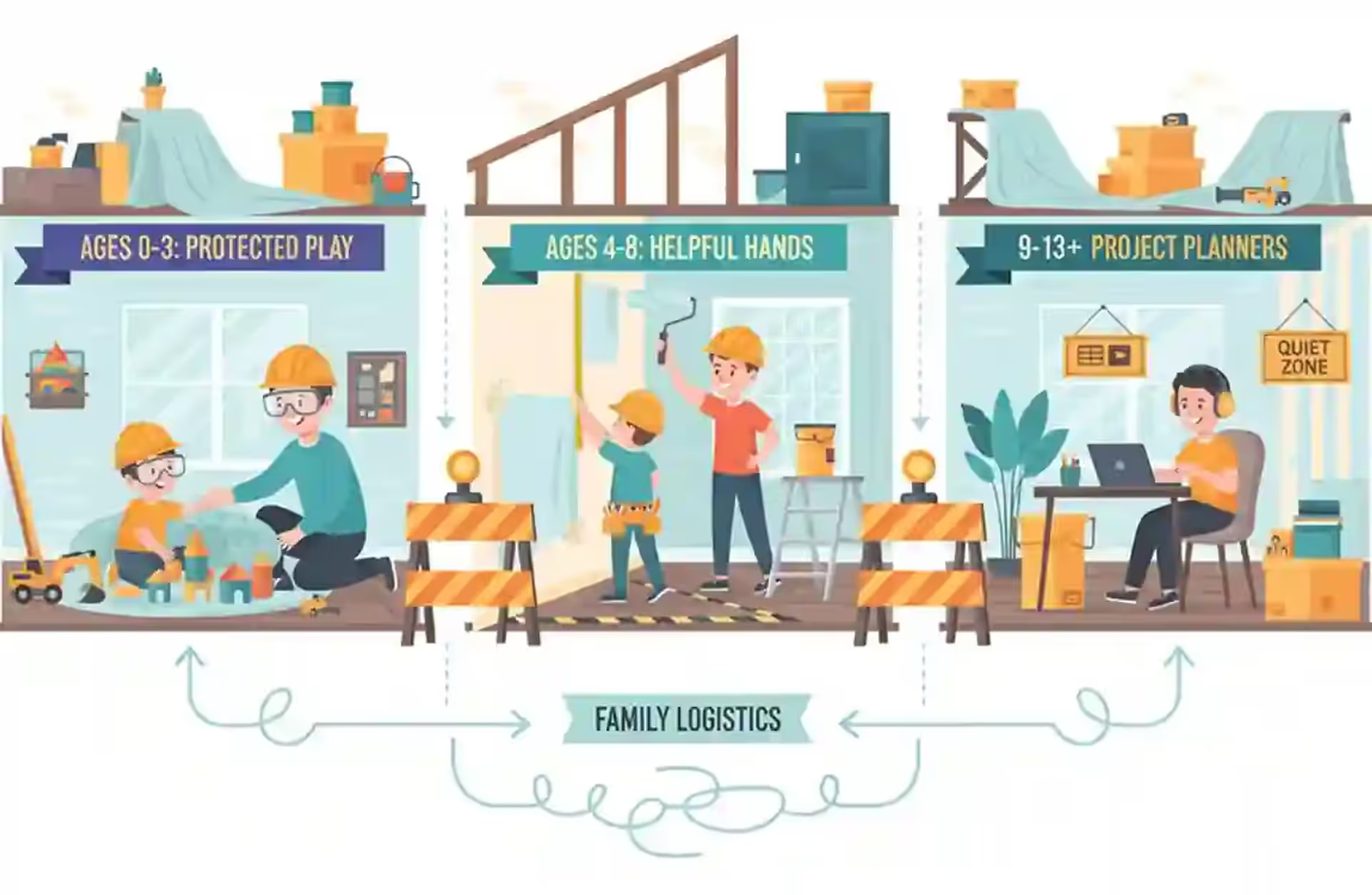
A circular saw's scream, mysterious strangers tromping through the house, and cherished play spaces suddenly barricaded behind plastic sheeting—home renovations transform a child's sanctuary into an unpredictable construction zone. While parents juggle contractor schedules and design decisions, young minds process the chaos as anxiety, curiosity, or outright fear. Understanding how children experience remodeling at different developmental stages transforms this potential nightmare into a manageable family adventure, preserving both physical safety and emotional wellbeing throughout the process.
Home renovations spike in spring and summer months, precisely when children spend maximum time at home. According to the Houzz & Home Study on renovation trends, a significant portion of renovating families have children under 18 at home, yet relatively few report adequate preparation for managing kids during construction. This oversight creates unnecessary stress and genuine hazards that could be prevented with proper planning and age-appropriate strategies.
This comprehensive guide provides age-specific strategies for navigating remodeling with children, from infants who can't understand the disruption to teenagers who might actually want to help. You'll learn how to anticipate developmental needs, create safe zones that respect each child's autonomy, and maintain family routines when your home feels anything but routine. The goal isn't just survival—it's emerging from renovation with stronger family bonds and children who feel proud of their contribution to the home's transformation.
Begin planning three to four weeks before demolition day, involving children in age-appropriate ways that help them understand and prepare for the changes ahead. For preschoolers and older children, create a visual calendar counting down to "Construction Week," using stickers to mark milestones and important dates. This transforms an abstract concept into something tangible they can track and anticipate. For toddlers who don't yet understand calendars, start using simple, consistent language like "soon we'll have a new kitchen" while pointing to the space that will change.
Host a family meeting where contractors explain, in kid-friendly terms, what they'll be doing in your home. Many skilled tradespeople genuinely enjoy showing children their tools and answering questions about their work—this demystifies the process and reduces fear of the unknown strangers who will soon be a daily presence. Give each child a "job" that makes them feel included and responsible, such as being the "nail inspector" who helps ensure no stray nails are left where baby sister crawls, or the "progress photographer" who documents changes each day.
Identify your family's "safe haven" room that remains untouched until the final phase of renovation. This space becomes your sanctuary during the most chaotic periods when dust fills the air and noise levels peak. Equip it with comfort items familiar to each child, activities appropriate for each age group, and a mini-fridge stocked with snacks and drinks to minimize trips through construction zones. The psychological benefit of having one predictable, unchanged space cannot be overstated—it provides children with a sense of stability and security when everything else feels uncertain.
If your renovation involves lead paint removal in pre-1978 homes or asbestos abatement in pre-1986 structures, seriously consider temporary relocation for your entire family. The American Academy of Pediatrics strongly advises that children, especially those under six years of age, should not live in homes during lead remediation due to the risk of irreversible neurological damage. Even small amounts of lead exposure can affect a child's IQ, damage the brain and nervous system, slow growth and development, and cause problems with learning, behavior, hearing, and speech.
Infants face the highest health risks during renovations due to their developing respiratory and neurological systems. Their inability to move independently paradoxically makes them safer from some physical hazards like wandering into construction zones, but leaves them more vulnerable to air quality issues that they cannot escape. Construction dust, volatile organic compounds (VOCs) from paint and sealants, and lead particles pose disproportionate threats to babies whose bodies are still forming and whose immune systems are not yet fully developed.
According to guidance from HealthyChildren.org, the safest approach is relocating with your infant during any phase involving demolition, painting, or floor finishing. If relocation is genuinely impossible due to financial or logistical constraints, create a sealed room with HEPA air filtration, maintaining positive air pressure so contaminants don't seep in from construction areas. Use a window air conditioner rather than central HVAC to avoid circulating dust throughout your home. Cover floors with damp towels at door bottoms to block dust migration, and consider purchasing a quality air purifier designed for nursery use.
Maintain feeding and nap schedules with military precision regardless of construction chaos. Infants sense parental stress through cortisol transfer in breast milk and through the emotional cues in your voice and body language, so your calm demeanor actively soothes them even when hammers are pounding in adjacent rooms. Use a white noise machine to mask construction sounds during naps—research from the AAP on noise exposure indicates that consistent, moderate white noise between 50-70 decibels can help infants sleep while protecting their hearing from sudden loud sounds that might otherwise startle them awake.
Keep diaper changing supplies, extra clothes, and feeding necessities in your safe haven to avoid trips through construction zones with your baby. Pack-n-plays become invaluable as portable safe sleep spaces that can be moved away from noise and dust. Designate a changing station on a sturdy table positioned away from any dust infiltration. Store formula, breast milk, or baby food in a cooler with ice packs if your kitchen is compromised by construction. A small bottle warmer that plugs into any standard outlet ensures feeding consistency regardless of which room you're using as your temporary base.
Contractor communication proves essential for protecting infant health and sleep. Post clear signs on doors stating "BABY SLEEPING – DO NOT KNOCK" during scheduled nap times. Provide contractors with a written schedule identifying when they can use particularly loud equipment such as circular saws, hammer drills, or demolition tools. Most professionals genuinely appreciate knowing when they can work without waking a baby, and many will voluntarily adjust their work sequence to accommodate infant nap schedules when given advance notice.
Toddlers combine newfound mobility with zero comprehension of danger, making them the highest-risk age group for renovation injuries. Their natural curiosity draws them inexorably to shiny tools, colorful electrical wires, and intriguing holes in walls that look like perfect places for small hands to explore. The developmental stage sometimes called the "terrible twos" amplifies frustration when familiar spaces disappear behind barriers and beloved routines are disrupted by strangers making loud noises.
Physical barriers are absolutely non-negotiable for this age group. Install baby gates with hardware-mounted screws into wall studs—never use pressure-mounted gates that determined toddlers can eventually push over. Use door knob covers on all rooms under active construction. According to comprehensive babyproofing guidelines from The Bump, construction zones require additional vigilance beyond standard childproofing because hazards change daily as work progresses. Implement the "don't step on wood" rule religiously—make it a game where toddlers earn stickers for correctly identifying and avoiding construction materials like lumber, drywall, and tools.
Maintain nap and meal schedules with unwavering consistency. Hungry, overtired toddlers in construction zones create disaster scenarios where meltdowns coincide with moments requiring parental attention to contractor questions or safety concerns. Create a "toddler toolkit" packed with snacks, sippy cups, diapers, wipes, and a rotation of favorite toys that travels with you to whatever room you're using as base camp. This prevents mid-construction dashes through hazardous areas to retrieve forgotten items.
Toddlers desperately want to help, and channeling this constructive impulse productively prevents frustration while building positive associations with the renovation process. Give them toy tools that mirror what contractors use and set up a "workbench" in their safe zone where they can "hammer" play-dough or "saw" foam blocks. When workers take breaks, ask if they'll wave to your toddler through a window or briefly show them a tool—this humanizes the strangers and reduces fear. Record the workers' names and mention them regularly: "Look, Maria is using her saw today!" This familiarity transforms scary strangers into known, trusted figures.
Sensory bins become absolute lifesavers for keeping toddlers engaged during extended periods in safe zones. Fill a large plastic tub with dried beans, rice, or pasta along with measuring cups, funnels, and toy trucks—this can keep curious toddlers engaged for thirty to forty-five minute stretches while you handle renovation logistics. Rotate the contents regularly to maintain novelty and interest. Create an "observation station" by a safely secured window where they can watch work in progress while standing on a sturdy stool—this satisfies curiosity while maintaining physical safety.

Preschoolers understand the renovation concept at a basic level but lack the risk assessment skills necessary for independent safety judgment. Their vivid imaginations may create fears that seem irrational to adults but feel completely real to them: "Will the workers take my toys?" "Will my room disappear forever?" "Are the loud noises hurting our house?" They're developmentally capable of following simple rules and can be genuinely helpful with small, safe tasks. This age group benefits enormously from involvement, information, and the sense that they're valued contributors to the family project.
Establish clear, simple rules and post them with picture illustrations that preschoolers can "read" independently: "Stay behind the yellow tape," "Ask before touching any tools," "Hold a grown-up's hand when workers are here." Practice these rules through role-play before construction begins, making it a game rather than a lecture. Create a "construction vest"—an old adult shirt or an inexpensive safety vest from a hardware store—that children must wear when entering any area where work is happening. This visual reminder helps both kids and workers recognize when children are present in transitional spaces.
Preschoolers ask incessant questions about everything they observe, which can be exhausting during already-stressful renovation periods. Designate a "question time" each day—perhaps during lunch or before bed—when you commit to answering everything about the renovation in detail. This prevents constant interruptions during critical parenting moments while reassuring children that their curiosity is valued and will be addressed. Create a "wonder wall" where they can post drawings of what they think the new space will look like, then compare their predictions to reality as work progresses.
Give preschoolers genuine responsibilities appropriate to their developmental stage. A four-year-old can hand screws to a parent doing light, supervised work in areas deemed safe. A five-year-old can help choose paint colors from a pre-selected set of acceptable options, giving them ownership in design decisions. Take photos throughout the process and create a "house diary" where they narrate what's happening each day—this builds narrative skills while helping them process the experience. Construction-themed crafts from resources like PBS Parents channel their interest productively and provide activities that connect to what they're observing in real life.
Set up a "construction site play zone" in the safe haven with building blocks, hard hats, and toy tool belts. Purchase kid-sized safety glasses and let them "help" from behind barriers while wearing their protective equipment just like real workers. Audio books become magical during this age—download construction-themed stories they can listen to while actual workers are making noise nearby. Create a treasure hunt where they find and sort different types of screws, washers, or nails from a safe, pre-collected batch that you've gathered and inspected for sharp edges.
School-age children understand cause and effect, can follow complex safety rules when properly explained, and genuinely want to help with real tasks that contribute to the family project. They also have legitimate concerns that deserve respect: worries about their belongings being damaged or lost, privacy needs that feel violated when strangers roam their home, and daily routines that academic success depends upon. This age group can become your greatest allies during renovation if you properly engage their capabilities while honoring their concerns.
Conduct a family safety meeting where school-age children actively help identify potential hazards in the renovation plan. According to experts in child psychology, this participation builds ownership and makes rules feel collaborative rather than imposed. The HouseLogic guide to remodeling with kids emphasizes that children who understand the reasoning behind safety rules follow them more consistently than those who receive unexplained directives. Teach age-appropriate children how to use basic hand tools safely under close supervision. Establish a "two-person rule"—no child enters any active construction area alone, even with explicit permission.
Homework and remote learning require quiet spaces with minimal disruption—a significant challenge during renovation. If their bedroom is being renovated, set up a temporary study area in the safe haven with a dedicated desk, good lighting, and all necessary school supplies organized and accessible. Communicate proactively with teachers about potential disruptions, including noise during online classes and possible impacts on sleep affecting daytime focus. Many educators will accommodate flexible deadlines during documented home renovations when informed in advance.
School-age children can handle genuinely meaningful responsibilities that contribute to the renovation effort. A nine-year-old can manage the family's daily photo documentation project, creating a visual record that becomes a treasured memento after completion. A ten-year-old can learn to operate a stud finder or measure spaces accurately for parents who need quick measurements. Older children approaching middle school can research materials or design elements appropriate to their interests—perhaps investigating eco-friendly paint options or comparing countertop durability ratings. With proper supervision and training, children can paint their own rooms using low-VOC paint with adequate ventilation.
This age group worries intensely about their belongings in ways that may seem excessive to adults but feel critically important to children. Create a "treasure box" for each child to pack their most precious items, which you store safely away from any construction area—preferably off-site at a relative's house or in a climate-controlled storage unit. They may also feel embarrassed about the mess when friends visit or talk about their home at school. Help them practice a simple, positive explanation: "We're making our house even better!" Show them before-and-after photos from renovation websites to frame the current chaos as a temporary stage in an exciting transformation.
Teenagers understand the full scope and timeline of renovations and can be genuinely helpful partners in the process. They may have strong opinions about design choices affecting their personal spaces—opinions that deserve serious consideration even if you can't accommodate every preference. Their social lives, including friends visiting and video calls for school or socializing, require consideration when scheduling noisy work. Some teens may view the disruption primarily as an invasion of their autonomy rather than an exciting home improvement project.
Teenagers can learn genuine construction skills during renovation that serve them throughout life. Consider enrolling interested teens in a weekend workshop on tool safety, basic drywall repair, or painting techniques. With proper training and appropriate supervision, teenagers can safely handle power tools like drills and jigsaws for specific, defined tasks. Establish clear communication boundaries: they must notify you before entering active work zones, and contractors must know immediately when teens are present. Create a family text group for real-time communication about which areas are currently active and when quiet is needed.
Teens need quiet for homework, standardized test preparation, and socializing with friends—all normal developmental activities that renovations disrupt. If their bedroom is being renovated, involve them meaningfully in planning their temporary space arrangement. Respect their input on where to position their bed, desk, and personal items within the constraints of available space. They may want to stay with friends during particularly disruptive phases—balance supporting their independence with ensuring you always know their location and can reach them quickly if needed.
Give teenagers real responsibilities commensurate with their maturity and demonstrated reliability. A responsible fifteen-year-old can supervise younger siblings for defined periods while you consult with contractors about decisions requiring your attention. A sixteen-year-old with a driver's license can run material pickups from hardware stores, saving you time while building their confidence. Consider giving them a defined renovation budget for their own room—if they want premium finishes beyond the standard plan, explore cost-sharing options where they contribute from allowance or earnings. This teaches financial literacy and investment concepts while respecting their growing autonomy over their personal space.
Teens value privacy intensely as part of normal developmental identity formation. If their personal bathroom is being renovated, establish clear schedules for shared bathroom use and rigorously respect their designated "do not disturb" times. Knock and wait for acknowledgment before entering any temporary bedroom setup. Remember that their friends may feel uncomfortable visiting during construction chaos—plan friend visits during quieter renovation phases, or arrange for teens to socialize at friends' homes instead. These accommodations acknowledge their developmental need for social connection and personal space without derailing renovation progress.
Families with children across multiple age groups face compound challenges that require creative solutions. An infant needs absolute quiet during naps while a preschooler requires active engagement to prevent boredom-driven mischief. A teen needs privacy and quiet for studying while a toddler needs constant supervision to prevent construction zone exploration. The key to managing these competing needs lies in staggered scheduling, deliberate zone creation, and leveraging older children's capabilities to support younger siblings under appropriate parental oversight.
Designate age-appropriate areas within your safe haven space that allow multiple children to coexist without constantly interfering with each other's needs. Position a corner with a playpen or portable crib for the baby, separated by bookshelves from a table designated for school-age homework. Provide the teenager with quality noise-canceling headphones and their own clearly defined zone. Use furniture as dividers to give each child psychological space even within a shared room. This parallel universe arrangement allows children of vastly different ages to occupy the same physical space while attending to developmentally appropriate activities.
Time blocking becomes essential for managing noise and activity levels. Schedule noisy demolition and construction during school hours when older children are away and infant nap times can be adjusted. Reserve infant nap times for quieter tasks like painting, electrical work, or detail finishing. Use weekend mornings for family outings to parks, libraries, museums, or friends' houses during the loudest and most chaotic renovation phases. Consider hiring a mother's helper, neighborhood teen, or babysitter for designated "construction hours" so you can focus on project management without simultaneously providing childcare.
Pair older siblings with younger ones for supervised activities that benefit both children. A ten-year-old can read picture books to a toddler while you consult with the electrician about outlet placement. A teenager can push a stroller for a midday walk around the block while you meet with the plumber about fixture selections. These arrangements build sibling bonds through shared experience while giving older children meaningful responsibility and younger children the attention they need. Be careful not to overburden older children with caretaking duties—they're siblings, not substitute parents.
Create a central family communication hub that all family members can access. Use a large whiteboard in your safe haven with daily schedules, work zones to avoid, meal plans, and weather forecasts that affect outdoor play options. Include a "questions" section where children of any age can write concerns or requests that you'll address at designated family meeting times. Review this board each morning so everyone knows what to expect that day. This predictability, according to research on childhood stress and routine, significantly reduces anxiety for children of all ages who feel unsettled by the chaos of home renovation.
Morning routines set the day's emotional tone for the entire family. Wake thirty minutes earlier than your normal pre-renovation schedule to prepare before workers arrive. Use this precious quiet time for family breakfast in the safe haven, reviewing the day's plan and addressing any concerns children woke up with. Pack "construction day bags" for each child containing activities, snacks, comfort items, and anything they might need during the day—this prevents stressful searches through construction zones for forgotten items.
Midday check-ins prevent emotional meltdowns by addressing needs before they become crises. At lunchtime, request that all construction sounds stop for at least thirty minutes. Have a "quiet hour" where everyone—children and parents alike—does calm activities like reading, drawing, or resting. Even workers appreciate this break from noise and physical labor. Use this midday pause to reconnect emotionally with each child, asking specific questions about how they're feeling rather than just whether they're "okay." This regular emotional temperature check catches brewing problems before they explode.
Evening wind-down proves crucial for quality sleep despite daytime chaos. Negotiate with contractors to stop all work at least thirty minutes before your children's bedtimes. Use this buffer time for baths—even if it's a makeshift setup with wet wipes and a portable basin—and reading familiar stories that provide comfort through predictability. The consistency of bedtime routines actively counters the day's chaos and signals to children's bodies that it's safe to relax. Before lights out, review one positive thing that happened with the renovation that day and one thing each child is looking forward to in their newly renovated space.
Meal planning requires extra attention during renovation when kitchen access may be limited or nonexistent. Stock your safe haven mini-fridge with healthy options that don't require cooking: pre-cut vegetables and hummus, cheese sticks, yogurt tubes, fruit, sandwich fixings. Invest in quality paper plates to minimize dishwashing when sink access is compromised. Plan for takeout or meal delivery on particularly chaotic days—this isn't failure, it's strategic sanity preservation. If possible, set up a temporary cooking station with a hotplate or electric skillet, microwave, and toaster oven in a room away from active construction.
Research in developmental psychology helps explain why children react so strongly to home renovations. According to studies cited by the Frontiers in Child and Adolescent Psychiatry, routine serves as a protective factor for children's mental health by helping them plan, predict what to expect, and feel secure during stressful times. When renovation disrupts the predictable patterns of daily life—where meals happen, where toys live, which bathroom to use—children lose important anchors that normally help them feel safe and regulated.
Children also absorb parental stress through multiple pathways, creating a feedback loop where stressed parents produce stressed children who in turn increase parental stress. Research consistently shows that parental anxiety correlates with elevated mental health symptoms in young children, including increased anxiety and behavioral problems. This doesn't mean you must hide all stress from your children—that's neither possible nor healthy. Rather, acknowledge stress while modeling coping strategies: "I'm feeling frustrated because the tiles arrived wrong, but I'm going to take some deep breaths and figure out how to fix it."
Young children in particular cannot cognitively separate temporary disruption from permanent change. When their bedroom becomes a construction zone, they may genuinely believe they've lost their room forever, triggering grief responses that seem disproportionate to adults who understand the timeline. Use concrete, visual aids to communicate that the disruption is temporary: mark the calendar with an end date, show them photos of finished renovations from the contractor's portfolio, and take "before" pictures together that you'll compare to "after" results.
Older children and teenagers may express renovation stress through irritability, withdrawal, declining academic performance, or increased conflict with siblings. These behavioral changes often indicate underlying anxiety about the disruption to their lives rather than specific complaints about the renovation itself. Create regular opportunities for older children to express concerns without judgment, and validate that their feelings are understandable even when their coping behaviors are problematic. Family counseling during major renovations can provide useful tools for everyone.
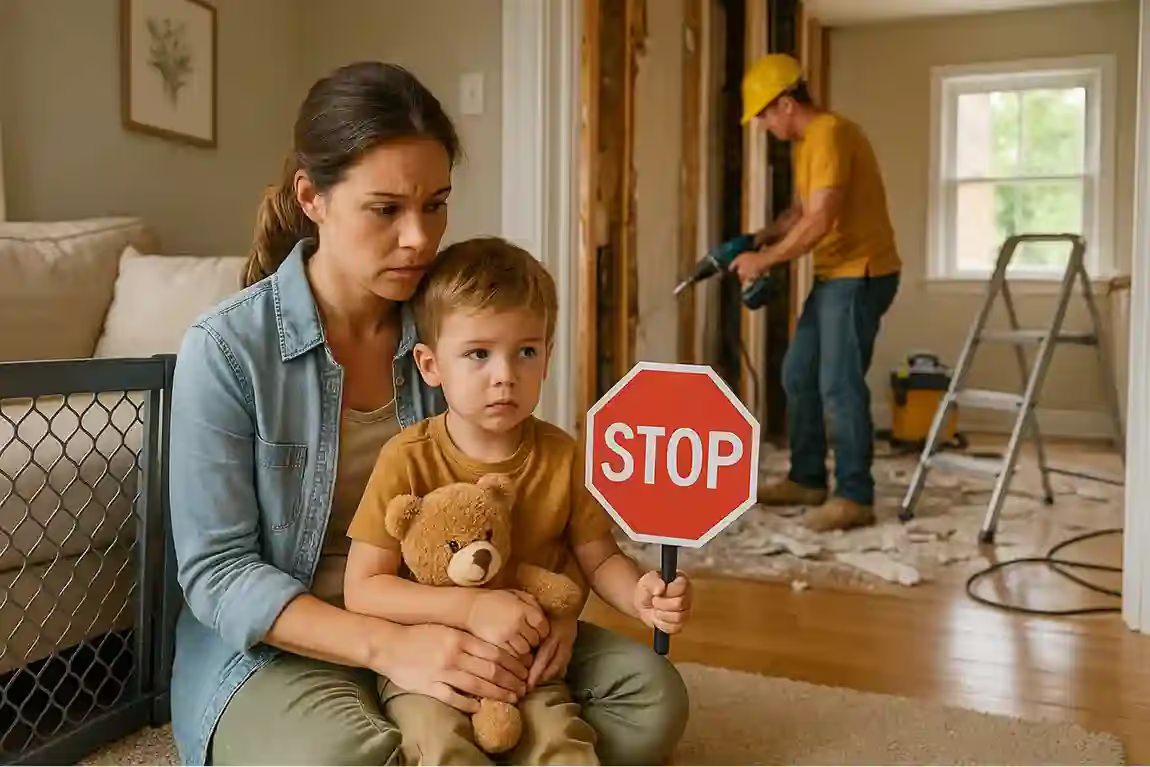
Verify that your homeowner's insurance adequately covers injuries to children during renovations before work begins. Most policies include liability coverage, but you should confirm specific limits and exclusions with your agent. Some insurers require formal notification when minors are present during construction activities. Consider umbrella coverage for major projects that involve significant demolition, structural changes, or extended timelines—the additional protection proves invaluable if accidents occur.
Contractor agreements should explicitly include child safety clauses that define mutual responsibilities. Require proof of workers' compensation coverage and general liability insurance from all contractors. The EPA's lead-based paint regulations require that any contractor disturbing painted surfaces in pre-1978 homes must be certified and follow specific lead-safe work practices. Always ask to see a contractor's RRP (Renovation, Repair, and Painting) certification before work begins on older homes. Document all safety protocols in writing and have contractors sign acknowledgment—this protects both parties if an incident occurs.
If your child is injured due to contractor negligence—such as leaving power tools unattended or failing to secure hazardous materials—you may have legal recourse for damages. However, if your child enters a clearly marked restricted area against established rules, liability questions become complex. Courts generally consider whether safety measures were reasonable, whether warnings were appropriate for the child's age, and whether supervision was adequate given known hazards. Document everything: photograph safety barriers daily, keep written records of rules communicated to children, and maintain copies of all contractor communications about child safety.
For families renting their homes, landlord-tenant laws vary significantly by state regarding habitability during renovations. If construction makes your home unsafe for children due to lead exposure, inadequate heating, lack of bathroom access, or other habitability concerns, you may have grounds for rent reduction, lease termination, or other remedies. Document all safety concerns with dated photographs and written communications to your landlord. Consult with a tenant rights organization or attorney if renovation conditions endanger your children's health or safety.
When construction officially ends, maintain child-centered safety practices during the transition period. New spaces have unfamiliar layouts that present trip hazards until furniture is properly placed and traffic patterns establish themselves. Test all childproofing in the renovated environment before resuming normal supervision levels: verify that outlet covers fit new outlets, check that cabinet locks work on new cabinets, and confirm that stair gates still secure properly if stairs were affected. The novelty of new features like kitchen islands, built-in seating, or accessible storage may attract climbing that didn't occur in the old layout.
Gradually reintroduce children to renovated areas over the course of a week rather than expecting immediate comfortable use. For younger children, spend time playing in new spaces while you narrate the experience: "Here's where we'll eat breakfast together now! See how the sun comes in this window?" Let children actively help unpack their belongings and decide where items belong in their updated spaces—this restores their sense of ownership and control that construction stripped away. For rooms that changed dramatically, consider placing one or two familiar objects prominently to bridge the old space and the new.
Watch carefully for behavioral regression that indicates lingering stress from the renovation experience. Some children develop new fears—of loud noises, strangers in the house, or changes to familiar spaces—that persist after construction ends. Sleep disturbances, increased clinginess, potty training regression in recently trained toddlers, or unusual aggression in school-age children may indicate that the renovation stress exceeded their coping capacity. According to pediatric mental health guidelines, if anxiety or behavioral problems continue beyond two to three weeks after returning to normal routines, consult your pediatrician. The stress of renovation can unmask underlying sensitivities that merit professional evaluation and support.
Celebrate project completion as a meaningful family milestone. Host a "new room reveal" party where each child shows off their favorite feature to grandparents, friends, or neighbors who haven't seen the changes. Create a photo book documenting the entire renovation journey from demolition through completion, highlighting moments your children remember participating in. This narrative framing helps children process the experience positively and transforms what may have felt like chaos and loss into an adventure story where they played an important role. Their contribution to the family home becomes part of your family history.
Remodeling with children at home demands far more than safety goggles and baby gates—it requires empathy for how children experience disruption, creativity in maintaining normalcy amid chaos, and genuine recognition that your children are active participants in your home's evolution rather than obstacles to work around. The dust settles, the paint dries, but the memories of how your family navigated this challenge together become part of your home's true foundation.
By tailoring strategies to each child's developmental stage, maintaining routines amid daily chaos, and transforming disruption into opportunities for growth and learning, you don't just survive renovation—you build family resilience, problem-solving skills, and cohesion that outlast any design trend. Your newly renovated home becomes more than beautiful spaces with updated finishes; it becomes a testament to your family's ability to adapt, support one another through difficulty, and create something wonderful together, one age-appropriate step at a time.
The renovation experience, when managed thoughtfully with children's needs prioritized alongside project goals, creates lasting positive memories that children carry into adulthood. They learn that homes can change and improve, that temporary discomfort leads to lasting benefits, and that family cooperation can accomplish impressive transformations. These lessons extend far beyond home improvement into every area of life where persistence through difficulty yields meaningful results.
DECEMBER 01, 2025
DECEMBER 01, 2025
NOVEMBER 28, 2025
NOVEMBER 28, 2025
NOVEMBER 28, 2025