

Tax Implications of Home Renovation: What You Can and Can’t Deduct
DECEMBER 01, 2025
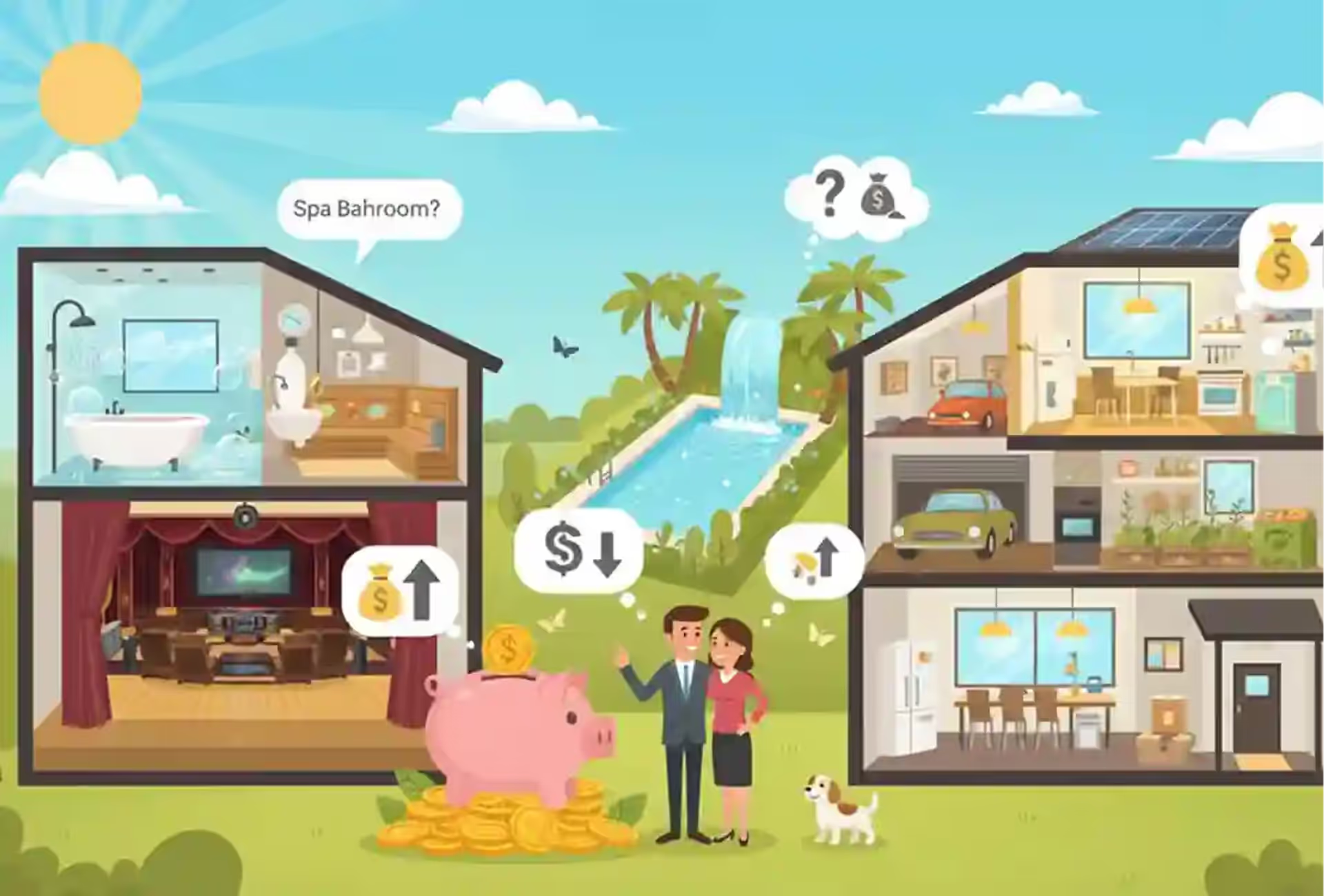
A homeowner spends $75,000 installing a gourmet kitchen with imported marble countertops, custom cabinetry, and professional-grade appliances, only to discover that neighborhood comparables top out at a $30,000 premium for renovated kitchens—leaving $45,000 of investment that evaporates the moment the project completes. Another family invests $50,000 converting their garage into a stunning home gym, but potential buyers see only a deal-breaker: the permanent loss of covered parking and storage space, causing their home to sit on the market 40 days longer than similar properties. These aren't isolated mistakes—they're the predictable outcomes of believing that any renovation automatically enhances property value. The hard truth is that some improvements not only fail to deliver positive returns but actively diminish your home's marketability and worth.
The home improvement industry thrives on a seductive promise: transform your space, increase your property value, and build wealth through strategic renovations. Television shows, magazine spreads, and contractor marketing materials consistently reinforce the narrative that every dollar invested in your home returns to you at sale time, often multiplied. This pervasive belief drives homeowners to finance ambitious projects, drain savings accounts, and make decisions based on emotional appeal rather than financial reality. Yet data from real estate professionals, appraisers, and market analysts tells a radically different story—one where many renovations recover only a fraction of their cost, and some improvements actually reduce a property's value and appeal to potential buyers. According to Remodeling Magazine's Cost vs. Value Report, exterior improvements consistently outperform major interior renovations in terms of return on investment, with projects like garage door replacement achieving returns of nearly 200% while major kitchen remodels recover less than 50% of their cost.
Understanding the difference between renovations that genuinely enhance value and those that represent pure consumption is essential for any homeowner weighing improvement options. The distinction isn't always intuitive: sometimes the most satisfying projects deliver the worst financial returns, while mundane updates that excite no one can preserve or enhance value most effectively. This comprehensive examination of ROI myths will help you navigate the complex intersection of personal enjoyment and investment wisdom, separating the renovations that build wealth from those that simply drain it. By learning which improvements consistently underperform and why, you'll make informed decisions that align your vision for your home with realistic expectations about its financial impact. The knowledge contained in this guide represents the accumulated wisdom of real estate professionals, appraisers, and homeowners who have learned these lessons the hard way, often at significant financial cost.
The most damaging misconception in home improvement is the belief that any renovation automatically increases property value. This myth persists because it feels intuitive—improvements should improve worth, and upgraded spaces should command higher prices. However, real estate markets operate on comparison, not absolute quality. Your home's value depends on what similar properties sell for in your immediate area, not on how much money you've invested. A $100,000 kitchen renovation in a neighborhood where homes sell for $300,000 doesn't transform your property into a $400,000 house; it creates a $300,000 home with a very expensive kitchen that most buyers won't pay extra for. The Fannie Mae appraisal guidelines explicitly require appraisers to evaluate properties based on neighborhood characteristics and comparable sales, meaning your renovation investment is filtered through the lens of what's typical for your area, not what you personally spent.
The data reveals a stark reality: most renovations recover only 60-70% of their cost at resale, with many projects returning less than 50%. This means you're typically losing money on renovations from a pure investment perspective. The only exceptions are certain critical system updates in specific market conditions, and even these rarely achieve 100% cost recovery. Renovations that address genuinely dysfunctional or unsafe conditions come closest to breaking even, but even these don't guarantee profit. Replacing a failing roof or an inoperative HVAC system preserves value rather than adding it, preventing your home from being priced below comparable properties but not commanding a premium. Buyers expect functional roofs and heating systems; they don't pay extra for them—they simply refuse to pay market rate for homes lacking these basics. The distinction between preserving value and enhancing value is critical: maintenance prevents loss, but rarely creates gain. As real estate appraisal experts note, it is important for homeowners to keep in mind the value range of homes in their neighborhood so that they will not over-improve their homes.
Your home's value is determined by comparable sales within approximately one mile, adjusted for size, condition, and features. Appraisers don't credit you for renovation costs; they compare your home to others that have sold recently. The improvements that add value are those that bring your property up to current neighborhood standards, not those that exceed them. If every comparable home has updated kitchens, your renovation simply maintains parity—it doesn't create an advantage worth extra dollars. This fundamental principle explains why the same renovation can yield dramatically different returns in different neighborhoods: a granite countertop upgrade in a neighborhood where everyone has granite simply keeps you competitive, while the same upgrade in a neighborhood of laminate countertops might actually make your home harder to sell by pricing it above what local buyers expect to pay.
"You don't want to own the nicest house on the street" represents advice repeated by real estate professionals for good reason—over-improvement consistently ranks among the costliest renovation mistakes. When your property significantly exceeds neighborhood standards, prospective buyers won't pay the premium necessary to justify your investment. They're shopping for a neighborhood as much as a house, and if comparable properties are selling for $400,000, your $500,000 home with luxury finishes simply won't appraise, making mortgage financing impossible for most buyers. The math is brutal: if you invest $75,000 in a gourmet kitchen but neighborhood comps support only a $25,000 premium for renovated kitchens, you've instantly lost $50,000. This doesn't mean you shouldn't enjoy your home while living there, but you must recognize that substantial portions of luxury upgrades represent personal consumption, not investment.
Over-improvement takes many forms beyond excessive finishes: adding square footage that makes your home drastically larger than neighbors, installing features uncommon for your area (like elevators in modest neighborhoods), or creating floor plans that deviate significantly from local preferences. A 5-bedroom addition to a neighborhood of 3-bedroom homes might seem valuable, but if local buyers are young families seeking manageable mortgages, your oversized property becomes a white elephant that appeals to a tiny buyer pool. According to appraisal professionals, over-improvement occurs when homeowners spend too much money on home improvement projects that do not add value to the property, and this can significantly hurt the appraisal value. Therefore, it is essential to consult with a professional appraiser or real estate agent before undertaking any home improvement projects to understand what improvements will actually increase the value of your property versus those that simply satisfy personal preferences without financial return.
The neighborhood ceiling effect represents one of the most misunderstood aspects of real estate valuation. Every neighborhood has an implicit price ceiling determined by the most expensive recent sales. No matter how spectacular your renovations, buyers searching in that price range are looking in different neighborhoods—neighborhoods where their money buys homes that match the surrounding properties. Your beautifully renovated home sits awkwardly above its neighbors, attracting buyers who can't understand why they'd pay a premium to live among less expensive properties. The result is extended time on market, frustrated negotiations, and ultimately price reductions that eliminate most of your renovation investment.
Swimming pools represent one of the most emotionally compelling yet financially devastating renovations for most homeowners. The vision of backyard entertaining, family recreation, and luxurious lifestyle drives $50,000 to $100,000 investments (or far more for elaborate designs), yet the actual value added typically ranges from $20,000 to $30,000 in warm climates where pools are expected, and often zero—or even negative value—in cooler regions where buyers view them as maintenance liabilities. According to Redfin research, the average return on investment for a swimming pool is about 7%, though this can vary dramatically by location. In Los Angeles, pools can add nearly $100,000 to a home's value, while in Boston, homes with pools actually sold for approximately $15,000 less than comparable properties without them. This geographic variation underscores the importance of understanding your local market before making major investment decisions.
The financial damage extends far beyond installation. Annual maintenance costs for chemicals, cleaning, repairs, and increased insurance premiums typically run $3,000 to $5,000, creating ongoing negative cash flow that never ends. Buyers calculate this burden when considering your property, often reducing offers by more than the pool's theoretical value to compensate for the long-term cost commitment. Families with young children frequently eliminate homes with pools from consideration entirely due to safety concerns, dramatically shrinking your potential buyer pool. The resale timeline impact proves equally problematic—in markets where pools aren't standard, expect your home to take 30-60 days longer to sell as you wait for the specific buyer who both wants a pool and can afford the associated costs. During that extended marketing period, carrying costs continue accumulating, effectively increasing your total loss beyond the initial installation deficit. The National Association of Realtors data suggests that a well-maintained in-ground pool can increase your home's value by 5% to 8%, sometimes more in warmer climates or luxury markets, but this increase rarely covers the installation cost, making pools a lifestyle choice rather than an investment strategy.
Tennis courts, saunas, putting greens, and wine cellars follow the same financial pattern as pools—expensive to install, costly to maintain, and appealing to a tiny buyer segment. A tennis court costing $50,000 might add $10,000 in value while requiring ongoing maintenance and limiting yard use for future owners who don't play tennis. Saunas and steam rooms create electrical and structural modifications that prevent easy conversion back to standard space, turning what you considered a luxury into a liability for buyers who must budget for removal. These highly personalized amenities should be undertaken only when you plan to remain in the home long-term and accept that the investment is consumption, not wealth-building. The key principle is that the more specialized the feature, the smaller the potential buyer pool, and the smaller the buyer pool, the lower the premium anyone will pay for that feature. High-end home theaters face similar challenges—while they may seem universally appealing, the rapid pace of technology change means today's state-of-the-art installation becomes tomorrow's dated eyesore requiring expensive updates or removal.
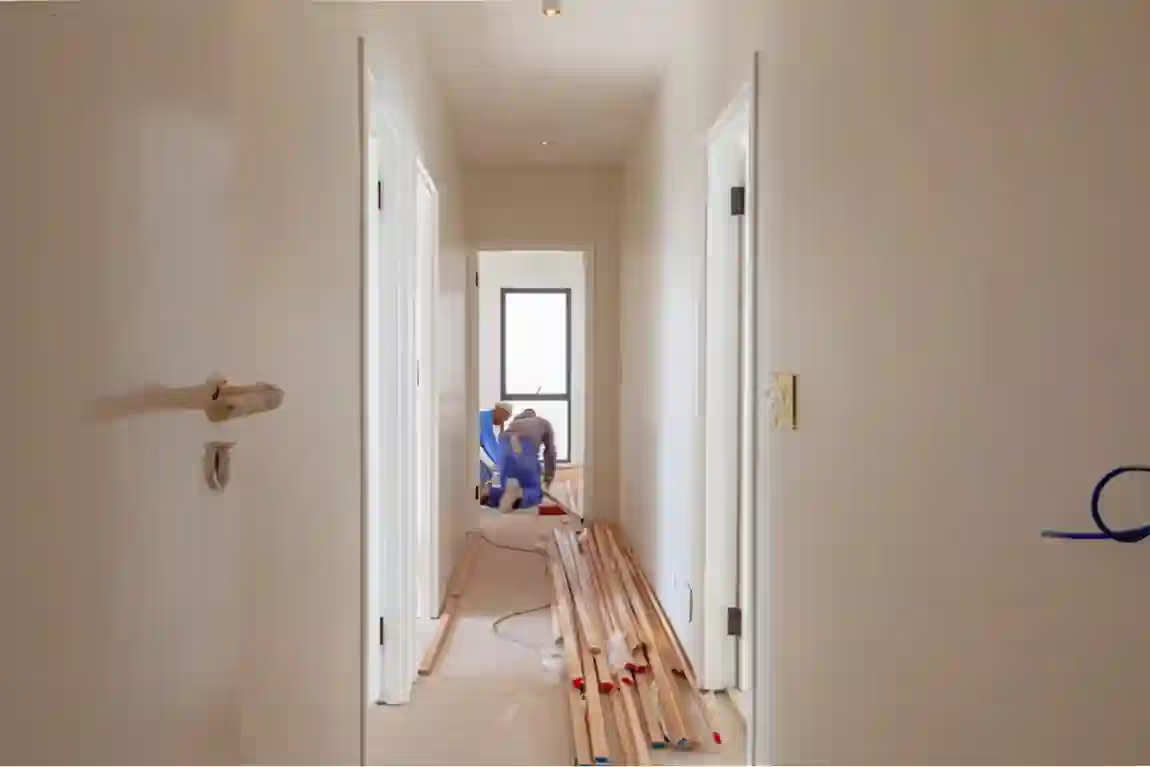
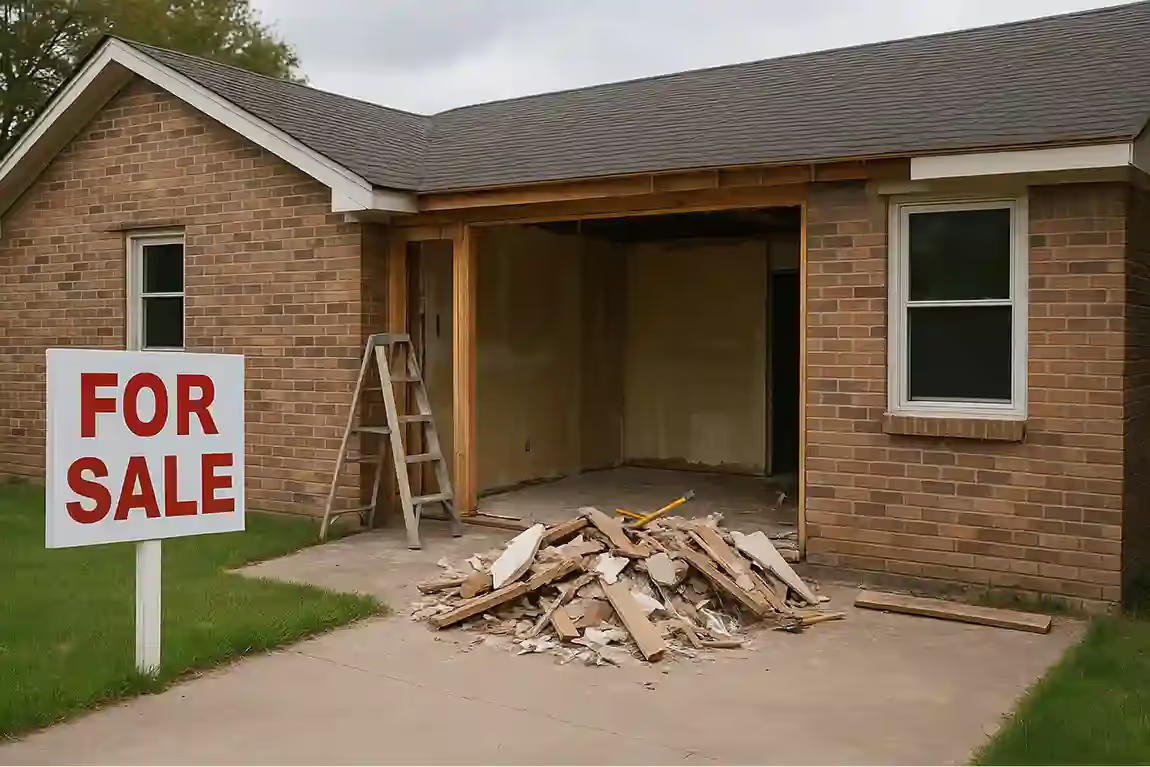
Converting a garage into living space ranks among the most value-damaging renovations homeowners regularly undertake. The financial logic seems sound—adding 400-600 square feet of finished space for $20,000-$40,000 appears cheaper than building a new addition, and the prospect of a home gym, guest suite, or office drives the decision. However, Sacramento real estate brokers report that in most cases garage conversions decrease the value of a home, with the best-case scenario being that the conversion equally cancels out the loss of the garage. Most buyers prioritize covered parking and storage space over additional living area, particularly in climates with harsh weather or neighborhoods with limited street parking. When evaluating garage conversions, real estate professionals consistently calculate the cost to remove the conversion and restore the garage to original usage, treating the conversion as a deficit rather than an improvement.
Real estate agents consistently report that homes without garages sell for 10-15% less than comparable properties with garages, and they remain on the market significantly longer. According to The Family Handyman, for the most part, experts agree that converting your garage into living space does not add value to your home, and if you live in an area where garages are desirable (such as snowy regions), it can actually lower your home's value. The conversion that added a bedroom you enjoy daily reduces your buyer pool by eliminating anyone who needs garage storage for vehicles, lawn equipment, bicycles, or seasonal items. Families with young children particularly value garage parking for loading and unloading, and they won't consider properties lacking this feature. The functional loss impact extends beyond parking—many homeowners use garages for workshops, hobby spaces, and utility storage that a converted room cannot accommodate. The flexibility that garages provide for various lifestyle needs makes them surprisingly valuable to a broad buyer base, while the converted space serves only one specific function that may not align with future owners' priorities.
The financial loss multiplies when buyers calculate restoration costs. A potential purchaser might mentally deduct $40,000 from their offer to cover rebuilding the garage, even if your conversion cost only $25,000. This mental math happens because buyers don't value your specific conversion—they value what they're losing. If you must convert garage space, design it to be easily reversible by preserving the garage door and structural elements, making it clear to future owners that restoration is straightforward and affordable. Some real estate agents report that the lack of garage parking in cold climates can reduce offers by 5-10% or extend time on market significantly, making this one of the most consistently negative renovations across geographic regions. The only exception tends to be in dense urban areas where street parking is accepted and additional living space commands significant premiums—but even in these markets, the conversion must be executed to professional standards with proper permits to avoid creating additional problems.
Highly personalized renovations represent some of the worst ROI investments because they reflect your specific tastes rather than broad market appeal. That pink Italian marble floor you adore, the custom-built wine cellar that stores your collection perfectly, or the elaborate built-in office that fits your workflow precisely—these features limit buyer imagination and create mental calculations about removal costs. Buyers don't see unique character; they see expensive projects they'll need to undo to make the space their own. Real estate professionals warn that personalized renovations, while fulfilling individual tastes, often clash with broader market preferences, and quirky tiling, bold paint colors, and lavish light fixtures can make a home stand out in ways that actually hurt rather than help resale value.
Extreme personalization examples include integrating wedding dates into wall designs, built-in aquariums, themed rooms (Tuscan kitchens from the 1990s being a notorious example), or removing bedrooms to create specialized spaces like home theaters or craft rooms. The more irreversible the customization, the more it damages resale potential. Perhaps no example illustrates this principle more dramatically than Michael Jordan's Highland Park mansion, which took 12 years to sell and ultimately sold for $9.5 million—a 67% discount from its original $29 million asking price. The property's basketball-court-themed features, prominent "23" branding on the gates, and extensive personalization to Jordan's tastes made it nearly impossible for buyers to envision as their own home, despite the property's luxury status and location. The listing agent noted that Jordan spent approximately $50 million constructing the mansion, meaning the final sale represented an enormous loss on his investment—a cautionary tale for any homeowner considering extensive personalization.
The financial impact of over-customization extends beyond simple aesthetics. Custom built-ins often use dimensions and configurations that prevent repurposing, forcing future owners into expensive demolition and reconstruction. Wall finishes, lighting fixtures, and architectural details that feel dated or overly specific can require complete room overhauls rather than simple updates, multiplying the perceived cost burden for buyers. The personal style trap causes sellers to mentally overvalue features that buyers mentally devalue, creating unrealistic pricing expectations that lead to extended market time and eventual price cuts. Tempered customization—using paint colors, furnishings, and easily changed decorative elements to express personality while keeping structural and finish choices neutral—allows you to enjoy your home while preserving broad appeal. The best ROI strategy focuses on quality, functionality, and timeless design rather than bold statements that reflect current trends or personal obsessions. Buyers pay premiums for move-in ready homes they can adapt gradually, not for spaces requiring immediate, expensive personalization reversals.
Built-in technology that seems cutting-edge today becomes tomorrow's outdated liability, and buyers know it. Remember when VHS tape storage cabinets were standard features? How about dedicated iPod charging stations? Technology evolves so rapidly that any system integrated into your home's structure will likely be obsolete before you sell, becoming an eyesore and a removal project for future owners. Home theaters with elaborate projection systems face the same fate as massive screens become affordable and streaming makes physical media storage unnecessary. Real estate experts note that built-in or customized electronics that take up space could turn off potential homebuyers, and as with all home renovations, over-personalization usually leads to a decrease in home value—especially true with technology, which can quickly become outdated.
Smart home systems present particular challenges because standards and compatibility change constantly. A $15,000 integrated home automation system using a proprietary platform from 2020 might not support devices manufactured in 2025, forcing buyers into expensive upgrades or complete system replacement. Wired audio systems, intercoms, and security setups face similar obsolescence risks. The technology trap causes homeowners to invest heavily in systems that provide personal convenience but deliver zero long-term value. Strategic tech choices that preserve ROI include easily updatable devices like smart thermostats, video doorbells, and Wi-Fi-enabled appliances that don't require structural integration. These can be replaced inexpensively as technology advances, and they don't create expensive removal burdens for future owners. The key is choosing technology that enhances functionality without becoming part of the home's permanent infrastructure. Portable, wireless, and modular tech solutions provide the benefits you want today while preserving flexibility for tomorrow's innovations.
Energy-efficient upgrades consistently deliver among the best returns because they reduce ongoing operating costs—a benefit buyers can quantify. According to the U.S. Department of Energy, homeowners can save between $126 and $465 per year by replacing single-pane windows with ENERGY STAR-certified models, with window replacement offering ROI of 60-70% while also providing immediate utility savings. New windows, added insulation, and smart thermostats appeal to environmentally conscious buyers while promising lower utility bills, making them easier to finance because they improve the home's overall affordability. In some markets, government incentives for energy improvements further offset costs, improving effective ROI. The Inflation Reduction Act offers federal tax credits worth 30% of energy-efficient window costs, up to $600 per year, making these upgrades even more financially attractive.
Critical system replacements—roof, HVAC, hot water heater—can approach 100% ROI when they bring your home up to current neighborhood standards and prevent value loss from deferred maintenance. A 20-year-old roof doesn't necessarily reduce value below market rate, but it prevents your home from achieving top-tier pricing for its size and location. When you replace it, you're not adding value as much as removing a negative that was suppressing potential price. This distinction matters because it explains why system upgrades help in some situations but not others. According to the 2024 Cost vs. Value Report, exterior projects continue to dominate ROI rankings, with garage door replacement achieving an astounding 268% ROI in 2025, followed by steel entry door replacement at 216% and manufactured stone veneer at 208%. These relatively affordable curb appeal improvements dramatically outperform expensive interior renovations in terms of cost recovery.
Neutral color schemes with timeless finishes create broad appeal without premium pricing that exceeds market capacity. Light, neutral paint colors, classic subway tiles, standard hardwood flooring, and quality but not extravagant countertops (quartz rather than marble, for instance) provide the updated look buyers want at price points they'll pay for. The goal is achieving "move-in ready" status rather than "designer showcase" status—the former adds value, the latter represents personal consumption. Minor kitchen remodels that refresh surfaces without changing layouts consistently outperform major gut renovations, with the Consumer Affairs research noting that kitchens and bathrooms are typically the most important spaces in a home, though total kitchen remodels usually have an ROI under 100 percent while minor updates can achieve significantly better returns.
Real estate value operates at hyper-local levels, with ROI varying dramatically between neighborhoods just miles apart. The granite countertops that are standard in one area's $400,000 homes might be considered extravagant upgrades in another's $300,000 properties, while being inadequate expectations in a third's $500,000 market. This variation means national averages and general advice have limited utility—you must understand your specific market's norms, buyer expectations, and competitive landscape before making renovation decisions. Appraisal professionals emphasize that most of the time, renovations like Carrara marble counters and heated floors are done for the homeowner, not for the added value to the house—buyers in most markets simply won't pay significantly more for these kinds of updates.
Consulting local real estate agents and appraisers before major renovations provides insights that prevent expensive mistakes. These professionals know whether swimming pools are expected or shunned in your area, whether garages are valued more than finished basements, and whether high-end appliances command premiums or go unnoticed. They can identify the specific features that differentiate quickly sold properties from lingering listings, helping you invest in improvements that genuinely matter to local buyers rather than following national trends that don't apply to your market. Neighborhood consistency drives value more than individual property excellence—renovations should bring your property up to the median condition of recently sold homes, not exceed it significantly. The investment in a brief consultation with local experts before committing to major renovation spending can save tens of thousands of dollars by preventing projects that won't deliver returns in your specific market.
Partial renovations that update some elements while leaving others dated often deliver worse ROI than no renovation at all. Replacing countertops while leaving 30-year-old cabinets creates a mismatch that screams "cheap fix" to buyers, who mentally calculate the cost of completing the job properly. This "lipstick on a pig" approach suggests the homeowner is trying to hide problems rather than address them, creating suspicion that undermines confidence in the property's overall condition. According to home improvement experts at Redfin, nearly 35% of new home buyers want a move-in ready home without renovations, making unfinished projects a major turnoff. Uncompleted updates like half-finished landscaping also hurt curb appeal and perceived value, and one major upgrade may make the rest of the house look outdated.
The negative impact intensifies when partial updates use materials that don't coordinate. Installing luxury vinyl plank flooring in the living room while leaving dated carpet in bedrooms creates a disjointed feel that makes buyers feel the home is confused rather than updated. Similarly, partially renovated bathrooms where fixtures don't match or tile styles clash across spaces feel incomplete and require mental budgeting for redoing work that's already been paid for once. Flooring inconsistencies particularly damage buyer perception because they affect flow throughout the home. Buyers walking through properties subconsciously calculate the cost of replacing flooring to create continuity, and their mental estimates always exceed actual costs. The complete remodel principle suggests that it's better to fully renovate one room than to partially update several, creating cohesive spaces that feel finished rather than works in progress. Maintaining consistent, neutral flooring throughout living spaces while updating bedrooms later as budget allows prevents this value erosion.
The fundamental distinction separating wealth-building renovations from wealth-draining ones is the decision-making framework: strategic renovations address market needs and functional deficiencies, while emotional renovations fulfill personal desires and aesthetic preferences. Neither approach is inherently wrong, but confusing their purposes creates ROI disappointment. Strategic renovations treat the home as an asset requiring maintenance and market positioning; emotional renovations treat it as a personal expression canvas. Both are valid perspectives, but they require different budget expectations. Home improvement analysts note that over-personalized projects that appeal to your interests, like a high-end home theater, built-in aquariums, or themed rooms, can hurt your resale value in the long run because sellers don't appreciate the money that goes into these projects—making it hard for you to recoup money on them.
Strategic renovations begin with market analysis: What do comparable properties offer? What condition issues are suppressing my value? What functional problems do buyers in my area prioritize? This research-driven approach might lead to boring but valuable investments like attic insulation, electrical panel upgrades, or neutral paint throughout—projects that deliver reliable returns because they address universal buyer concerns. The satisfaction comes from knowing your money works efficiently, not from daily aesthetic enjoyment. Emotional renovations start with personal wish lists: I've always wanted a chef's kitchen, I dream of a spa bathroom, I need a home theater. These projects deliver lifestyle enhancement and daily satisfaction, which are legitimate benefits, but they rarely provide financial returns. The key is acknowledging this trade-off and budgeting accordingly—if you accept that your $50,000 kitchen renovation will recover only $25,000 at resale but provide $25,000 worth of cooking pleasure and hosting capability, the investment becomes rational consumption rather than failed wealth-building.
The hybrid approach involves strategic emotional renovations: choosing finishes you love within market-acceptable parameters, personalizing spaces that are easily reversible (paint, fixtures, hardware), and investing heavily in functional improvements that deliver both daily benefit and market appeal. This balanced strategy lets you enjoy your home while preserving financial flexibility, acknowledging that some renovation dollars are spent on lifestyle and others on investment, with different expectations for each category. Quality execution trumps expensive materials every time—buyers notice crooked tile, uneven paint lines, and poorly fitted fixtures, and they assume these visible problems indicate hidden issues throughout the house. Invest in skilled craftsmanship over premium finishes for the best overall value preservation.
Renovation ROI myths persist because they serve the interests of an entire industry—contractors, designers, manufacturers, and media—all promoting the narrative that spending money on your home is always wise. But the investment truth is more nuanced and ultimately more liberating: some renovations build wealth, some build lifestyle, and understanding the difference empowers you to make decisions that serve your actual goals. The most successful homeowners approach renovations with clear-eyed realism about market dynamics, personal priorities, and financial limitations. They invest in boring but valuable infrastructure before glamorous finishes, they respect neighborhood standards rather than attempting to transcend them, and they customize with reversible elements while keeping structural choices neutral. This strategic patience preserves both their property value and their financial health.
Your home is simultaneously your largest asset and your daily living space—honoring both roles requires honesty about which renovations serve which purpose. By learning from the expensive mistakes documented across thousands of homeowner experiences, you can transform your property wisely, enjoying the improvements that matter to you while protecting the investment that secures your financial future. The goal isn't to avoid all renovations with poor ROI, but to enter them with eyes open, budgets prepared, and expectations aligned with reality rather than myth. When you understand that a $50,000 kitchen renovation will recover only $25,000 at resale but provide years of cooking pleasure and hosting capability, the investment becomes rational consumption rather than failed wealth-building—and that clarity transforms how you approach every home improvement decision.
The timing of renovations also significantly impacts their financial return. Renovations undertaken years before selling allow you to enjoy the improvements while market conditions evolve, potentially improving your return if property values rise. However, renovations completed immediately before listing rarely justify their expense, as buyers don't credit you for the full cost of recent improvements—they simply expect the home to be in good condition. The sweet spot for strategic renovations is typically 2-5 years before an anticipated sale, allowing you to benefit from the improvements while positioning your home competitively when you're ready to list. Renovations undertaken with no sale timeline in mind should prioritize personal enjoyment over ROI calculations, accepting that the financial return is secondary to the lifestyle benefit. This timeline awareness prevents the common mistake of expensive last-minute renovations that provide no return while depleting funds needed for the transition to your next home.
The financing method for renovations also affects their true cost and ultimate ROI. Home equity loans and lines of credit offer lower interest rates but put your home at risk and extend your debt obligations. Personal loans provide faster access to funds but at higher interest rates that increase total project cost. Credit cards offer convenience but carry the highest interest rates, potentially doubling the effective cost of renovations if balances aren't paid quickly. Cash purchases avoid interest entirely but deplete emergency reserves and opportunity costs. Each financing choice affects the break-even point for your renovation investment—a project that might show positive ROI when paid in cash could represent a net loss when financed at high interest rates over multiple years. Understanding the total cost of financing, not just the construction cost, is essential for realistic ROI expectations and informed renovation decisions.
DECEMBER 01, 2025
DECEMBER 01, 2025
DECEMBER 01, 2025
DECEMBER 01, 2025
NOVEMBER 28, 2025