

Tax Implications of Home Renovation: What You Can and Can’t Deduct
DECEMBER 01, 2025
A homeowner watches in disbelief as their half-finished kitchen sits in shambles—cabinets partially installed, walls torn open exposing electrical wires, and a sink piled with construction debris. The contractor's phone goes straight to voicemail for the fifth consecutive day, his website displays a "domain expired" message, and the $35,000 deposit has already cleared the bank with nothing to show for it. This devastating scenario, known as contractor ghosting, leaves families stranded with uninhabitable spaces, depleted savings, and no clear path forward. Understanding immediate crisis response strategies can mean the difference between financial recovery and total loss, transforming what feels like an insurmountable disaster into a manageable challenge with defined solutions.
Contractor ghosting represents one of the most traumatic experiences a homeowner can face during renovation projects, combining financial devastation with the emotional violation of trust and the practical nightmare of an unfinished living space. Unlike simple project delays or workmanship disputes that can be negotiated, ghosting involves complete abandonment after payment has been rendered and substantial work has commenced, leaving homeowners with few obvious options and significant exposure. According to the Better Business Bureau's consumer protection resources, home improvement contractor complaints consistently rank among the top ten consumer issues nationwide, with thousands of homeowners reporting everything from shoddy workmanship to complete project abandonment each year. The emotional impact—feelings of violation, anger, and helplessness—often paralyzes victims precisely when they need to act decisively, making this comprehensive crisis management guide essential for protecting your finances, securing your property, and rebuilding your project when your remodeler disappears.
The phenomenon of contractor ghosting affects thousands of families annually, yet most homeowners remain completely unprepared for the possibility until it strikes their own project. Whether the abandonment stems from financial mismanagement, legal troubles, overwhelming job commitments, or deliberate fraud, the result for the homeowner is identical: you are left holding the debris of a half-finished project with significant money already spent and no contractor to complete the work. The critical difference between those who recover successfully and those who suffer devastating losses often comes down to knowledge and speed of response. Understanding your immediate options, legal pathways, and recovery strategies transforms you from helpless victim to empowered consumer capable of navigating this crisis effectively.
Recognizing warning signs before complete disappearance gives you critical leverage to act preventatively, potentially saving thousands of dollars and months of project delay. Contractors rarely vanish without exhibiting earlier indicators of trouble that vigilant homeowners can identify and respond to before the situation becomes catastrophic. According to legal experts who specialize in contractor abandonment cases, vigilant homeowners who spot these patterns early can pause payments, demand accountability, or terminate contracts before losses mount to levels that threaten their financial stability.
The first and most reliable warning sign of impending contractor ghosting involves deteriorating communication that progressively worsens despite your best efforts to maintain contact. If your once-responsive contractor now takes days or even weeks to answer simple calls, emails, or texts, this represents a significant red flag that demands immediate attention. Consistent communication forms the foundation of successful contractor-client relationships, and when a contractor starts dodging updates, it usually indicates they are juggling too many jobs simultaneously, experiencing cash flow problems that prevent them from purchasing materials for your project, or actively planning to abandon the work. The communication breakdown typically follows a predictable pattern: initial responsiveness gives way to delayed responses, which then deteriorate into sporadic contact, and finally complete silence. By the time you reach the complete silence phase, the contractor has likely already made the decision to abandon your project, making early intervention during the delayed response phase essential.
Document every attempt to reach your contractor from the moment you notice communication problems developing. Create a written log that includes dates, times, methods of contact attempted, and whether you received any response. This documentation serves two critical purposes: it demonstrates your good-faith efforts to maintain the relationship if you later need to pursue legal action, and it provides objective evidence of the pattern that helps you recognize when normal delays have crossed into problematic territory. Send follow-up communications via certified mail to create an official paper trail that proves the contractor received your correspondence, as verbal communications and even emails can be disputed in legal proceedings.
Phrases like "waiting on permits," "materials are delayed," "the crew is tied up at another site," or "my supplier can't deliver until next week" sometimes reflect legitimate construction challenges that affect even the most reputable contractors. However, when every update feels like an excuse with no clear solution or concrete timeline for resolution, it often signals that your contractor is buying time because the project is unraveling behind the scenes. The distinction between legitimate delays and warning-sign excuses lies in the specificity and verifiability of the explanations provided. A contractor experiencing genuine permit delays should be able to tell you exactly which permits are pending, which agency is processing them, and an estimated timeline based on typical processing periods. Vague statements like "still working on the permits" without specific details suggest the contractor may not have actually filed for permits at all.
Work stoppages that extend beyond a few days without clear explanation demand immediate investigation and intervention. At the start of most projects, crews appear on-site daily with visible progress that you can observe and measure. When this activity suddenly stops and stretches into weeks of no visible progress, the contractor is often taking on new jobs to generate cash flow while your project languishes. This pattern, where contractors use deposits from new clients to fund operations on existing jobs while none actually progress to completion, represents a construction industry version of a Ponzi scheme that eventually collapses when new deposits stop arriving. Request written timelines and verifiable proof of progress from your contractor, and be prepared to pause further payments if satisfactory documentation cannot be provided.
If you hear grumblings from workers on-site about unpaid wages, receive notices from suppliers indicating outstanding invoices, or have subcontractors contact you directly complaining about non-payment, your contractor's financial house may be collapsing around your project. These indicators suggest the contractor is using your payments for purposes other than your project—likely to cover debts from previous failed projects or to fund their personal expenses. Even if you have paid your contractor in full for work that should be completed, unpaid subcontractors can place mechanic's liens on your property under the laws of most states, potentially forcing you to pay twice for the same work or face foreclosure on your home. The California Contractors State License Board and similar agencies in other states provide resources for homeowners to verify contractor financial standing and file complaints when problems arise.
A contractor who starts demanding large, unexpected payments—especially upfront payments beyond what the contract specifies—is waving a significant red flag that requires immediate attention. This behavior often signals they have run out of operating cash, are trying to secure funds before disappearing, or are diverting money from your project to cover emergencies on other jobs. Never pay more than your contract explicitly allows, regardless of the contractor's stated justification for the additional payment. Insist on detailed change orders documenting any additional work before releasing funds, and require conditional lien waivers from all subcontractors and suppliers before making progress payments. These protective measures create accountability that honest contractors welcome and dishonest contractors resist, helping you identify problems before they become catastrophic.
When contractor ghosting becomes undeniable, every hour counts in determining whether you will recover most of your investment or suffer a total loss. The actions you take in the first two days after confirming abandonment determine your options for financial recovery, your ability to complete the project without excessive additional cost, and your standing in any legal proceedings that may follow. This emergency protocol prioritizes legal protection, financial recovery, and project stabilization in the order that typically produces the best outcomes for homeowners facing this crisis. According to construction law experts, homeowners who act decisively within the first 48 hours typically recover significantly more of their investment than those who delay action hoping the contractor will return.
Secure Your Property Immediately Your first priority upon confirming contractor abandonment is securing your property against further damage, theft, and liability. Change all locks immediately if the contractor or any of their employees had keys to your home, as you cannot predict whether a financially desperate contractor might return to remove materials or equipment they consider their property. Install temporary security cameras if practical, covering primary entry points and any areas where valuable materials or equipment remain on-site. Cover open walls, exposed roofing, and any other weather-vulnerable areas with heavy-duty tarps properly secured against wind, as your homeowner's insurance may deny claims for water damage or theft if you fail to take reasonable protective measures after becoming aware that the property was left unsecured by the contractor's abandonment.
Beyond physical security, you must also address immediate safety hazards that the contractor's abandonment may have created. Exposed electrical wiring, open gas lines, unstable structural elements, and excavations without proper shoring all present dangers that could injure family members, guests, or even trespassers—and potentially create liability for you as the property owner. If you lack the expertise to assess these hazards yourself, hire a licensed professional to conduct a safety inspection and address any immediate dangers before anyone is injured. Document the condition of the property thoroughly with photographs and video before making any changes, as this evidence will be essential for insurance claims and legal proceedings.
Create Extensive Documentation Comprehensive documentation forms the foundation of every successful recovery effort, whether you pursue insurance claims, surety bond claims, small claims court, civil litigation, or criminal prosecution. Photograph every square foot of the abandoned project from multiple angles, capturing both the current condition and any evidence of substandard work or code violations. Create video walkthroughs with verbal narration describing what should have been completed according to the contract versus the actual status of each element. Save every text message, email, voicemail, and written communication you have received from the contractor throughout the project, organizing them chronologically to demonstrate the pattern of declining communication that preceded the abandonment.
Create a comprehensive timeline of all payments made to the contractor, including dates, amounts, payment methods, check numbers or transaction references, and the project phase each payment was supposed to cover. This payment history becomes critical evidence in court proceedings and surety bond claims, demonstrating the gap between what you paid and what you received. According to Florida construction law attorneys, homeowners should also document any communication attempts, noting dates, times, and methods used, to establish that they made good-faith efforts to contact the contractor before pursuing legal remedies. This documentation proves you did not abandon the contractor—rather, the contractor abandoned you.
If you made any payments by credit card, immediately contact your card issuer to initiate a dispute for services not rendered. Credit card chargeback rights typically give you 60 days from the statement date showing the charge to dispute it, though many issuers will consider disputes filed somewhat later if you can demonstrate the fraudulent nature of the transaction. Explain that you paid for construction services that were never completed and that the contractor has abandoned the project without delivering the promised work. Provide documentation of the contract, your payments, and evidence of the abandonment to support your dispute. Credit card chargebacks represent one of the fastest and most reliable recovery mechanisms available to ghosted homeowners, potentially returning thousands of dollars within weeks rather than the months or years required by litigation.
For payments made by check, contact your bank immediately to inquire about stop-payment options, though be aware that once a check has cleared, stopping payment is no longer possible. If you have any checks that have not yet been deposited by the contractor, placing stop-payments on those checks prevents the contractor from accessing those funds. Document all payment amounts with dates, purposes, and current status, creating a master spreadsheet that will serve as the foundation for all recovery efforts. If you paid by cash—which represents one of the most difficult situations for recovery—gather whatever receipts or written acknowledgments you received and prepare for a more challenging recovery process that will likely require legal assistance.
Your legal options for recovering funds from a ghosting contractor depend on several factors, including the contractor's license status, your contract terms, the dollar amount of your losses, and the laws of your specific state. Understanding these pathways prevents you from wasting money on legal fees that exceed potential recovery amounts while also ensuring you do not overlook valuable recovery options simply because you were unaware they existed. The Federal Trade Commission's consumer protection guidance recommends that homeowners facing contractor fraud pursue multiple recovery pathways simultaneously rather than sequentially, as each pathway offers different advantages and timelines that can complement each other effectively.
For losses under your state's small claims court limit—which typically ranges from $5,000 to $15,000, though some states like California allow claims up to $12,500 and a few permit amounts as high as $25,000 to $35,000—small claims court offers an accessible, affordable pathway to recover your losses without hiring an attorney. Filing fees typically range from $30 to $100, and the informal procedures allow you to present your own case without legal training. Judges in small claims court regularly hear contractor abandonment disputes and understand the typical patterns, making these cases relatively straightforward when you arrive with proper documentation. Bring your original contract, all payment records with bank statements or canceled checks showing the payments cleared, photographs documenting the project status, any written communications with the contractor, and your certified mail receipts showing you attempted to contact the contractor before filing suit.
The primary limitation of small claims court is the monetary cap on recoverable damages, which may not cover your full losses if you paid substantial deposits or if the cost to complete the abandoned work significantly exceeds the cap. Additionally, winning a judgment and actually collecting the money represent two very different challenges—many contractors who ghost projects do so because they are financially insolvent, making collection difficult even with a court judgment in your favor. However, small claims judgments remain enforceable for many years in most states, and the contractor's financial situation may improve over time. Some states also allow you to place liens on property owned by judgment debtors, attach bank accounts, or garnish wages, providing mechanisms for collection even when immediate payment is not possible.
Licensed contractors in most states are required to carry surety bonds that provide a financial guarantee protecting consumers from contractor misconduct, including project abandonment. These bonds typically range from $10,000 to $25,000 or more, depending on the state's requirements and the contractor's license classification. Filing a claim against a contractor's surety bond often provides faster recovery than litigation—typically resolving within 30 to 90 days—and does not require you to hire an attorney or pay legal fees. The California Contractors State License Board provides detailed guidance on filing bond claims, and similar resources are available through contractor licensing boards in other states. To file a claim, you will need to identify which surety company holds the contractor's bond, which you can typically determine through your state's contractor licensing board website, and then submit a claim directly to that surety company with documentation of your losses.
One critical consideration with bond claims is that multiple parties may file claims against the same bond simultaneously, and bond amounts represent the total available for all claims rather than the amount available per claim. If subcontractors, suppliers, and multiple homeowners all file claims against a contractor's bond, the available funds may be divided among all claimants, potentially reducing your recovery to a fraction of your actual losses. This reality makes speed essential—acting quickly to file your bond claim secures your place in line before other claimants exhaust the available funds. According to surety bond claims experts, homeowners who file claims within the first 30 days of confirmed abandonment typically receive higher payouts than those who delay, as bond funds become depleted as more claims are filed.
If the contractor took your money with no genuine intention of completing the work—which may be evidenced by a pattern of similar abandonments, immediately depositing your payment into personal accounts, or making major personal purchases with project funds—their conduct may constitute criminal theft or fraud under most state laws rather than merely a civil contract dispute. File a police report with your local law enforcement agency, providing all documentation of the payments, the abandonment, and any evidence suggesting the contractor never intended to complete the work. Contact your district attorney's consumer protection unit or fraud investigation division to report the contractor's conduct and request criminal prosecution. While criminal prosecution does not directly return your money, it creates significant pressure on the contractor to negotiate restitution agreements as part of plea arrangements, and criminal conviction can also support your civil claims for damages.
The FTC's fraud reporting system allows you to report contractor fraud at the federal level, which becomes particularly valuable when the contractor has operated across state lines or when a pattern of fraud affecting multiple victims warrants federal attention. While the FTC does not resolve individual complaints, the data collected helps identify serial fraudsters, supports law enforcement investigations, and contributes to enforcement actions that may provide restitution to victims. Additionally, filing complaints with your state's Attorney General consumer protection division creates an official record that may trigger investigation if multiple complaints about the same contractor accumulate, potentially leading to enforcement actions that include restitution orders.
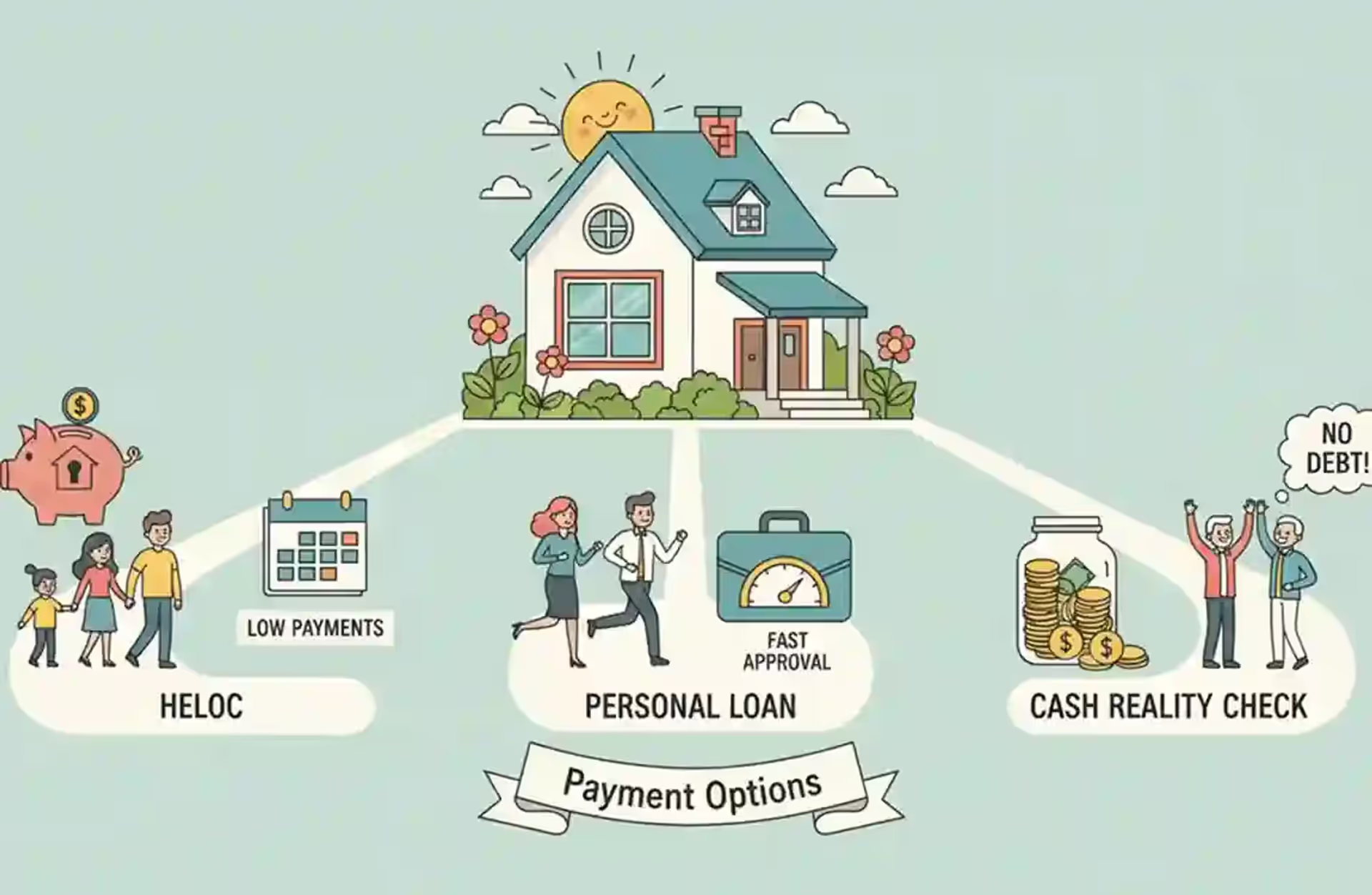
If the ghosting contractor exhausted your renovation budget, leaving you unable to hire a replacement contractor to complete the work, accessing emergency financing becomes critical for restoring habitability to your home and preventing further damage to the unfinished project. Each financing option presents different advantages and risks that must be evaluated based on your specific financial situation, the amount needed to complete the project, and your tolerance for various types of debt. The Navy Federal Credit Union's comparison of financing options provides excellent guidance on evaluating these alternatives based on your specific needs.
Home Equity Line of Credit (HELOC) A home equity line of credit offers significant advantages for homeowners who need flexible access to funds for completing an abandoned project, particularly when the total amount needed remains uncertain due to unknown conditions that will only become apparent as work progresses. Unlike a fixed loan that provides a single lump sum, a HELOC functions similarly to a credit card secured by your home equity, allowing you to draw funds as needed up to your approved limit and pay interest only on the amount actually borrowed. According to SoFi's analysis of home equity products, HELOCs typically offer lower interest rates than personal loans or credit cards because they are secured by your home equity, with average rates in the 8-10% range for well-qualified borrowers as of late 2024. The flexibility of a HELOC proves particularly valuable for rescue projects, where hidden costs from the previous contractor's substandard work frequently emerge during the completion process.
The primary risk of a HELOC lies in using your home as collateral—if you cannot make payments, you face potential foreclosure and loss of your home entirely. This risk is particularly concerning for homeowners who have already suffered significant financial losses from the contractor's abandonment and may have reduced financial resilience. Additionally, HELOCs typically have variable interest rates that can increase significantly if market rates rise, making long-term budgeting more challenging than with fixed-rate products. You will also need at least 15-20% equity in your home to qualify for most HELOC products, and the approval process typically takes two to six weeks, which may be too slow if your project requires immediate attention to prevent further damage.
Personal Loans for Project Completion Personal loans offer several advantages for homeowners facing contractor abandonment, particularly speed of funding and the absence of home equity requirements. Unlike HELOCs, personal loans do not use your home as collateral, meaning you cannot lose your house if you fail to make payments—though defaulting on any loan damages your credit and exposes you to collection actions. Personal loan approval and funding typically occurs within days rather than weeks, making this option particularly valuable when your project requires immediate attention to prevent weather damage, safety hazards, or further deterioration. The Experian comparison of financing options notes that personal loans work best for smaller project amounts in the $10,000 to $40,000 range, where the higher interest rates compared to home equity products do not create excessive total interest costs over the loan term.
The primary disadvantage of personal loans is their higher interest rates compared to secured lending products, typically ranging from 11-13% for well-qualified borrowers and potentially exceeding 20% for those with lower credit scores. Personal loans also provide a fixed amount at closing, meaning you cannot draw additional funds if your project costs exceed initial estimates—you would need to apply for a second loan, which may be difficult if you have already taken on significant debt from the first loan. Consider personal loans when you need relatively quick access to a known amount of money, you lack sufficient home equity for a HELOC, or you prefer not to put your home at risk as collateral for the loan.
Hiring a new contractor after experiencing ghosting requires extraordinary vetting that goes far beyond the standard due diligence you would apply to a normal project, both because your trust has been shattered and because your half-finished project presents unique challenges that not all contractors are equipped to handle. Many contractors avoid rescue projects entirely because assessing unknown work quality, addressing potential code violations hidden behind finished surfaces, and working around existing conditions created by another contractor requires specialized expertise and creates elevated risk of problems. The contractors willing to take on rescue work include some of the industry's most experienced professionals who have developed expertise in completing troubled projects—and also some opportunistic operators who see vulnerable homeowners as easy targets for inflated pricing. Distinguishing between these categories requires careful attention to specific indicators of genuine rescue experience.
During interviews with prospective replacement contractors, prioritize differentiating factors that demonstrate genuine experience with project rescue rather than simply general construction competence. A contractor with true rescue experience will actively listen to your story, express genuine empathy for your situation, and ask detailed questions about the previous contractor's work, the current project status, and any documentation you have about what was promised versus what was delivered. They should request to review your original contract, any permits that were pulled, and your complete payment history before providing a quote, as this information is essential for accurately assessing the scope of rescue work required. According to Massachusetts construction attorneys, the measure of damages when hiring a replacement contractor is the reasonable cost to complete the project and correct any defects, less the amount remaining unpaid on the original contract—making accurate assessment of existing conditions essential for both your budget planning and potential legal recovery.
Request specific references from rescue projects the contractor has completed previously, and actually call those references to ask detailed questions about their experience. A contractor who claims rescue experience but cannot provide references from actual rescue projects may be overstating their qualifications. During reference calls, ask specifically how the contractor handled discovering hidden problems from the previous contractor, whether they completed the project within the quoted price or required significant change orders, and whether the homeowner would hire them again for a similar situation. Be wary of any contractor who insists on starting completely over and ignoring all completed work "to do it right," as this approach often maximizes the contractor's revenue rather than your value. Experienced rescue contractors know how to evaluate existing work objectively and preserve quality elements while correcting problems.
Any replacement contractor requesting large initial payments because "rescue work is riskier" or "I need to cover the last guy's mess" before even beginning work should be immediately disqualified from consideration. Experienced rescue contractors understand that homeowners in your situation have already been burned by trusting a contractor with significant upfront payment, and they design their payment structures to rebuild trust rather than exploit your vulnerability. The appropriate payment structure for rescue work mirrors best practices for any construction project: an initial deposit of no more than 10% to demonstrate commitment and cover initial permit and material costs, followed by milestone-based progress payments tied to specific, verifiable completion stages. According to the BBB's guidance on contractor disputes, milestone-based payment structures protect both homeowners and contractors by ensuring payments correspond to actual work completed rather than arbitrary calendar dates or contractor cash flow needs.
Require conditional lien waivers from all subcontractors and suppliers before each progress payment, protecting yourself from the mechanic's lien claims that devastated you during the original contractor's abandonment. A conditional lien waiver acknowledges that the party signing has been paid for work and materials provided to date, conditional upon the payment actually clearing—this protects you if the replacement contractor also fails to pay their subcontractors while simultaneously protecting the subcontractors' rights until payment is actually received. Maintain detailed records of all communications, payments, and site visits in a dedicated project file, applying the documentation discipline that your original contractor's abandonment taught you was essential. Never again pay a contractor without requiring the documentation that protects your investment.
The trauma of contractor ghosting creates permanent vigilance that, when channeled properly, transforms you into a smarter consumer who will never again be vulnerable to this type of exploitation. The preventative measures outlined here ensure you never experience this nightmare again, whether completing the current abandoned project with a rescue contractor or planning future renovations years from now. These practices represent the hard-won wisdom of thousands of homeowners who learned these lessons through devastating personal experience, compiled by consumer protection advocates and construction industry professionals into best practices that virtually eliminate the risk of contractor abandonment.
Before signing any contract or making any payment to a contractor, complete every step of a comprehensive verification process that confirms the contractor's legitimacy, financial stability, and track record. Verify the contractor's active license status and check for any complaints, disciplinary actions, or license suspensions through your state's contractor licensing board website, as most states now provide searchable online databases that allow instant verification. Confirm current insurance coverage by requesting certificates of insurance and calling the insurance company directly to verify the policy is active and provides adequate coverage—general liability coverage of at least $1 million and workers' compensation coverage for all employees. The National Association of State Contractors Licensing Agencies (NASCLA) provides resources for understanding licensing requirements and verification processes across different states.
Read online reviews across multiple platforms including Google, Yelp, and the Better Business Bureau, looking for a minimum of 20 reviews with an overall rating of 4 stars or higher before considering any contractor. Pay particular attention to negative reviews, looking for patterns of complaints about communication breakdown, project abandonment, or financial irregularities that might signal future problems. Call at least five recent references using a prepared questionnaire that asks specific questions about whether the project stayed on budget, whether there were timeline delays and how they were handled, how the contractor communicated throughout the project, and whether the reference would hire this contractor again without hesitation. These verification steps require perhaps two to four hours of effort but can save you tens of thousands of dollars and months of anguish.
Recovery from contractor ghosting is possible for homeowners who act decisively, pursue multiple recovery pathways simultaneously, and maintain the documentation discipline that supports legal remedies.
The following essential principles summarize the most critical lessons from this comprehensive guide: The following resources provide essential support for homeowners navigating contractor abandonment recovery: Recovery from contractor abandonment is a marathon requiring sustained effort over months rather than a sprint that resolves quickly. During the first month, focus on crisis stabilization: secure the property, document everything, file initial complaints with the BBB and your state licensing board, consult with a construction attorney about your legal options, initiate any applicable bond claims, contact your insurance agent about potential coverage, interview at least five replacement contractors to obtain detailed rescue estimates, and if applicable, file in small claims court and finalize emergency financing to hire your replacement contractor. Expect this first month to feel overwhelming as you juggle multiple urgent priorities simultaneously.
During months two through four, construction progresses on your new contract while legal proceedings advance in parallel. Attend any bond claim hearings, respond promptly to attorney requests for documentation, and provide detailed information to the district attorney if you are pursuing criminal charges. Expect emotional ups and downs during this period as the stress of the original abandonment combines with the anxiety of depending on a new contractor—this is normal and does not indicate that anything is wrong with your recovery process. Have your new contractor provide weekly progress reports with photographs to rebuild your sense of control and trust in the construction process. By months five through eight, your project should reach completion with final inspections, legal proceedings should conclude (typical bond claims resolve in 90-120 days), and you can begin the psychological healing and financial rebuilding process in earnest.
Being ghosted by a contractor represents one of the most stressful experiences a homeowner can endure, combining financial devastation, uninhabitable living conditions, and emotional betrayal into a perfect storm of crisis that can feel overwhelming. Yet countless homeowners navigate this nightmare successfully each year, emerging from the experience wiser, more empowered, and ultimately with completed projects that meet their original vision. Your path forward requires blending pragmatic action with self-compassion—taking methodical legal and financial steps while acknowledging the genuine emotional toll this experience has inflicted. Seek support from those who have walked this path before you through online communities and professional counseling, and transform your anger into advocacy that protects future homeowners from suffering the same fate.
The contractor who ghosted you counted on your helplessness, expecting that the complexity of the situation, the emotional devastation, and the apparent lack of clear options would prevent you from pursuing effective recovery. Prove them wrong by rebuilding stronger, smarter, and more resilient than before. Your dream home remains achievable—it simply requires a different, more informed approach than your first attempt. The knowledge you have gained through this crisis transforms you from a vulnerable consumer into an empowered homeowner who will never again be an easy target for contractor fraud. Channel that knowledge into protecting your investment, completing your project, and helping others avoid the devastating experience you have survived.
DECEMBER 01, 2025
DECEMBER 01, 2025
DECEMBER 01, 2025
DECEMBER 01, 2025
NOVEMBER 28, 2025