

The Psychology of Color: How to Choose a Palette You Won't Regret
DECEMBER 01, 2025

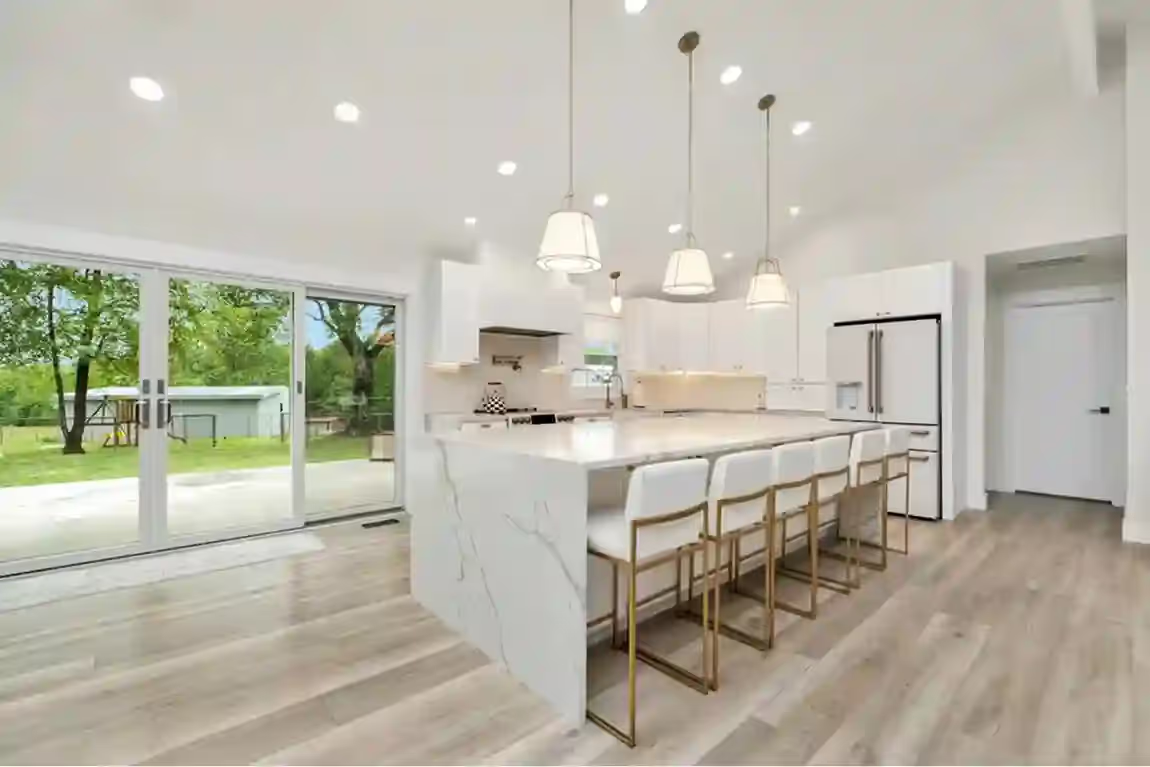
You saved hundreds of pins featuring pristine white kitchens with waterfall islands and brass accents. Your contractor delivers a functional space with slightly off-white cabinets and standard edges. The gap between your Pinterest board and reality feels like failure, even though you've gained exactly what you needed. This disconnect—the Pinterest Problem—afflicts the majority of remodeling homeowners, turning what should be an exciting transformation into a source of disappointment, budget anxiety, and decision paralysis. Social media doesn't just inspire; it distorts, creating expectations that real-world renovations can rarely meet. Understanding this phenomenon is the first step toward protecting your renovation experience from the corrosive effects of unrealistic digital standards.
The average homeowner spends 3-5 hours daily scrolling renovation content during the planning phase, immersing themselves in a carefully curated world of perfect spaces that bear little resemblance to everyday life. This digital immersion rewires expectations, creating a filtered reality where every project appears flawless, affordable, and effortless. The psychological impact is profound—decision confidence drops significantly after extensive social media research, replaced by FOMO-driven choices that prioritize appearance over function. According to research published in the National Institutes of Health, social media use can lead to negative comparisons with others and contribute to feelings of inadequacy, which directly applies to how homeowners evaluate their renovation outcomes against the polished images they consume online.
Understanding how platforms like Pinterest, Instagram, and TikTok manipulate perception allows you to harness their inspiration while protecting your project from unrealistic standards. This guide deconstructs the mechanisms of social media distortion, reveals the hidden costs of trend-driven decisions, and provides practical strategies for using digital tools constructively. You'll learn to distinguish between genuine inspiration and manufactured desire, set realistic budgets free from influencer distortion, and make choices that serve your actual life rather than your feed. The goal isn't to avoid social media entirely—that would mean missing valuable inspiration—but to engage with it consciously, understanding its limitations and biases so you can extract useful ideas without absorbing harmful expectations.
Social media platforms operate on algorithms designed to maximize engagement, not provide accurate representation of reality. Content creators curate perfection—photos shot during golden hour, styled with fresh flowers, devoid of daily life's inevitable clutter and imperfections. This curation creates three fundamental distortions that systematically sabotage remodeling expectations, each reinforcing the others to create a comprehensive illusion of perfection that real renovations simply cannot match.
Survivorship bias ensures you only see successful outcomes in your feed. For every stunning reveal that goes viral, twenty mediocre or failed projects remain unposted, invisible to your scrolling thumb. This creates an illusion that high-end results are standard and easily achievable by anyone with a Pinterest board and some determination. You never see the budget overruns that forced painful compromises, the contractor conflicts that delayed projects by months, or the design choices that looked better in photos than they function in daily use. The platforms reward success with visibility, while failure disappears into algorithmic obscurity, leaving you with a fundamentally skewed understanding of what renovation typically looks like.
Scale and proportion manipulation happens through camera lenses that most viewers don't consciously consider. Wide-angle lenses make small spaces appear palatial, transforming a cramped galley kitchen into what looks like a spacious cooking haven. Strategic cropping eliminates awkward angles, low ceilings, and the various compromises that every real space contains. Your brain absorbs these images as reality, then experiences genuine shock when standing in your actual room with its actual constraints. That 48-inch range that looked perfect in a 400-square-foot kitchen becomes an impossible obstacle in your 150-square-foot space. The disconnection between image and reality creates disappointment that has nothing to do with the quality of your renovation and everything to do with the manipulation inherent in the images you've been consuming.
Styling distortion presents spaces that function as photo sets, not homes where people actually live their messy, complicated lives. Fresh flowers that would wilt within days, artfully arranged cookbooks that would fall over with the first pot lid, and spotless surfaces that require weekly professional cleaning investment—these elements create an aesthetic that simply doesn't exist in reality. When your real kitchen houses a coffee maker you use every morning, a mail pile that accumulates despite your best intentions, and your child's homework spread across the counter, it can't compete with these styled fantasies. The disappointment isn't in your space—it's in measuring daily life against professional photography designed specifically to create desire rather than document reality.
When evaluating renovation inspiration from social media, watch for these common distortion indicators: Social media systematically obscures true project costs, creating devastating budget misalignment that catches homeowners off guard mid-project. Influencers rarely disclose actual spending, and when they do, the numbers omit critical expenses that can double or triple the apparent cost. A "budget kitchen reno" post showing $8,000 likely excludes the $12,000 in labor provided free by a contractor spouse or family member. That "affordable" bathroom fails to mention the sponsored plumbing fixtures valued at $6,000 that the influencer received for free in exchange for posting. According to the Cost vs. Value Report from Remodeling Magazine, understanding true renovation costs requires looking at regional data from independent sources rather than social media claims, which consistently underrepresent actual expenses by significant margins.
"Cost-per-follower" economics drives systematic underestimation across all platforms. Creators gain followers by promising aspirational results for impossibly low costs, because that's what generates engagement and shares. A realistic $75,000 kitchen renovation gets ignored in feeds optimized for shareability; the same kitchen claimed at $25,000 goes viral because it tells people what they want to hear. The actual price is irrelevant to the creator's goals of building audience and securing sponsorships, but it's devastating to your financial planning when you base your budget on these distorted figures. You start a project expecting to spend $30,000 and discover mid-way that you're already at $45,000 with major expenses still ahead.
Geographic cost blindness compounds the issue in ways that social media actively obscures. A New York City renovation costs 3-4 times a Midwest project for identical work, but posts rarely include location details. Your budget based on aggregated "average" costs from national feeds will fall short by 40-60% when local labor rates and permit fees apply to your actual project. The Rocket Mortgage home renovation cost guide emphasizes that renovation costs vary significantly based on location, with factors like local labor rates, permit requirements, and material availability creating substantial regional differences that social media budgets simply ignore. What works in rural Texas has no bearing on what you'll pay in San Francisco or Boston.
Invisible expense categories consistently disappear from social media budgets, creating an incomplete picture that leaves homeowners financially blindsided. Permits ($500-2,000 depending on your municipality), dumpster rentals ($600-1,200 for typical projects), temporary kitchen setups during construction ($800-2,500), and design consultations ($2,000-5,000 for quality guidance) rarely appear in influencer posts. These aren't optional expenses in most renovations—they're necessary costs that influencers simply don't mention because they make projects appear less aspirational. Homeowners discover these costs mid-project, forcing compromises on visible elements that diminish results and satisfaction. You end up with cheaper countertops than you wanted because the permit fees ate into your material budget.
The paradox of choice overwhelms modern renovators in ways that previous generations never experienced. A Pinterest search for "kitchen backsplash" returns 50,000+ images, each representing a valid option that someone, somewhere found appealing. This abundance creates analysis paralysis—you become so consumed with exploring possibilities that making an actual decision feels impossible. Every choice you lean toward gets undermined by another beautiful image suggesting a different direction. The Decision Lab's research on choice overload demonstrates that while we assume more choice is beneficial, excessive options actually make choosing harder and reduce satisfaction with whatever we ultimately select. Applied to renovation, this means your extensive Pinterest research may actually be making your decisions worse, not better.
Algorithmic tunneling narrows your vision without you realizing it's happening, creating an illusion of exploration that's actually repetition. Once you engage with certain content—liking, saving, or lingering on particular images—platforms show you more of the same, creating an echo chamber that feels like broad exploration but actually represents algorithmic manipulation. You believe you're exploring broadly across all design possibilities, but you're actually seeing variations of 5-6 design trends that the algorithm has determined you'll engage with. This artificial limitation makes you think these are your only options, even when local showrooms offer dozens of alternatives that would better suit your space, budget, and lifestyle. The algorithm optimizes for engagement, not for helping you make good decisions.
Comparison fatigue sets in after viewing thousands of images over weeks or months of planning. Your brain loses the ability to distinguish genuine preference from mere familiarity. That subtle difference between honed and leathered marble finishes becomes paralyzing because you've seen both celebrated equally in professional photography. Without a framework for decision-making grounded in your actual needs and constraints, you default to whatever appears most frequently in your feed—which reflects algorithmic popularity, not suitability for your specific situation. According to the HelpGuide resource on social media and mental health, excessive social media use can trigger feelings of inadequacy and dissatisfaction, which directly applies to how homeowners evaluate their renovation options and outcomes against the curated perfection they see online.
Trend whiplash occurs when you save pins over months of planning while platforms continuously update what they show you. Your early favorites feature brass fixtures because that's what was trending when you started, but six months later, your feed fills with matte black because trends have shifted. You begin second-guessing original choices, believing your taste has evolved when really, the algorithm has simply shifted to promote different content. This causes mid-project change orders that inflate budgets by thousands of dollars and delay timelines by weeks, all because you're chasing an algorithmic moving target rather than making decisions based on timeless principles of good design that work for your specific situation.
Watch for these warning signs that social media is undermining your decision-making ability: Social media creates an expectation of perfection that real renovations can't achieve because real renovations happen in real spaces with real constraints. The tile layout that looked flawless in a professional photo reveals slight lippage upon installation because your subfloor has minor variations. The paint color that matched your screen perfectly appears different under your home's specific lighting conditions. These imperfections are normal—they're present in every renovation ever completed—but against the backdrop of digital perfection, they feel like failures that reflect poorly on your choices and your contractor's work.
Micro-obsession develops over invisible details that social media has trained you to notice but that would never register in normal daily life. You notice that your grout lines are 1/16th inch wider than the Pinterest photo, or that your cabinet hardware alignment is off by 1/8 inch from perfectly level. In a pre-social media era, these variations wouldn't register—they fall within professional tolerances and are literally invisible to most observers. Now they dominate your perception, creating dissatisfaction with an otherwise successful project. Research from the U.S. Surgeon General's advisory on social media notes that social media can significantly impact how people perceive themselves and their circumstances, creating negative comparisons that affect mental health and satisfaction with real-world outcomes.
Labor illusion convinces you that professional results are DIY-achievable because social media compresses expertise into entertainment. Time-lapse videos compress 40 hours of expert tiling into 60 seconds of satisfying content. You don't see the tile setter's 15 years of experience that prevented lippage and achieved perfect grout consistency, the hundreds of jobs that built muscle memory and problem-solving intuition. When your DIY attempt reveals amateur skill—uneven spacing, visible adhesive, grout that cracks within months—you feel personally inadequate rather than realistically impressed by professional mastery that takes years to develop. The failure isn't in your attempt; it's in social media creating the illusion that expertise is easily replicated by watching a few videos.
Material mythology ignores the fact that photographed spaces are often shot immediately after installation, before real life takes its toll and materials begin their natural aging process. That pristine marble countertop hasn't experienced a single red wine spill or hot pan placement. The unblemished hardwood hasn't seen a single scratch from a pet's claws or a dropped utensil. Your kitchen will gain character through use—that's the nature of lived-in spaces—but you measure it against a fantasy of perpetual perfection that exists only in staged photographs. Real materials patina, scratch, and show wear; that's not failure, it's the nature of physical objects used in daily life.
Social media isn't inherently harmful—it's a tool that becomes dangerous when used unconsciously, without awareness of its biases and limitations. Intentional, limited consumption transforms it from sabotage into genuine inspiration. The key is establishing boundaries and maintaining perspective, treating social media as one input among many rather than the primary source of your renovation vision. According to research from Georgetown University on digital detox benefits, reducing screen time can significantly improve mental health metrics, with participants in one study experiencing improvements comparable to established therapeutic treatments. Applied to renovation planning, this suggests that limiting social media consumption may actually improve your decision-making and satisfaction.
Time-bound research prevents endless scrolling that distorts expectations and exhausts decision-making capacity. Set a timer for 30 minutes, three times per week, to gather inspiration. Outside these windows, avoid design content entirely. This prevents algorithmic tunneling that narrows your vision and decision fatigue from constant exposure to options. When your research time ends, close the apps and move on with your day. This discipline feels restrictive at first but actually liberates you from the endless scroll that creates anxiety rather than clarity.
Curatorial discipline means saving only images that represent your actual space constraints, not fantasy versions of what you wish you had. That 800-square-foot kitchen is irrelevant if yours is 180 square feet—saving it only creates disappointment. Create separate boards for "dream home" (fantasy you acknowledge as unrealistic) and "my renovation" (images that actually apply to your situation). When your realistic board contains 10-15 images that share common elements, you've identified your true style and can stop searching. More pins don't equal better decisions; they equal more confusion and analysis paralysis.
Source verification involves clicking through to original articles and blog posts rather than just saving images. What was the actual budget for this project? What problems emerged during construction? How does the space look two years later after real life has happened? Apartment Therapy's "House Tours" often include follow-up visits showing how spaces age—this reality check is invaluable for calibrating expectations. When you see that the "perfect" kitchen now has scratches on the counters and dings on the cabinets, you understand that your space will look the same, and that's normal rather than failure.
Local grounding means taking inspiration to local showrooms before finalizing decisions, experiencing materials in person rather than through screens. The tile that looked perfect on your screen may clash with your home's natural light or look completely different in person than it did in photographs. Viewing materials physically provides tactile information—texture, weight, quality—that screens can't convey regardless of image resolution. You need to touch the countertop sample, see the cabinet door in your actual kitchen light, feel the flooring under your feet. Digital inspiration should start the conversation, not end it.
Implement these practices to transform social media from saboteur to useful tool: Successful renovations begin with realistic expectations grounded in your actual circumstances rather than digital fantasy. This framework replaces aspirational imagery with achievable satisfaction, focusing on what will improve your daily life rather than what photographs well for strangers on the internet. The Ramsey Solutions guide to renovation budgeting emphasizes that successful renovations require knowing exactly what you want, creating detailed plans, and sticking to them despite temptations to expand scope—advice that directly counters the expansive fantasizing that social media encourages.
Function-first planning identifies your actual pain points before considering aesthetics. Does your kitchen lack prep space for how you actually cook? Do you need more storage for the items you actually own? Does your bathroom have poor ventilation that creates mold problems? Solve these real problems before copying aesthetic trends that might not address your actual needs. A kitchen that works beautifully for your daily routines matters infinitely more than one that looks perfect in photos but doesn't function for how you live. Start with a list of what frustrates you about your current space, then design solutions for those specific problems.
Budget honesty means adding 30% to every social media cost estimate to account for hidden expenses and geographic differences, then verifying against local reality. Use local contractor quotes—not Pinterest captions—as your financial baseline. Get at least three quotes from reputable local contractors for every major element of your project, and use the middle quote as your planning number. The Fidelity budgeting guide for renovations suggests using your home's value to determine appropriate renovation spending, with guidelines assigning percentages of overall home value to different rooms. This grounded approach prevents the budget fantasy that social media creates.
Timeline reality accepts that your project will take 30-50% longer than the influencer's "weekend makeover" because real life includes complications that edited videos don't show. Permits require review periods measured in weeks, not days. Material delays happen when supply chains hiccup. Contractor scheduling means coordinating multiple professionals who have other projects. Planning for realistic timelines reduces stress when the inevitable delays occur because you expected them rather than being blindsided. Build buffer time into your schedule and consider it a pleasant surprise if things finish early rather than a disaster when they don't.
Good-enough acceptance recognizes that 90% accuracy is success, not failure, and that the remaining 10% is invisible to everyone except you. Your tile lines won't be perfectly straight to the millimeter because your walls aren't perfectly straight either. Your paint touch-ups will be slightly visible in raking light if you look for them. These imperfections are characteristics of real homes built and renovated by real humans, not failures of your project or your contractor. Professional perfection exists only in photographs; lived-in excellence is a different, more achievable, and ultimately more satisfying standard.
Sometimes the healthiest choice is complete disconnection from renovation content. After you've gathered initial inspiration, step away from social media entirely during critical decision phases. This prevents last-minute second-guessing and allows you to commit to choices based on genuine preference rather than algorithmic pressure. Research published in the National Institutes of Health on digital detox confirms that digital detox interventions can lead to favorable improvements in both addiction behaviors and health-related outcomes, with many participants finding the experience less challenging than anticipated and reporting sensations of pleasure and relief. Applied to renovation, stepping away from social media can help you feel confident in your decisions rather than perpetually uncertain.
Decision lockdown means once you've selected and ordered materials, stop looking at alternatives entirely. Unfollow design accounts temporarily. Mute renovation hashtags. Ignoring content prevents the "Did I make the right choice?" anxiety that plagues mid-project homeowners and leads to expensive change orders. Your decision was made with good information at the time; second-guessing it based on new images you see weeks later serves no purpose except to create doubt and dissatisfaction. The Cleveland Clinic's guide to digital detox notes that taking breaks from technology can help improve sleep, relationships, and mood—all of which benefit homeowners navigating the stress of renovation.
Comparison abstinence during installation protects your satisfaction with results that are genuinely good but not photographically perfect. When your backsplash is being installed, don't browse other backsplash options. When your cabinets are painted, don't repin cabinet colors. When your floors are going in, stay off the flooring hashtags. Trust your earlier decision-making process, which happened when you were rested and thoughtful rather than stressed and reactive. The materials you chose are good; looking at alternatives now only creates regret for roads not taken.
Post-project perspective requires waiting 3-6 months after completion before sharing photos online or extensively comparing your results to others. This allows you to experience the space as a home, not a photoshoot set. You'll cook in your kitchen, shower in your bathroom, and live your actual life in these spaces. When you do share, include honest captions: "This corner makes me happy, even if the grout lines aren't perfect." Your authenticity helps other homeowners develop healthier expectations and contributes to a more honest online conversation about what renovation actually looks like.
Understanding the psychological mechanisms that make social media so effective at distorting expectations can help you resist its pull. According to UC Davis Health research on social media impacts, social media is often called a "highlight reel" displaying only the best parts of users' lives, which increases feelings of dissatisfaction with our own day-to-day reality. This dynamic applies directly to renovation content, where you see only the highlights—beautiful reveals, perfect details, satisfied homeowners—while the struggles, compromises, and disappointments remain invisible.
The dopamine feedback loop that social media creates reinforces constant checking and comparison behaviors. Each like, save, or new beautiful image triggers a small dopamine release that keeps you coming back for more. This neurological mechanism, designed to keep you engaged with platforms, works against your interests when planning a renovation because it rewards consumption over decision-making. You feel good scrolling and saving but anxious and uncertain when you try to translate that consumption into actual choices. Recognizing this pattern can help you interrupt it—the pleasure of scrolling is real, but it's not moving you toward your goal of a completed renovation you love.
The fear of missing out (FOMO) that social media exploits makes you question every decision because somewhere, someone might be doing it better or differently. According to the Johns Hopkins research on social media and mental health, social media can create negative comparison patterns that affect how we perceive ourselves and our choices. Applied to renovation, this means that every image of a beautiful kitchen that's different from your planned kitchen triggers doubt about whether your choice is right. The solution isn't finding the "perfect" option—it's recognizing that perfection doesn't exist and that your good choice is good enough.
Developing resistance to social media's distorting effects requires conscious effort and specific strategies, but it's entirely achievable with practice. Start by curating your feed to include accounts that show real-life, lived-in spaces rather than only styled photographs. Follow renovation bloggers who document both successes and failures, who share real budgets with itemized expenses, and who show their spaces months or years after completion when real life has happened. These honest accounts calibrate your expectations toward reality.
Create accountability systems that keep you grounded during the planning process. Share your budget with a trusted friend who will ask hard questions when you start talking about options that exceed what you can afford. Establish a "final decision" deadline after which you stop researching and start executing. Write down your non-negotiable priorities before you start scrolling so you have something to return to when social media pulls you toward different directions. These external structures compensate for the internal uncertainty that constant comparison creates.
Practice gratitude for what your renovation will accomplish rather than disappointment for what it won't. Your new kitchen may not look like the $150,000 showpiece you saved on Pinterest, but it will have the storage you desperately needed, the prep space that makes cooking enjoyable, and the lighting that makes the room feel warm and welcoming. Focus on the specific improvements that will change your daily life, not the aesthetic details that differ from impossible standards. The renovation that improves your actual Tuesday evening cooking experience is more valuable than the one that would photograph better for strangers.

Social media doesn't have to be your renovation's enemy. When you understand its mechanisms of distortion—filtered reality, budget misinformation, decision paralysis, and perfection pressure—you can engage consciously rather than unconsciously, extracting value while protecting yourself from harm. The platforms aren't going away, and they do offer genuine benefits: inspiration for possibilities you might not have considered, examples of how others solved similar problems, and visual references that help you communicate with designers and contractors. The key is using them as tools rather than being used by them.
The Pinterest Problem stems not from the platforms themselves, but from mistaking inspiration for instruction and fantasy for standard. The images you see online are not documentation of typical results; they're carefully curated content designed to generate engagement and sell products. By setting realistic expectations grounded in your actual space, budget, and lifestyle, you transform social media from a source of sabotage into a genuine tool for discovery. Start with your real constraints, use social media to explore options within those constraints, then step away to make decisions with confidence.
Your renovation's success won't be measured in likes or repins, but in how well it serves your daily life for years to come. That kind of satisfaction—the quiet confidence of a home that truly works for how you actually live—never needs a filter. When you cook dinner in your new kitchen without fighting for counter space, when you shower in your renovated bathroom without dealing with mold, when you relax in your updated living room that finally feels like home, you'll understand that the real measure of renovation success has nothing to do with how the space photographs and everything to do with how it functions. That's the standard worth pursuing, and it's entirely achievable when you free yourself from the distorting influence of social media's impossible perfection.
Social media creates filtered reality where survivorship bias, scale manipulation, and styling distortion make renovations appear flawless, affordable, and effortless—setting impossible standards for real projects that include inevitable compromises, realistic budgets, and the normal imperfections of construction in real spaces with real constraints.
Budget distortion occurs through hidden costs, geographic blindness, and "cost-per-follower" economics that systematically underestimate true project expenses by 40-60%, leading to mid-project financial crises that force painful compromises on visible elements. Using local contractor quotes and independent cost resources rather than social media claims is essential for realistic financial planning.
Decision paralysis from algorithmic tunneling and comparison fatigue overwhelms homeowners with thousands of options, creating anxiety and second-guessing that delays projects, inflates costs through change orders, and ultimately reduces satisfaction with results that would otherwise be considered successful.
The perfection premium makes normal imperfections feel like failures, while micro-obsession over invisible details and material mythology ignore the realities of lived-in spaces that all exhibit wear, patina, and the character that comes from actual daily use.
Strategic digital detox, reality frameworks based on function-first planning, and conscious social media consumption transform these platforms from saboteurs into supportive tools for genuine inspiration, allowing you to extract useful ideas while protecting your mental health, budget, and ultimate satisfaction with your renovation.
Armed with understanding of how social media distorts renovation expectations, you can now approach your project with clarity and confidence. Remember that the gorgeous kitchens filling your feed represent the top fraction of a percent of outcomes, shot by professionals under ideal conditions, often funded by budgets that weren't disclosed honestly. Your renovation, completed within your actual budget and constraints, represents real success in a world where most homeowners struggle to complete projects on time and within financial limits.
The space you create will be uniquely yours—not a replica of someone else's vision scaled to impossible perfection, but a genuine improvement to your daily life crafted around your specific needs, preferences, and realities. That authenticity, that fit to your actual life rather than an imagined ideal, is worth more than any Pinterest-perfect photograph. When you live in a space designed for how you actually function, rather than how you think you should function based on social media imagery, you discover a deeper satisfaction that no number of likes or saves could ever provide. Your home should serve you, not serve as content for strangers.
DECEMBER 01, 2025
DECEMBER 01, 2025
NOVEMBER 28, 2025
NOVEMBER 28, 2025
NOVEMBER 28, 2025