

What a Good Contractor Will Never Say — and Why It Matters
DECEMBER 01, 2025
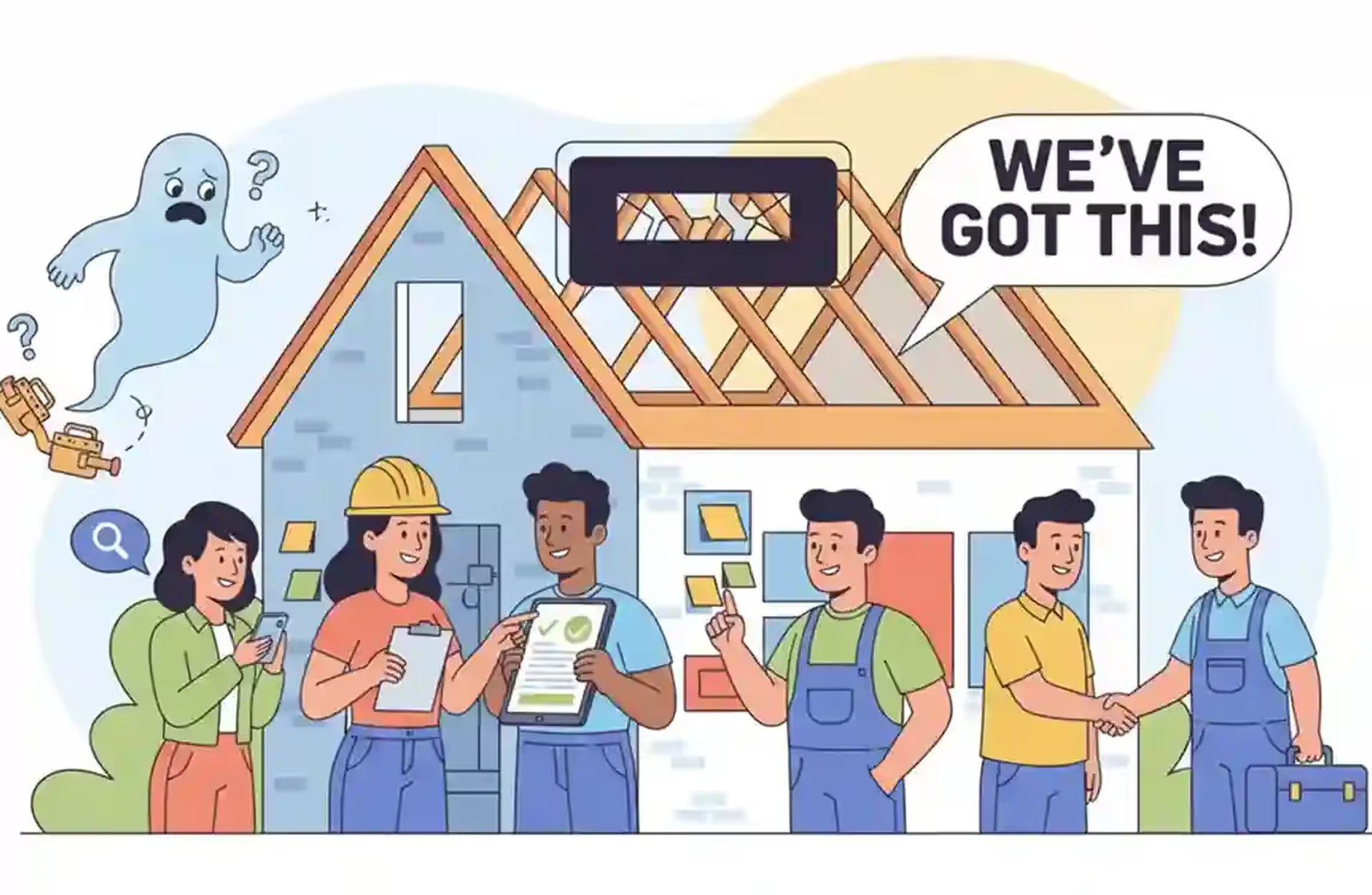
Imagine this nightmare scenario: You've invested $45,000 into your dream kitchen renovation. The cabinets are half-installed, your walls are torn open, and suddenly your contractor's phone goes straight to voicemail. His website is down, his social media profiles have vanished, and your neighbor mentions seeing his truck loaded with equipment at 6 AM yesterday morning. You've been ghosted—abandoned with a demolished home, depleted savings, and no clear path forward. This devastating situation, known in the home improvement industry as "contractor ghosting," affects thousands of homeowners annually and represents one of the most traumatic experiences a property owner can face during what should be an exciting home improvement journey.
Whether due to financial mismanagement, legal troubles, personal crises, or outright fraud, the result is the same: you're left holding the debris while your contractor has disappeared with your money and your dreams of a completed project. The emotional toll compounds the financial damage—feelings of violation, betrayal, and helplessness can be overwhelming when you realize that someone you trusted with your home and your savings has abandoned you mid-project with no explanation and no apparent intention of returning. This comprehensive crisis management guide provides immediate, actionable steps to protect your finances, your property, and your sanity when your remodeler disappears mid-project, offering a roadmap through one of homeownership's most distressing situations.
Contractor ghosting represents more than just poor communication or project delays—it's a complete cessation of contact after payment has been rendered and work has commenced, leaving homeowners stranded without recourse or explanation. Unlike simple scheduling conflicts or temporary communication lapses, ghosting involves the contractor becoming completely unreachable through all channels, often absconding with deposits and payments for unfinished work while leaving behind a trail of destruction in your home. According to the Better Business Bureau, complaints against home improvement contractors consistently rank among the top ten consumer issues nationwide, with thousands of homeowners reporting abandonment, incomplete work, and contractor disappearances each year. The pattern is disturbingly common: a contractor establishes credibility through initial professionalism, collects substantial payments, and then vanishes when the project is only partially complete, leaving homeowners with few immediate options for recourse.
The reasons behind these disappearances vary widely, though certain patterns emerge repeatedly in consumer protection investigations. Some contractors take on more projects than they can realistically handle, using deposits from new clients to finish previous jobs in an unsustainable financial juggling act until the house of cards inevitably collapses. When the money runs out and they can no longer pay subcontractors or purchase materials, disappearing becomes easier than facing the mounting obligations. Others face genuine personal emergencies—health crises, family problems, substance abuse issues, or legal troubles—that make completing your project impossible, though their failure to communicate these challenges constitutes abandonment regardless of the underlying cause. In worst-case scenarios, you've fallen victim to a deliberate scam where the contractor never intended to finish the work, having planned from day one to pocket your money and vanish before accountability arrives.
Understanding that you're likely not this contractor's first victim can shift your perspective from personal betrayal to pragmatic problem-solving, recognizing that predatory contractors often leave trails of abandoned projects and devastated homeowners in their wake. The emotional impact—feelings of violation, anger, shame at being deceived, and overwhelming helplessness—is real and valid, and you should acknowledge these feelings rather than suppressing them. However, channeling that emotional energy into methodical recovery efforts proves far more productive than dwelling on the injustice of your situation, and recognizing that others have navigated this nightmare successfully can provide hope during the darkest moments of the crisis.
While hindsight is 20/20, recognizing common warning signs can help you act preventatively before complete abandonment occurs or confirm your worst suspicions early enough to minimize additional losses. The Federal Trade Commission's consumer protection division has documented numerous tactics that scammers and troubled contractors employ before disappearing, and learning to recognize these patterns can help you take protective action before the situation becomes irretrievable. Payment pressure represents one of the most significant warning signs—requests for unusually large upfront payments exceeding 10-15% of the total project cost, demands for cash-only transactions that leave no paper trail, or pressure to bypass written contracts entirely should trigger immediate concern. Legitimate contractors understand that milestone-based payment schedules protect both parties, and those who demand substantial funds before demonstrating progress often have ulterior motives or desperate financial situations.
Communication breakdown often precedes complete disappearance, manifesting as missed appointments without explanation, unanswered calls and texts that previously received prompt responses, vague or evasive answers about project timelines, or persistent blaming of suppliers and subcontractors for delays that never seem to resolve. When a contractor who was previously responsive and engaged suddenly becomes difficult to reach, your internal alarm should sound loudly. Document all attempted contacts by sending certified letters requiring written responses within specified timeframes, creating a paper trail that demonstrates the contractor's failure to communicate and supports future legal action. Subcontractor issues provide another critical warning sign—when electricians, plumbers, or other trades show up unannounced at your property complaining about non-payment, refuse to work until they receive money, or express surprise that you're asking them to continue, the general contractor's financial situation has likely deteriorated to a critical point.
A disorganized job site can signal impending abandonment when it progresses beyond normal construction messiness into apparent neglect. Tools left behind for extended periods, work materials disappearing from the site rather than being installed, and visible evidence that no progress has occurred for more than a week despite contractor assurances all suggest the project is failing. Take photographs documenting the state of the site each day, creating timestamped evidence of abandonment that proves invaluable for insurance claims and legal proceedings. License and insurance problems represent perhaps the most serious red flags—excuses for not showing a valid license, expired insurance certificates, or inability to pull necessary permits indicate either unlicensed work or a contractor in serious trouble with regulatory authorities. The moment a contractor asks for final payment before 90% of the work is complete, or requests money for undefined "emergency expenses," you should pause all payments and demand detailed explanations before proceeding.
When you realize your contractor has ghosted, time becomes your most critical asset—the actions you take in the first two days can determine whether you recover your money or lose it permanently, whether your home suffers additional damage, and whether you preserve the evidence necessary for successful legal action. This emergency protocol prioritizes legal protection, financial recovery, and project salvage in a systematic approach designed to maximize your chances of emerging from this crisis with minimal additional losses. Every hour of delay potentially allows the contractor to move assets beyond your reach, allows weather damage to compound construction damage, and allows evidence to deteriorate or disappear.
Your first priority must be securing your property against additional damage and theft. If the contractor had keys to your home, change the locks immediately to prevent unauthorized access or removal of materials already delivered to your site. If the construction has left your home exposed to elements—open walls, missing roofing, incomplete windows—install temporary protection such as tarps, plywood barriers, or plastic sheeting to prevent water damage that could compound your losses. Install temporary security cameras if the site is accessible to thieves, as construction sites with valuable materials attract opportunistic theft, and your insurance may not cover theft of materials left unsecured on an abandoned project. Document everything through extensive photography before any protective measures alter the scene—photograph every inch of the project capturing tool marks, unfinished wiring, exposed plumbing, structural elements, and the overall state of incompletion. Create a video walkthrough with narration describing what was supposed to be completed versus what's actually done, establishing a clear record of the contractor's failure to perform.
Stop all payments immediately through every available channel. If you paid by credit card, call your issuer within 24 hours to initiate a dispute under federal consumer protection laws that may allow chargebacks for services not rendered. For checks that haven't cleared, contact your bank immediately about stop payment orders—though this only works if the contractor hasn't already cashed them. Document every payment you've already made including dates, amounts, payment methods, check numbers, and what project phase each payment supposedly covered, creating the financial record essential for legal proceedings and insurance claims. Contact your homeowner's insurance agent to determine whether your policy provides any coverage for contractor abandonment—some policies include "construction abandonment" or "contractor fraud" riders that provide coverage for completing abandoned projects, though this coverage is far from universal. Ask specifically about any coverage that might apply and file a claim if applicable, even if you're uncertain about coverage, since the claims process can clarify your options. Begin researching the contractor's background by searching their business name with keywords like "scam," "complaint," "lawsuit," and "abandoned" to discover whether other homeowners have experienced similar treatment. Check the Better Business Bureau's complaint database, your state's Attorney General website, and local court records for pending civil or criminal cases against the contractor.
Send a formal demand letter via certified mail with return receipt requested to every address you have on record for the contractor—their business address, the address on their contractor license, any home address you may have, and any PO Box listed on correspondence. The letter should state clearly that they have abandoned your project in violation of your contract, specify the damages you've suffered, demand response within seven days, and warn that failure to respond will result in legal action including reports to licensing boards, police, and civil courts. This formal notice creates a legal record demonstrating you made reasonable efforts to resolve the matter before escalating to authorities, and sometimes—particularly when contractors have faced genuine emergencies rather than planning to defraud you—a formal demand letter prompts their return or at least communication about the situation.
Creating comprehensive documentation of every financial loss you've suffered proves invaluable for legal proceedings, insurance claims, bond claims, and potential criminal complaints against the contractor. Develop a detailed spreadsheet tracking every payment made to the contractor, including dates, amounts, payment methods, check numbers or transaction IDs, and what work phase each payment was intended to cover. This documentation establishes the breach of contract and quantifies your damages with the specificity courts and insurance companies require. Include receipts for materials you purchased that the contractor was supposed to supply but didn't, proving additional out-of-pocket costs beyond the original contract price that resulted from the contractor's failure to perform.
Document temporary repairs you've made to protect your property from further damage—the cost of tarps, sealants, plywood, and other protective materials represents mitigation expenses that may be recoverable through legal action or insurance claims. If your home became uninhabitable due to the abandoned project, track all housing costs including hotel stays, short-term rentals, extra mileage to temporary housing, and any additional expenses incurred because you couldn't live in your home. Some insurance policies and civil judgments cover these displacement costs, but only if you can document them thoroughly. Pay for professional assessments from other licensed contractors to evaluate the damage and estimate completion costs—these independent evaluations provide credible third-party verification of substandard or incomplete work that carries weight in legal proceedings. Track any lost wages resulting from time off work to manage the crisis, meet with attorneys, appear in court, or supervise emergency repairs, as these economic damages may be recoverable through small claims court or civil litigation.

Your legal options depend on your contract terms, the contractor's license status, the amount of money involved, and the specific laws of your state, but multiple pathways exist for pursuing recovery of your losses. Understanding these options helps you choose the most effective recovery strategy without wasting money on legal fees that might exceed your potential recovery. The National Association of State Contractors Licensing Agencies provides resources for understanding contractor licensing requirements in your state and can direct you to your state's licensing board for filing complaints and pursuing bond claims against licensed contractors who have abandoned projects.
Small claims court represents your most cost-effective legal option for losses under your state's jurisdictional limit, which typically ranges from $5,000 to $15,000 depending on your location. No attorney is required for small claims proceedings, filing fees generally run under $100, and judgments in your favor are legally binding and enforceable. Bring your contract, all payment records, photographs documenting the abandoned project, records of your attempts to contact the contractor, and estimates from other contractors for completing the work. The informality of small claims court works in your favor if you're well-organized and can present your case clearly, and many ghosting contractors fail to appear for hearings, resulting in default judgments that you can then pursue through wage garnishment or asset seizure.
Licensed contractors must carry surety bonds that provide financial protection for consumers harmed by contractor misconduct, and filing a claim against this bond through your state's contractor licensing board often provides faster recovery than litigation. Bond amounts typically range from $10,000 to $50,000 depending on your state and the contractor's license classification. The California Contractors State License Board provides an example of how state licensing boards handle consumer complaints and bond claims, and similar processes exist in most states with contractor licensing requirements. The bond claim process typically moves faster than litigation and doesn't require hiring an attorney, though you must act quickly because most states impose strict deadlines—often 60-90 days from abandonment—for filing bond claims.
If subcontractors or material suppliers file mechanic's liens against your property for non-payment by the ghosting contractor, you face the prospect of paying twice for the same work—once to the contractor who absconded with your money, and again to the unpaid subcontractors who have legitimate claims. According to FindLaw's guide to mechanic's liens, these liens create legal claims against your property that must be addressed before you can sell or refinance. File a "notice of dispute" immediately upon receiving any lien notice, and consult with a construction law attorney about your options for defending against liens while pursuing the contractor for the original payments. In some cases, paying the subcontractors directly and then pursuing the contractor for reimbursement proves the most practical path forward, though this depends on your financial resources and the specific circumstances of your case.
If the contractor took your money with no intention of completing work—essentially stealing through false pretenses—you may have grounds for criminal complaints as well as civil remedies. File a police report documenting the theft and contact your district attorney's consumer fraud unit about potential criminal prosecution. Criminal proceedings can pressure contractors to make restitution to avoid jail time, and even if prosecution doesn't result in your personal recovery, it creates a record that protects future homeowners from the same predator. For large losses exceeding $25,000, consider hiring a construction law attorney who can pursue damages through civil court, attach contractor bank accounts, place liens on contractor property, and potentially pierce corporate veils if the contractor operated behind an LLC to shield personal assets. Many construction attorneys handle clear-cut fraud cases on contingency, meaning you pay nothing unless you recover money. You can report contractor fraud through the FTC's Report Fraud portal, which collects data on fraudulent contractors and may inform future enforcement actions.
Every state imposes strict deadlines for filing legal claims, and missing these deadlines can permanently bar your recovery regardless of how strong your case might otherwise be. Breach of contract claims typically allow 3-6 years depending on your state, but contractor bond claims often require notice within 60-90 days of the abandonment date—a deadline that arrives much faster than most homeowners realize while they're still processing the shock of abandonment. Mechanic's lien disputes also have specific timeframes for homeowner responses, and missing these deadlines can result in valid liens becoming enforceable against your property even when the underlying contractor fraud should have released you from liability. Consult your state's contractor licensing authority immediately to understand the specific timeframes that apply to your situation, and consider consulting with an attorney if you're uncertain about any applicable deadlines.
Minimizing your financial hemorrhage becomes priority number one once immediate property security is addressed, because every day your project sits abandoned increases costs through weather damage, material theft, and continued housing displacement if your home is uninhabitable. The money you've already lost to the ghosting contractor is likely gone for the immediate term regardless of legal proceedings that may eventually recover some portion, so focusing on stemming ongoing losses proves more productive than obsessing over already-departed funds. Conduct a realistic assessment of what remains to be done, what it will cost to complete with a reputable contractor, and how you can finance completion without destroying your financial stability.
If you've exhausted your renovation budget paying the ghosting contractor, several financing options exist for completing the project and restoring your home to habitability. A home equity line of credit (HELOC) provides immediate access to funds at relatively low interest rates if you have available equity in your home, though you should use these funds strictly for completion costs rather than speculative investments while your situation remains uncertain. The Consumer Financial Protection Bureau provides educational resources about home equity products and other financing options that may help you navigate emergency funding needs. FHA's Section 203(k) rehabilitation mortgage program allows you to roll completion costs into your mortgage through a federally-backed loan, though this requires hiring FHA-approved consultants and following specific procedures that add time to the process. Personal loans offer faster approval than equity products but typically carry higher interest rates—shop credit unions, which often provide more favorable terms than commercial banks for emergency lending. Some reputable replacement contractors partner with lenders offering 0% promotional financing periods, though you should read fine print carefully to understand when promotional rates expire and what standard rates will apply thereafter.
Hiring a new contractor after being ghosted requires extraordinary vetting because your trust has been shattered and your project presents unique challenges that can scare away inexperienced builders or attract predators seeking vulnerable victims. Rescue projects—taking over abandoned work started by another contractor—involve complications that standard new-construction projects don't present, including uncertainty about hidden work quality, potential code violations requiring correction, and coordination challenges with existing partially-completed systems. Your ideal replacement contractor has specific experience completing abandoned projects and understands the unique challenges involved. The BBB's guidance on hiring trustworthy contractors provides comprehensive recommendations for vetting contractors that become even more critical when you're recovering from a traumatic abandonment experience.
When vetting potential replacement contractors, certain behaviors signal trustworthiness while others should prompt immediate concern. Positive signs include willingness to visit the abandoned site and provide a detailed written assessment before discussing pricing, requests to see your original contract and payment schedule to understand the project history, references specifically from clients where they completed similar rescue projects rather than just standard new construction, errors and omissions insurance that specifically covers takeover work, and at least five years of licensing history with a clean complaint record. Warning signs that should cause you to walk away include reluctance to take over "someone else's mess" without demanding a huge price premium that seems designed to discourage you, insistence on starting completely over while ignoring work that was properly completed, vague or evasive responses about their experience with rescue projects, recent licensing with limited track record, or any request for large upfront payments before demonstrating competence on your specific project.
When interviewing potential replacement contractors, ask specific questions that reveal their experience and approach to rescue projects: "How many abandoned projects have you completed, and can I speak directly with those homeowners about their experience?" "What specific challenges do you foresee with my project based on what you see today during your site assessment?" "Will you honor the existing permits, or do we need to start the permit process over with the building department?" "How do you handle discovering code violations or substandard work from the previous contractor—who bears those remediation costs?" "What's your payment schedule specifically for rescue projects, and how does it differ from your standard new-build payment terms?" "Do you provide lien waivers from all subcontractors and suppliers after each progress payment?" Legitimate rescue contractors expect these questions and answer them transparently, drawing on their experience with similar situations to explain exactly how they'll approach your project's unique challenges. Verify every claim by checking licenses through your state's contractor licensing board, calling all references with specific questions about the rescue experience, and researching the contractor's complaint history through the Better Business Bureau's business profiles.
The trauma of being ghosted creates lasting vigilance that, properly channeled, ensures you never experience this nightmare again whether you're completing the abandoned project or planning future renovations. These preventative measures represent hard-won wisdom from homeowners who've survived contractor abandonment and from consumer protection professionals who've studied patterns of contractor fraud. Implementing these safeguards consistently on every project—no matter how trustworthy a contractor seems—provides protection that costs little but saves enormously when problems arise.
Before signing any contract or making any payment, complete thorough verification of the contractor's credentials and reputation. Verify their license is current and in good standing through your state's contractor licensing board, confirming both that a license exists and that it remains active with no pending disciplinary actions. Confirm active insurance coverage including both general liability (minimum $1 million coverage) and workers' compensation—and request current certificates of insurance that you can verify directly with the insurance company rather than trusting documents the contractor provides. Obtain the contractor's surety bond information and verify it's active with the bonding company, as this bond provides your financial protection if problems arise. Read online reviews thoroughly on Google, Yelp, and the BBB, looking for patterns in complaints rather than isolated negative reviews, and seeking a minimum of 20 reviews with 4+ average stars before considering a contractor. Request at least five recent references and call all of them with specific questions about communication, timeline accuracy, handling of problems, and overall satisfaction—not just "were you happy?" but "what went wrong and how did they handle it?" The Minnesota Attorney General's guide to mechanic's liens and contractor protection provides excellent guidance on protecting yourself during construction projects that applies broadly regardless of your state.
Structure your contract and payment schedule to maintain leverage throughout the project rather than surrendering control through large upfront payments. Never pay more than 10% of the total contract price—or $1,000, whichever is less—as an initial deposit before work begins. Use a detailed written contract with payment milestones tied specifically to inspections and verified completion of defined work phases, not calendar dates that arrive regardless of progress. Include specific completion dates with penalty clauses for delays that aren't attributable to homeowner-caused changes or documented force majeure events. Require lien waivers from all subcontractors and material suppliers before each payment, protecting yourself from paying twice for the same work. Consider setting up project payments through a third-party escrow service that releases funds only upon verified milestone completion, providing an additional layer of protection that legitimate contractors readily accept.
Protect yourself by tying payments to verifiable completion stages rather than calendar dates or contractor requests, maintaining leverage throughout the project while ensuring contractors receive fair compensation for completed work. A well-structured milestone payment system might allocate 10% as an initial deposit upon contract signing, permits pulled, and materials ordered. The next 20% becomes due when demolition and rough-in work is complete, verified by building inspector approval of electrical, plumbing, and framing. Another 20% is released when drywall and insulation are installed with inspection passed. Cabinets and fixtures installation triggers the next 25% payment when all permanent installations are complete and functional. Finishing work completion releases another 20% when a punch list has been created and 95% of work is visually complete. The final 5% is held until final inspection passes, all lien waivers are received from every subcontractor and supplier, and warranty documents are provided. This structure ensures you never have more money invested than the value of completed work, maintaining leverage throughout the project while treating contractors fairly for work actually performed.
Beyond the financial and logistical nightmares, contractor ghosting inflicts genuine psychological trauma that deserves acknowledgment and intentional healing. The violation of trust, invasion of your home, financial devastation, and feelings of powerlessness can trigger anxiety, anger, shame, and even depression that persists long after the practical problems are resolved. Many victims report symptoms similar to post-traumatic stress: hypervigilance about new contractors and home improvement projects, obsessive documentation and verification, difficulty sleeping, rumination about what they could have done differently, and strained relationships with partners who may blame each other for the contractor choice or financial decisions. These reactions represent normal responses to abnormal events—you are not overreacting, and your emotional distress is legitimate and valid.
Coping with the emotional aftermath requires intentional strategies that acknowledge the trauma while building toward recovery. Joining support groups—online communities like Reddit's home improvement forums or local homeowner advocacy groups—connects you with others who've walked this path and understand your experience without judgment. Sharing your story reduces isolation, provides practical advice from those who've navigated similar situations, and reminds you that sophisticated scammers have deceived intelligent, careful people for centuries. Consider seeking professional support from a therapist familiar with financial trauma who can help you process the betrayal, rebuild trust, and develop healthy coping mechanisms. Knowledge combats helplessness: educating yourself about contractor law, construction processes, and your legal rights restores a sense of control that the ghosting experience stripped away. Channel your anger constructively by writing detailed reviews on every platform where the contractor has a presence, reporting to licensing boards and consumer protection agencies, and sharing your story to protect future homeowners from the same predator.

Your experience contributes to a larger pattern that demands systemic change in how contractors are licensed, monitored, and held accountable for abandoning consumers. Several states have strengthened contractor regulations in response to epidemics of ghosting and fraud, and consumer advocacy groups continue pushing for national standards that would provide consistent protection regardless of where you live. California's Contractors State License Board has increased bond requirements and implemented stricter financial qualification standards for contractors. Florida created a dedicated Construction Industry Enforcement Unit within the Attorney General's office to investigate and prosecute contractor fraud. Texas now mandates that contractors place customer deposits in escrow accounts until work actually begins, preventing the common pattern of using new customer deposits to finish previous projects.
Advocate for similar consumer protection measures in your state by contacting your state legislators, sharing your story with local media, and connecting with consumer advocacy organizations pushing for reform. Public pressure drives legislative action, and your voice—particularly when combined with other victims willing to share their experiences—can prevent future homeowners from suffering the same fate. Many states lack adequate contractor licensing requirements, provide insufficient bonding protection, or fail to aggressively pursue contractors who repeatedly abandon projects. By telling your story publicly, supporting consumer protection legislation, and holding regulators accountable for enforcement failures, you transform your painful experience into meaningful advocacy that protects your community.
Recovery from contractor ghosting is a marathon rather than a sprint, and maintaining realistic expectations about the timeline helps you persist through setbacks without becoming discouraged. This month-by-month framework keeps you focused on essential tasks while avoiding the overwhelm that leads to paralysis and missed deadlines. During the first month, focus on stabilization: the first week involves securing your property, documenting everything, and filing initial complaints with licensing boards and consumer protection agencies. The second week should involve consulting with an attorney about your legal options, initiating bond claims if applicable, and contacting your insurance company about potential coverage. During the third week, interview replacement contractors, obtain repair estimates from at least three reputable companies, and begin developing a completion plan. The fourth week focuses on filing small claims court paperwork if applicable and finalizing emergency financing arrangements.
During months two and three, focus shifts to legal proceedings and reconstruction beginning simultaneously. Attend all scheduled court dates, respond promptly to bond company document requests, and finalize your contract with the replacement contractor after thorough vetting. Construction can begin during this period, though expect emotional ups and downs as progress reminds you of the original trauma while also demonstrating that completion is possible. Months four through six typically see project completion, final inspections, and conclusion of most legal proceedings. This period also marks the beginning of genuine psychological healing as your home returns to normalcy and the crisis recedes into memory. Use this time to share your story publicly, helping others avoid the same fate while processing your own experience through advocacy.
The following resources provide critical support for homeowners navigating contractor abandonment: Being ghosted by a contractor represents one of the most stressful experiences a homeowner can face—the financial devastation, the destruction of your living conditions, and the emotional betrayal combine to create a perfect storm of crisis that can feel insurmountable. Yet countless homeowners have navigated this nightmare successfully, emerging wiser, more empowered, and ultimately with completed projects that meet their original vision. Your path forward requires blending pragmatism with self-compassion: taking methodical legal and financial steps while acknowledging the genuine emotional toll and seeking support from those who understand your experience.
The contractor who ghosted you counted on your helplessness—they assumed you would be too overwhelmed to pursue legal action, too embarrassed to report their fraud publicly, too traumatized to complete the project with someone else. Prove them wrong by rebuilding stronger, smarter, and more resilient than before. Secure your property, document your losses, pursue every available legal remedy, and find a trustworthy replacement contractor who can complete what the ghost abandoned. Transform your anger into advocacy that protects future homeowners from the same predator. Your dream home remains achievable—it just requires a different, more informed approach than your first attempt. Recovery is possible, and with methodical action, appropriate support, and determined persistence, you will emerge from this crisis with your home completed, your finances stabilized, and the hard-won wisdom to never be victimized again.
Remember these essential principles as you navigate contractor abandonment: DECEMBER 01, 2025
DECEMBER 01, 2025
NOVEMBER 28, 2025
NOVEMBER 28, 2025
NOVEMBER 28, 2025