
What a Good Contractor Will Never Say — and Why It Matters
DECEMBER 01, 2025
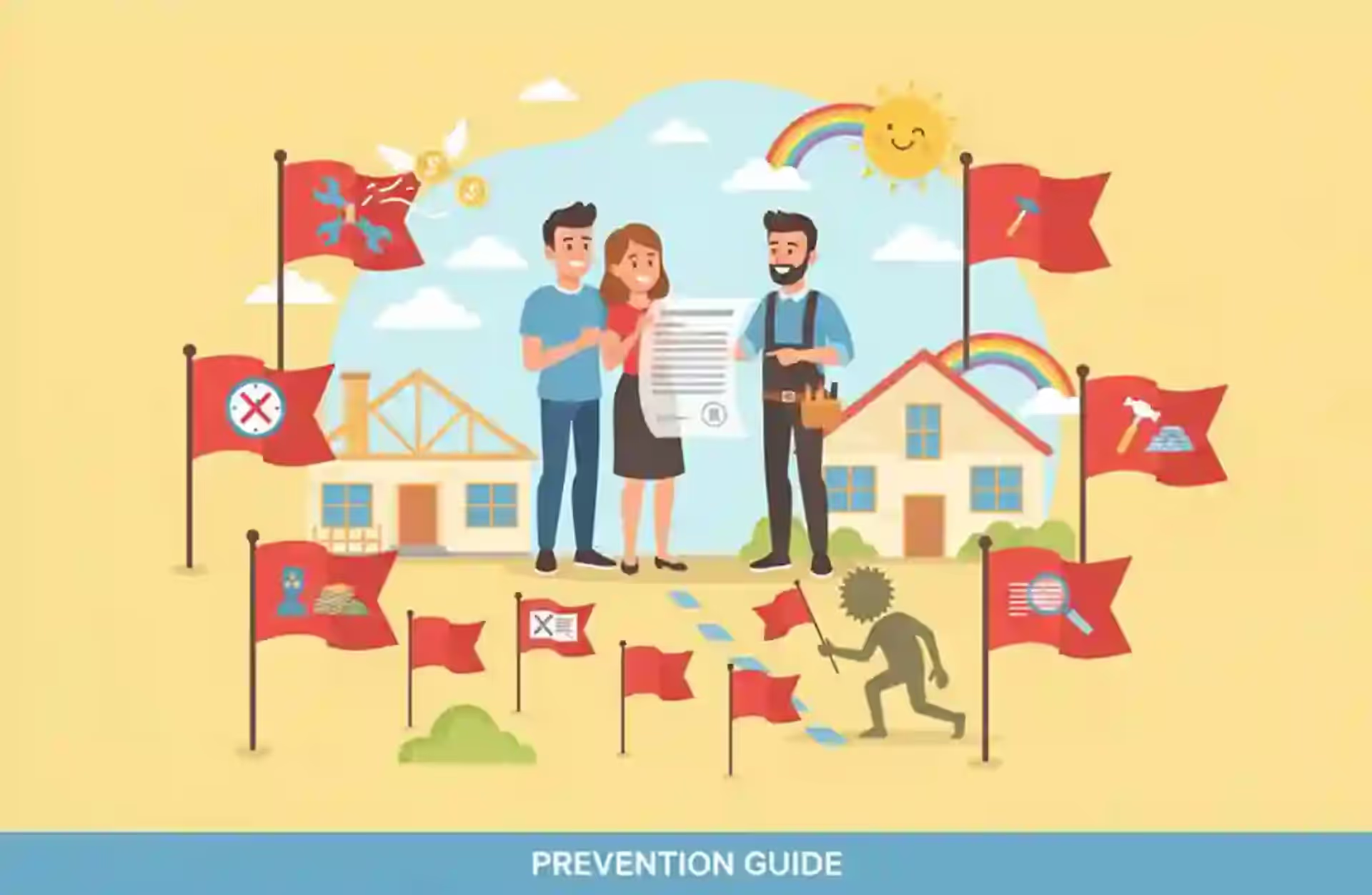
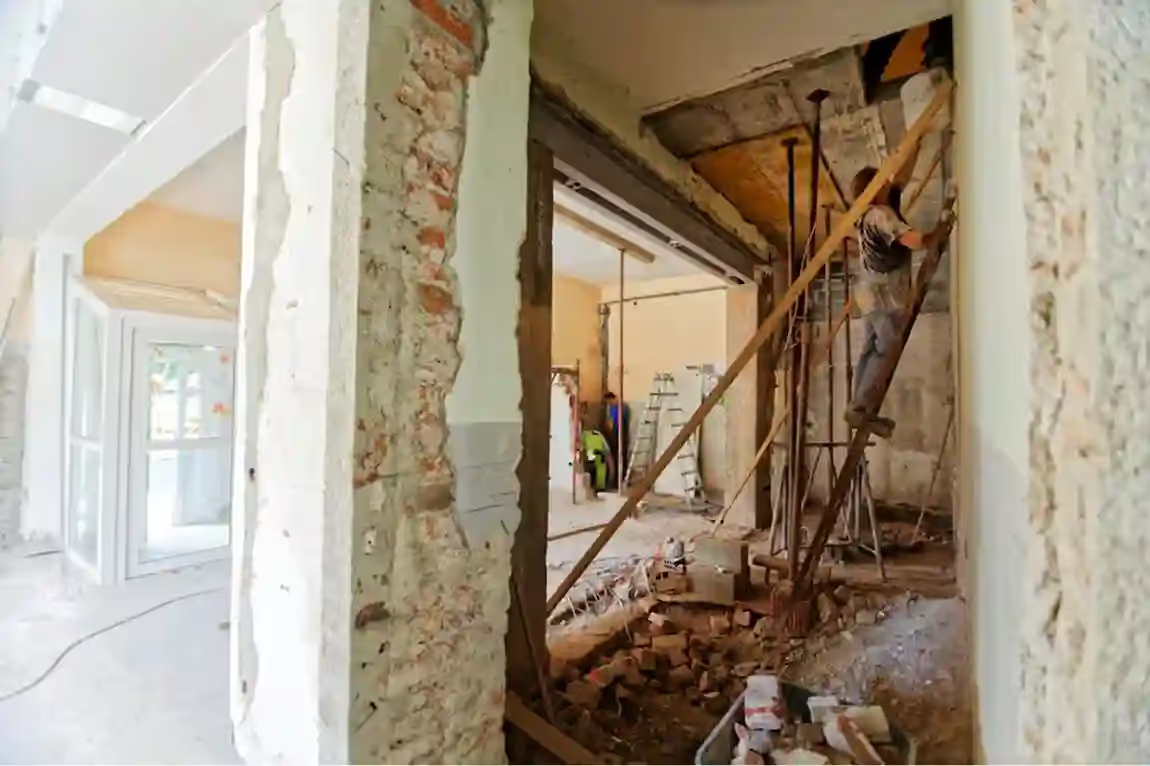
A homeowner excitedly signs a renovation contract after a charming contractor promises a dream kitchen at a price that seems unbelievably good. Three weeks later, the contractor demands an additional $15,000 for "unforeseen problems," stops answering calls after receiving the money, and leaves behind a demolished space with no permits pulled. This devastating scenario plays out thousands of times annually across the country, yet most homeowners miss the warning signs that were present from the very first meeting. Learning to spot these red flags before signing any agreement transforms you from an easy target into an empowered consumer who can walk away from disaster before it begins. The knowledge contained in this guide represents the collective experience of countless homeowners who learned these lessons the hard way, and your willingness to invest time in understanding these warning signs may save you tens of thousands of dollars and months of anguish.
The decision to hire a contractor represents one of the most significant financial commitments a homeowner makes, yet most people approach this process with surprising naivety that leaves them vulnerable to exploitation. They focus on portfolio photos and personality while overlooking critical warning signs that signal potential fraud, incompetence, or financial instability. According to the Federal Trade Commission's consumer protection guidance, home improvement scams consistently rank among the most common consumer complaints, with thousands of homeowners reporting everything from shoddy workmanship to complete project abandonment each year. The patterns of contractor fraud are remarkably consistent, which means that educated consumers can learn to recognize and avoid these traps before they become victims.
The financial and emotional devastation of hiring the wrong contractor extends far beyond the initial monetary loss, creating cascading problems that can affect your life for years. Projects left half-finished create uninhabitable conditions, forcing families into expensive temporary housing while they scramble to find legitimate contractors willing to complete someone else's abandoned work. Substandard work can cause long-term structural damage, code violations that complicate future sales, and safety hazards that endanger your family. The stress of managing a failing project takes a toll on mental health and relationships, often causing lasting damage that money alone cannot repair. This comprehensive prevention guide equips you with the knowledge to identify problem contractors before you sign on the dotted line, protecting your home, your finances, and your peace of mind through systematic evaluation and careful attention to warning signs.
Financial red flags often provide the clearest indicators of a contractor's intentions and stability, serving as objective measures that cut through charm and salesmanship to reveal underlying problems. How a professional handles money discussions, payment structures, and pricing reveals their business practices and ethical standards in ways that verbal promises cannot mask. These warning signs demand immediate scrutiny because they directly predict how your project will unfold financially and whether you will be left holding the bag when problems arise.
Legitimate contractors require modest deposits to secure materials and schedule work, but excessive upfront demands signal potential financial instability or fraudulent intent that should immediately raise your suspicions. Industry standards typically limit deposits to 10-15% of the total project cost or $1,000, whichever is less, providing enough capital to demonstrate commitment while limiting your exposure. According to California's contractor deposit laws, state regulations legally cap deposits at these amounts for residential work specifically to protect consumers from predatory practices. When a contractor requests 30%, 40%, or even 50% before swinging a hammer, they are likely using your money to fund other projects—a classic Ponzi scheme pattern in construction that inevitably collapses when new deposits stop arriving.
Contractors who demand excessive deposits may be robbing Peter to pay Paul, using deposits from new clients to complete previous jobs until the house of cards collapses and leaves multiple families devastated. This practice leaves you financially exposed if they walk away after receiving a large payment, and recovery through legal channels is often impossible because the contractor has already spent your money or declared bankruptcy. Any contractor demanding full payment before substantial completion is an immediate disqualification—this represents not just a red flag but a flashing neon sign of imminent ghosting. Reputable professionals have enough credit with suppliers and financial stability to fund materials without requiring pre-payment from clients, and they understand that progress payments tied to completed milestones protect both parties throughout the project.
Contractors who insist on cash-only transactions create an untraceable payment trail that serves their interests exclusively, leaving you without documentation when disputes arise or when you need to prove payments in court. While they may offer a tempting "cash discount" to justify this request, the real reason often involves tax evasion or avoiding a paper trail that could be used against them in future disputes or legal proceedings. Cash payments eliminate your ability to use credit card chargeback protections or prove payment amounts in court, stripping away consumer protections that could otherwise help you recover losses. Without canceled checks or credit statements, you have no verifiable record of how much you paid, and the contractor can simply deny receiving certain payments if disputes arise later. Legitimate businesses accept multiple payment methods and provide detailed receipts for every transaction, understanding that professional documentation protects everyone involved in the project.
High-pressure tactics accompanying payment requests represent another major warning sign that experienced scammers use to bypass your natural caution and critical thinking. Phrases like "this price is only good if you sign today," "I need your deposit by tomorrow to lock in material prices," or "my crew has a gap next week that won't last" create artificial urgency designed to bypass your due diligence and prevent you from consulting with others or researching the contractor properly. The National Association of Insurance Commissioners warns that reputable contractors will not pressure you to make quick decisions, recognizing that informed clients make better partners. Quality contractors provide written estimates valid for 30 days and respect your need to compare options, understanding that their value proposition should withstand scrutiny rather than requiring artificial pressure to secure your signature.
The adage "if it seems too good to be true, it probably is" applies perfectly to contractor estimates, serving as a reliable guide through the complex landscape of renovation pricing. Significantly lower bids than other contractors suggest several troubling possibilities: they are cutting critical corners on materials that will fail prematurely, they do not understand the project scope well enough to price it accurately, they plan to add costs later through manufactured "change orders," or they are using a deliberate bait-and-switch strategy to secure your signature before revealing the true cost. According to State Farm's guidance on contractor fraud, offers involving "leftover materials" from previous jobs or significant unexplained discounts should trigger immediate skepticism, as these claims often mask inferior materials or deceptive pricing strategies.
Cost creep represents a deliberate strategy where contractors bid low to win contracts, then systematically inflate prices through "unforeseen problems" and change orders that conveniently emerge after work begins and you have already invested significant money. While legitimate unexpected issues do occur in renovation projects, dishonest contractors manufacture problems that conveniently justify cost increases that were actually planned from the beginning. They might claim your walls have "hidden damage" that requires expensive remediation, or that material prices suddenly spiked after they quoted the job, or that code requirements changed unexpectedly. Protect yourself by requiring detailed, line-item estimates that specify materials by brand and model, labor hours, and markup percentages. Reputable contractors provide transparent pricing and willingly explain their markup structure, understanding that informed clients are actually better to work with than those who feel deceived. According to consumer protection experts at Justia, legitimate change orders should be rare, documented in writing with detailed justification, and require your signature before any additional work proceeds.
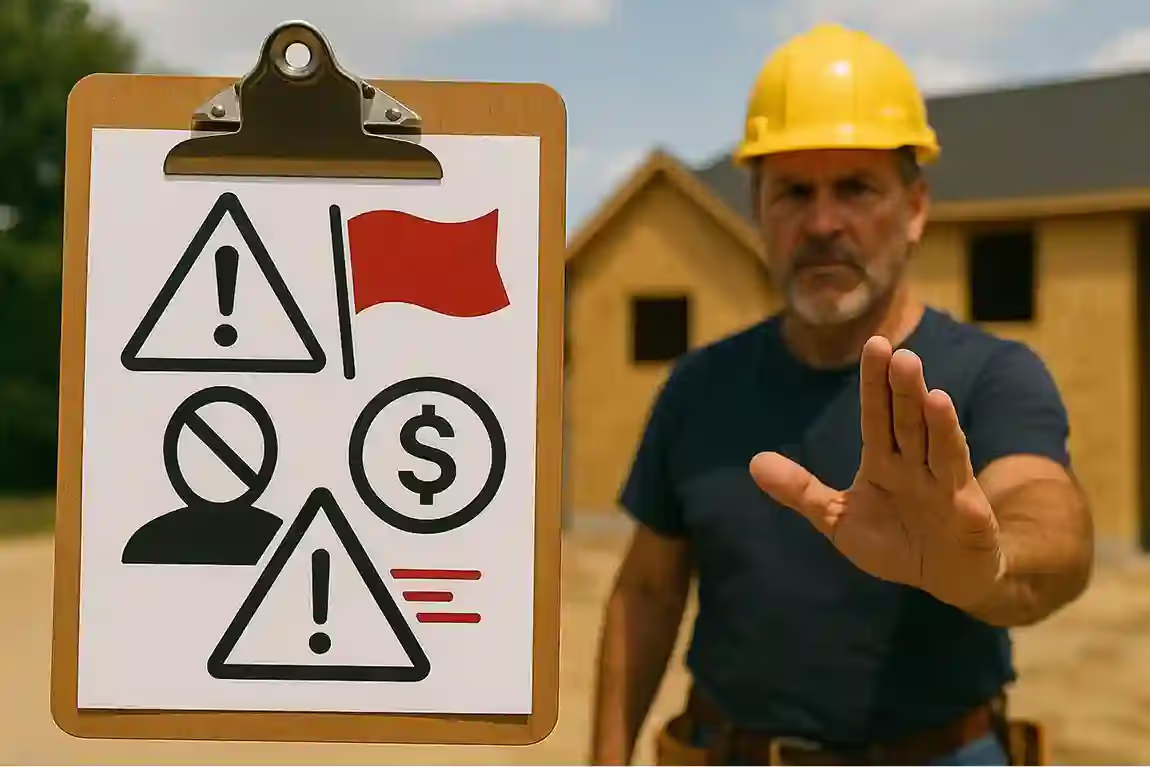
A contractor's professional conduct during initial meetings often predicts their behavior throughout the project with remarkable accuracy, revealing patterns that will either make your renovation smooth or transform it into a nightmare. Subtle cues in communication, punctuality, and presentation reveal their work ethic and respect for clients in ways that portfolios and references cannot capture. These intangible factors frequently separate reliable professionals from future nightmares, and learning to read these signals gives you a significant advantage in the selection process.
Effective communication forms the foundation of successful contractor-client relationships, and problems that emerge during the courtship phase invariably worsen after you sign the contract and the contractor no longer needs to impress you. When a contractor is slow to return calls, provides vague answers to direct questions, or repeatedly misses scheduled appointments during the initial consultation phase, these patterns will only intensify after work begins and you are committed financially. The DC Attorney General's consumer protection guidance emphasizes that contractors who pressure you to hire immediately or demand payment upfront demonstrate potentially deceptive business practices that should disqualify them from consideration regardless of other qualifications.
Watch for contractors who delegate all communication to assistants or who become evasive when you ask detailed questions about their process, materials, or timeline. Quality professionals welcome client questions and provide clear, thorough explanations, understanding that informed clients make better decisions and have realistic expectations that lead to smoother projects. Specific warning signs include taking more than 48 hours to return calls without explanation, providing estimates without visiting your property to assess conditions, refusing to put verbal promises in writing, and using high-pressure language to rush your decision. These communication failures predict a contractor who will leave you in the dark about progress, fail to notify you of problems, and become defensive when you raise legitimate concerns during the project.
A contractor who arrives late to your initial consultation without a valid reason and advance notification demonstrates disrespect for your time that typically reflects their broader approach to project timelines and commitments. This behavior pattern usually translates into extended project durations, missed completion dates, and cascading delays that affect your life plans in ways that seemed unimaginable when you signed the contract. Pay close attention to how contractors explain delays when they occur. Professionals acknowledge mistakes, take responsibility, and provide realistic solutions that demonstrate their commitment to your satisfaction. Problem contractors, however, develop elaborate excuses involving supplier issues, weather delays, personal emergencies, or workforce problems that somehow never seem to affect their competitors working on similar projects in the same area.
This pattern of blame-shifting indicates a fundamental lack of accountability that will frustrate you throughout the project as problems multiply and responsibility always falls elsewhere. Contractors who cannot accept responsibility during the sales process will certainly not accept it when facing the much greater pressures of active construction, tight timelines, and budget constraints. Look for professionals who demonstrate ownership of their commitments from the very first interaction, treating your time and concerns with the respect they deserve. The contractor who arrives on time, prepared, and focused during the initial meeting is likely to bring that same professionalism to managing your project.
A contractor's professional credentials and business history provide objective measures of their legitimacy that cannot be faked or talked around with charm and salesmanship. Problem contractors often operate on the fringes of legality, lacking proper licensing, insurance, or stable business structures that would protect you if problems arise. These verifiable factors separate qualified professionals from fly-by-night operators who will disappear when accountability becomes inconvenient, and taking the time to verify them represents one of your most important protections.
Every legitimate contractor carries proper licensing, insurance, and bonding that protects both themselves and their clients from the inevitable risks of construction work. When a professional makes excuses for not providing these documents—claiming "the license is in the mail," "insurance certificate is at the office," or "bonding isn't required for small jobs"—they are revealing their illegitimacy in a way that should immediately end your consideration of them. The National Association of State Contractors Licensing Agencies (NASCLA) provides resources for verifying contractor credentials across different states, making it easy to confirm that a contractor's claims match reality.
Verify licenses directly through your state's contractor licensing board before signing any agreement. Most states provide online lookup tools where you can confirm the license is active, current, and in good standing. Check for any disciplinary actions, suspensions, or complaints that might indicate patterns of misconduct. A history of violations suggests patterns that will likely repeat on your project. Request certificates of insurance directly from the contractor's insurance carrier rather than accepting photocopies from the contractor, which can be outdated or falsified. Ensure they carry both general liability insurance with a minimum of one million dollars in coverage and workers' compensation insurance that protects you from liability if workers are injured on your property. Without these coverages, you could be held personally liable for injuries to workers or damage to neighboring properties, transforming a renovation project into a financial catastrophe.
Contractors who have operated under multiple business names often do so to escape negative reviews, unresolved complaints, or legal judgments that would otherwise warn potential clients away. Search the contractor's name online with terms like "formerly known as," "DBA," or "doing business as" to uncover previous identities that might reveal problems they are trying to hide. Multiple name changes within a few years represent a major red flag that suggests the contractor is running from their past rather than building a legitimate reputation. Similarly, contractors who change business structures frequently—from LLC to corporation to sole proprietorship—may be attempting to dodge liability from previous projects or judgments. Ask direct questions about business history and search state business entity databases for ownership records that reveal the full picture. Legitimate professionals maintain stable business structures that build long-term reputations they are proud to stand behind.
A quality contractor proudly shares their portfolio and client references, understanding that their past work represents their best sales tool and that satisfied clients are their most effective advocates. When a professional hesitates to provide these materials—offering excuses like "our clients value privacy" or "we haven't updated our portfolio"—they are likely hiding subpar work or unhappy customers whose stories would change your mind. Request references from projects completed one to two years ago rather than just recent completions. Recent references may still be in the honeymoon phase before problems emerge, while older references reveal how the contractor handles warranty issues and long-term problems that only become apparent after initial enthusiasm fades. When calling references, ask specific questions: Did the project stay within budget? Were there delays and how were they handled? Would you hire this contractor again without hesitation? Visit completed projects if possible, as photographs can hide flaws that become obvious in person. Pay attention to details like trim work, caulk lines, and paint finishes—these elements reflect a contractor's standards and attention to detail that will determine the quality of your own project.
How a contractor approaches planning, permitting, and documentation reveals their professionalism and compliance with legal requirements in ways that predict your project's trajectory. Problem contractors often skip critical steps to save time or hide their lack of qualifications, creating future problems for homeowners that may not become apparent until years later when selling the home or facing an insurance claim. Understanding these process red flags protects you from contractors who cut corners at your expense.
Permit Avoidance and Regulatory Non-Compliance A contractor who suggests skipping permits to "save time and money" is advising you to break the law and potentially void your homeowner's insurance, creating risks that far outweigh any short-term savings. Permits exist to ensure work meets safety codes and building standards that protect your family and your investment. The FEMA guidance on contractor fraud emphasizes that reputable contractors provide written contracts detailing the scope of work, time frame, and cost—including all necessary permits and inspections. Unpermitted work can create massive problems when selling your home, cause insurance claim denials when you need coverage most, and create safety hazards that endanger your family for years to come.
Some contractors claim permits are not necessary for your project or suggest you pull the permits yourself as the homeowner to avoid involvement. This represents a major red flag that should immediately disqualify the contractor from consideration. Licensed contractors should handle all permit applications as part of their standard service, navigating the regulatory requirements that they understand and you likely do not. If they ask you to obtain permits, it often means they are not properly licensed in your jurisdiction or have had their license suspended for violations. Verify permit requirements through your local building department before work begins, as most municipalities provide online resources listing which projects require permits. Never trust a contractor who downplays the importance of regulatory compliance, as they are asking you to accept risks they are unwilling to take themselves.
Vague Contracts and Documentation Reluctance A contract that lacks specificity creates opportunities for disputes and cost overruns that benefit the contractor at your expense while leaving you without recourse. Problem contractors provide vague agreements with minimal detail about scope, materials, timelines, or payment schedules, using ambiguity as a tool to expand costs and reduce accountability. They may present a one-page "handshake deal" that leaves critical elements undefined, assuring you that "we'll work out the details as we go." The Texas Attorney General's consumer protection guidance warns that consumers should never sign a contract with blanks in it and should carefully read and understand every word before signing, as terms added later are unlikely to favor the consumer.
Essential contract elements include detailed scope of work describing exactly what will be done, specific materials with brand and model numbers rather than generic descriptions, realistic start and completion dates with consequences for delays, payment schedule tied to verifiable milestones rather than arbitrary dates, formal change order procedures requiring written approval before additional work, warranty information specifying coverage periods and limitations, and cleanup responsibilities that ensure your property is left in acceptable condition. Without these details explicitly stated in writing, you have no recourse when disagreements arise about what was promised versus what was delivered. Equally concerning is a contractor's reluctance to document changes or additions to the project as work progresses. Verbal agreements about extra work almost always lead to payment disputes that favor the party with the better memory or the greater willingness to misrepresent the past. Insist that all changes be documented through written change orders that specify the work, cost, and timeline impact before the work begins.
In the digital age, information about contractors is readily available through multiple sources that can reveal patterns invisible during a single consultation. Problem contractors often leave trails of dissatisfied customers, legal troubles, and business instability that diligent research can uncover before you commit to a relationship you will regret. Taking time to conduct thorough background research represents one of your most powerful protections against contractor fraud and incompetence.
Online reviews provide valuable insights into a contractor's track record, but require careful interpretation that goes beyond counting stars to understand what past clients actually experienced. Look for patterns rather than isolated complaints, as a few negative reviews among many positives are normal for any business. However, consistent complaints about the same issues—delays, cost overruns, poor communication, or defensive responses to problems—signal systemic problems that will likely affect your project as well. According to research on fake online reviews in the contractor industry, an estimated 15-30% of online reviews may be fake or manipulated, making it essential to read critically and look for specific details that indicate genuine experience rather than generic praise.
Pay close attention to how contractors respond to negative reviews, as this reveals their customer service approach when problems arise. Professional contractors address concerns respectfully and offer solutions that demonstrate commitment to customer satisfaction. Those who respond with anger, blame the customer for their own failures, or simply ignore complaints demonstrate poor customer service attitudes that will affect your experience when the inevitable problems emerge. Check multiple review platforms including Google, Yelp, Better Business Bureau, Houzz, and Angi. A contractor with glowing reviews on one site but numerous complaints on others may be manipulating their online reputation on select platforms while their true track record appears elsewhere. Also search for reviews under previous business names that the contractor may have abandoned to escape negative history.
Contractors who have been in business for many years have weathered economic cycles and built reputations that suggest stability and competence. While new businesses are not inherently bad, those with less than three years of operating history carry higher risk that warrants additional scrutiny. They may lack the financial reserves to handle unexpected project challenges, may be operating under a new name to escape past problems, or may simply lack the experience to manage complex projects effectively. Check the contractor's business address carefully. A residential address or PO Box suggests a small, potentially unstable operation that may lack the infrastructure to support your project. While many legitimate contractors work from home offices, a commercial location indicates greater investment in the business and suggests stability that benefits you as a client. Be particularly wary of contractors who cannot provide a stable business address or who have moved frequently.
Search for the contractor's name in local court records, as many jurisdictions offer online case search tools where you can find lawsuits, liens, and judgments against the contractor or their business. While occasional disputes are normal in the construction industry, multiple lawsuits from clients or suppliers indicate serious problems that will likely affect your project. Patterns of legal action suggest a contractor who fails to complete work properly, does not pay subcontractors and suppliers, or engages in business practices that generate conflict. The Pennsylvania Attorney General's contractor resources provide guidance on checking contractor registration and understanding your rights under state consumer protection laws, including deposit limitations and contract requirements that protect homeowners.
Problem contractors often employ sophisticated psychological tactics designed to override your better judgment and bypass the critical thinking that would otherwise protect you from making poor decisions. These manipulation strategies exploit common cognitive biases and emotional vulnerabilities that affect all consumers, regardless of intelligence or experience. Recognizing these tactics in real time helps you resist pressure and make rational decisions based on facts rather than manufactured emotions that cloud your judgment.
Artificial Scarcity and Urgency Creation Contractors create false urgency with claims like "material prices go up Monday," "my crew has a gap next week that won't last," or "this discount expires when I leave your driveway." These tactics pressure you to sign before completing due diligence, preventing you from researching the contractor, getting competing bids, or consulting with trusted advisors who might identify problems. According to Nationwide's guidance on contractor fraud, taking a contractor's word for details without getting them in writing represents a major vulnerability that scammers exploit. Legitimate contractors have stable pricing and scheduling that accommodates your decision timeline, understanding that their value proposition should withstand scrutiny rather than requiring artificial pressure to close the deal.
Never make significant financial decisions under pressure, regardless of how convincing the urgency seems or how much you like the contractor personally. Reputable professionals provide written estimates valid for at least 30 days and respect your need to get multiple bids, review contracts carefully, and consult with others before committing. The contractor who respects your process demonstrates confidence in their value proposition and treats you as a partner rather than a target. Any contractor who insists you must decide immediately is revealing that their offer cannot withstand the scrutiny that additional time would bring, which tells you everything you need to know about whether to proceed.
Emotional Manipulation and Trust Engineering Some contractors engage in rapport-building that feels genuine but actually serves manipulative purposes designed to lower your guard and bypass professional evaluation. They may share personal stories that create emotional connection, claim to share your values or background, present themselves as "just like family," or establish common ground that makes saying no feel personally awkward. While friendliness is positive and you certainly want to work with someone you can communicate with easily, excessive familiarity that bypasses normal business formalities can indicate manipulation rather than genuine connection. Watch for contractors who badmouth competitors rather than selling their own strengths, as this negative campaigning suggests insecurity and unprofessionalism that will manifest in how they handle your project. Quality contractors focus on their qualifications, their process, and their track record, letting their work speak for itself rather than tearing down others to look better by comparison.
The Strategic Sweet Spot Pricing Trap Experienced scammers price their bids just low enough to be attractive but not so low that they trigger obvious suspicion that would cause you to investigate further. They research competitor pricing and undercut by 10-15%—enough to win your business while still appearing legitimate and professional. This strategy works because homeowners naturally gravitate toward the best price, especially when the contractor seems otherwise qualified and personable. The U.S. News guidance on contractor scams warns that one in ten Americans has fallen victim to a contractor scam, with common tactics including low-ball bids that balloon into much higher final costs. Protect yourself by getting at least three detailed, line-item estimates from different contractors. If one bid is significantly lower than the others, ask the contractor to explain the difference in writing with specific details about materials, methods, and assumptions. Legitimate variations stem from different material grades, labor efficiencies, or scope interpretations that can be documented and compared. Vague answers or claims of "better supplier relationships" without documentation warrant significant skepticism.
Creating a systematic approach to vetting contractors ensures no red flags slip through the cracks due to the excitement of starting a project or the charm of a particular candidate. This repeatable process protects you across all future home improvement projects by providing a consistent framework that removes emotion from decision-making. The time invested in developing and following a systematic vetting process pays dividends far exceeding the modest effort required.
Effective vetting unfolds across multiple stages that progressively screen out problematic contractors while building confidence in those who remain. Stage one involves an initial phone screen where you ask about license status, insurance coverage, and experience with your specific project type, eliminating candidates who cannot provide clear answers to basic questions. Stage two brings qualified candidates to an in-person meeting where you assess professionalism, communication style, and punctuality—intangible factors that predict project success. Stage three involves reviewing written estimates with attention to detail, transparency, and pricing structure compared to other bids. Stage four requires calling at least five references from projects completed one to three years ago, asking detailed questions about budget adherence, timeline accuracy, problem-solving, and overall satisfaction. Stage five involves background verification where you independently confirm license status, insurance coverage, bonding, and search court records for lawsuits or judgments. Stage six brings finalists back for a second meeting to review contract terms in detail and address any concerns that emerged during your research.
This six-stage process typically spans two to three weeks, giving you time to notice inconsistencies, identify pressure tactics, and make a rational decision free from artificial urgency. Any contractor rushing this timeline is likely hiding something that additional time would reveal. Use the process as a filter that progressively eliminates candidates who cannot meet your standards, understanding that the goal is not to find a contractor quickly but to find the right contractor who will protect your investment and deliver the results you deserve.
Discovering red flags does not require confrontation or dramatic exits that could create uncomfortable situations or even safety concerns. Professional responses protect your interests while maintaining your safety and dignity. The goal is to disengage gracefully and move forward with better candidates who meet your standards.
When red flags appear during initial consultations, simply thank the contractor for their time and state that you are "considering multiple options and will be in touch if we decide to move forward." This neutral statement requires no explanation, avoids arguments about your reasoning, and ends the conversation professionally. Never tell contractors what red flags you discovered, as this information helps them improve their scams and target future victims more effectively. Simply disengage and add them to your mental "do not hire" list without explanation. Trust your instincts throughout this process—if something feels wrong, it probably is, and no amount of rationalizing should override the warning signals your experience is generating.
While you may choose not to hire a contractor with red flags, reporting them can protect other homeowners from the same problems you identified. File complaints with your state's contractor licensing board, the Better Business Bureau complaint system, and consumer protection agencies even if you did not suffer financial loss from the contractor. Your complaint creates a record that helps authorities identify patterns and take action against repeat offenders. If you encounter contractors engaging in clear fraud—such as operating without a license in a state that requires one—report them to your state's Attorney General office and local building department. These agencies have enforcement authority that can prevent future victims from suffering the losses you avoided through careful vetting.
Prevention remains your most powerful protection against contractor fraud, abandonment, and poor workmanship that can devastate your finances and your home. The following essential guidelines synthesize the key lessons from this guide into actionable principles you can apply immediately: Apply these guidelines to make confident decisions during your contractor selection process: Before signing any contract, verify the following credentials through independent sources: Spotting red flags before signing a contract represents your most powerful defense against contractor fraud, abandonment, and poor workmanship that can transform your dream renovation into a nightmare. While no vetting process guarantees perfection, systematic assessment dramatically reduces your risk of becoming another cautionary tale shared among friends and neighbors. The time invested in thorough vetting pays dividends in project success and peace of mind that far exceed the modest effort required. Remember that legitimate contractors welcome scrutiny because they understand that informed clients make better partners. Professionals with nothing to hide provide documentation proactively, answer questions thoroughly, and respect your timeline without pressure tactics. The contractor who becomes defensive when you ask questions or who rushes you toward a signature is revealing their unsuitability in the clearest possible terms.
Your home is your sanctuary and likely your largest financial investment. Protecting it requires vigilance, healthy skepticism, and the courage to walk away when red flags appear regardless of how much you want to proceed with the project. The contractor who pressures you to ignore warning signs is precisely the one you must avoid, as their urgency reveals that they cannot withstand the scrutiny that additional time would bring. Trust your instincts, verify everything independently, and never sign until you are confident you have found a true professional who will treat your project with the care, competence, and integrity it deserves. The extra time invested in proper vetting is an investment in your home, your finances, and your peace of mind that will pay dividends for years to come.
DECEMBER 01, 2025
DECEMBER 01, 2025
NOVEMBER 28, 2025
NOVEMBER 28, 2025
NOVEMBER 28, 2025