
What a Good Contractor Will Never Say — and Why It Matters
DECEMBER 01, 2025

A homeowner sends a text message asking when the new cabinets will arrive, receiving a thumbs-up emoji in response. Three days later, with no cabinets in sight, they call the contractor directly—voicemail. An email goes unanswered for a week. When they finally catch the contractor on-site, he says, "I thought you meant the bathroom cabinets, not the kitchen ones." Six weeks into a kitchen renovation, and a simple misunderstanding about cabinet delivery has derailed the entire project timeline. This communication breakdown, repeated in homes across America daily, costs homeowners thousands in dollars through delays, rework, and unnecessary stress. Learning to communicate effectively with contractors is not merely a nice-to-have skill—it represents the difference between project success and financial disaster, between a dream renovation and a nightmare experience that leaves lasting damage to your home and your wallet.
Communication failures between homeowners and contractors represent the single greatest predictor of project dissatisfaction, budget overruns, and timeline delays. According to research from the National Association of Home Builders, the overwhelming majority of project disputes stem from communication breakdowns rather than technical workmanship issues. Yet most homeowners enter contractor relationships using casual communication patterns better suited to friends than business partnerships involving tens of thousands of dollars. The stakes are simply too high to leave communication to chance, and the good news is that with deliberate effort and the right systems, you can dramatically improve your chances of a successful renovation experience.
The unique dynamics of contractor relationships create communication challenges unlike any other professional interaction in your life. Contractors work in your personal space, making decisions affecting your largest financial asset while operating in a technical field where you have limited expertise. This inherent power imbalance, combined with the stress of living in a construction zone, emotional fatigue from constant decision-making, and the financial pressure of watching your budget fluctuate daily, creates a perfect storm for misunderstandings that can rapidly escalate into serious conflict. Mastering contractor communication requires deliberate strategies, disciplined processes, and emotional intelligence that most homeowners never develop—until disaster forces them to learn the hard way through costly mistakes.
Contractor communication fails predictably due to several structural factors that are built into the very nature of renovation projects. First, the parties speak fundamentally different languages. Contractors use technical jargon, industry abbreviations, and trade-specific terminology that leaves homeowners confused and hesitant to ask clarifying questions for fear of appearing ignorant. When a contractor says, "We'll need to sister those joists and add a beam," most homeowners nod while having no idea what this means or why it costs $4,500. This communication gap creates fertile ground for assumptions that later explode into disputes when the work doesn't match expectations. The NAHB Residential Construction Performance Guidelines provides a helpful reference for understanding construction terminology, but most homeowners never access such resources until problems arise.
Second, communication channels fragment across text messages, emails, phone calls, and casual on-site conversations in ways that make tracking information nearly impossible. Important decisions get discussed verbally but never documented in writing, leading to memory conflicts weeks later when the work is complete and someone is unhappy. The contractor remembers agreeing to "standard" outlets while you recall specifying "decorative" ones—an $800 difference that becomes a contentious conflict requiring time, energy, and sometimes legal intervention to resolve. According to a Houzz survey on homeowner experiences, nearly half of homeowners say that a clear project timeline and better communication from contractors would have significantly improved their renovation experience. This finding underscores how pervasive the communication problem truly is across the industry.
Third, power dynamics skew conversations in subtle but significant ways that undermine effective communication. Contractors control the technical knowledge, project timeline, and daily progress, leaving homeowners feeling dependent and vulnerable. Many homeowners fear appearing ignorant or difficult, so they avoid asking questions that might seem "stupid" or that might annoy the contractor who holds so much power over their project's success. This reticence allows assumptions to go unchecked until they become expensive problems that require significant time and money to fix. The psychological toll of this dynamic cannot be overstated—homeowners often feel trapped between wanting to advocate for themselves and fearing that doing so will damage the relationship with the person responsible for their home.
The "Assumption Avalanche" effect compounds these problems exponentially over the course of a project. One unstated assumption multiplies rapidly as work progresses. Assuming the contractor will "match existing trim" leaves quality, material, and method undefined in ways that virtually guarantee disappointment. Assuming "paint is included" leaves color, sheen, and coat count unspecified, creating opportunities for conflict when the final result doesn't match your mental image. Each assumption becomes a potential conflict point that explodes into budget overruns and timeline delays, and by the time you realize the problem exists, significant work may have already been completed incorrectly. The financial and emotional cost of fixing these assumption-based mistakes far exceeds the small investment of time required to clarify expectations upfront.
Successful communication begins before the first hammer swings, during the contract negotiation phase when both parties are still highly motivated to establish a productive working relationship. Establishing clear protocols, expectations, and channels during this early phase prevents the vast majority of future conflicts that plague renovation projects. This upfront investment of two to three hours saves weeks of stress and thousands of dollars in preventable mistakes down the road. The NAHB guide to finding and hiring contractors emphasizes the importance of establishing mutual understanding about schedules and communication expectations before signing any contract, advice that successful renovation veterans consistently echo.
Append a one-page communication plan to your contract that both parties sign as a formal commitment to professional interaction standards. This document formalizes expectations and creates enforceable standards for how you will interact throughout the project, removing ambiguity about responsibilities and response times. The communication plan should specify the primary communication channel for all decisions, questions, and clarifications—typically email for its documentation capabilities. It should establish response time expectations, such as contractor response to emails within 24 hours on business days. The plan should define a weekly check-in schedule, such as Friday afternoon on-site meetings lasting 15 minutes to review progress and upcoming week priorities. It should outline an emergency protocol that distinguishes phone calls for true emergencies from text messages for urgent but non-emergency issues. The plan should require documentation of all verbal discussions in email within 24 hours, and specify that change orders must be written and emailed within 24 hours of discussion. Having these standards in writing before work begins transforms vague expectations into concrete commitments that both parties can reference when confusion arises.
Clearly establish who communicates with whom on larger projects to avoid mixed messages and confusion. You might deal with a project manager, site supervisor, and crew leader, each with different responsibilities and areas of expertise. Know which person handles which issues so you can direct questions appropriately and receive authoritative answers. Your role as homeowner involves making final decisions, approving change orders, providing payments on schedule, communicating preferences and concerns, documenting everything, maintaining records, and tracking the timeline against original commitments. The contractor's role involves executing technical work according to specifications, managing the schedule, coordinating trades, providing expertise and explaining technical requirements, providing daily updates, notifying you of issues, and submitting change orders for any additional work. Shared responsibilities include problem-solving, timeline adjustments, quality concerns, material selections, finish details, maintaining a clean worksite, respecting property, and ensuring safety for everyone involved. When roles are clearly defined, accountability follows naturally.
Establish a "no surprises" principle as a cornerstone of your working relationship: the contractor alerts you immediately to any deviation from plan, unexpected condition, or potential delay. This early warning system prevents small issues from becoming crises that derail your project and budget. Specifically agree that the contractor will notify you within 24 hours of discovering any condition that could affect budget, timeline, or quality. This includes supply delays, accidental damage, code compliance issues, or design problems that emerge during construction. Early notification gives you time to make informed decisions rather than reacting under pressure when options are limited and costs are higher. The emotional benefit of this approach is equally important—knowing that you will hear about problems promptly reduces the anxiety that comes from wondering what might be going wrong behind closed doors.
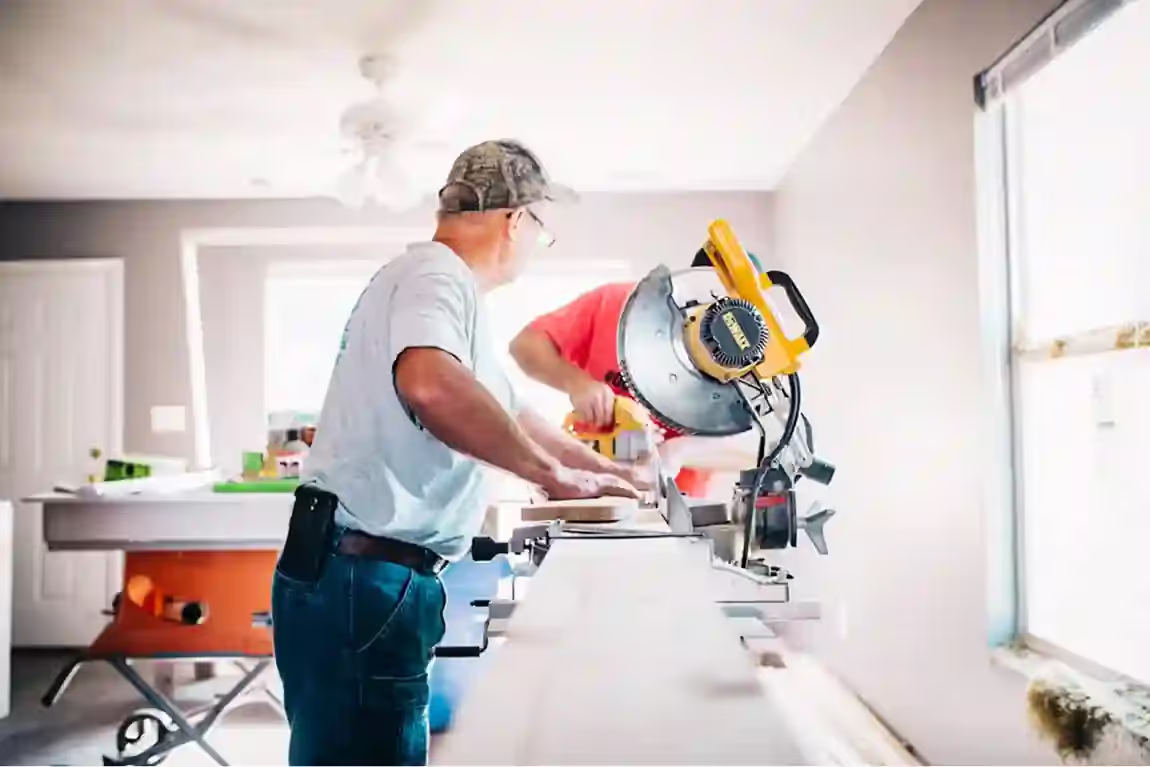
Different communication channels serve different purposes, and using the right medium for each message prevents miscommunication while creating appropriate documentation trails. Randomly mixing channels leads to lost information and confusion that can cost you dearly when disputes arise. Understanding the strengths and appropriate uses of each communication channel transforms your ability to manage your renovation effectively and protects you when problems occur.
Email: The Decision and Documentation Channel Use email for all decisions, approvals, change orders, and formal communications without exception. Email creates a permanent, timestamped, searchable record that both parties can reference when memories conflict or disputes arise. Never make significant decisions via text or phone without following up with an email summary that captures the agreement in writing. Structure important emails with clear subject lines that make searching effortless: "Project: Kitchen Renovation – Decision: Cabinet Hardware Selection" tells everyone exactly what the email contains at a glance. Include photos, product links, and specific details that leave no room for ambiguity. End every email with a clear question or action item to prompt a response, ensuring the conversation moves forward productively. For decision confirmation, structure your emails with a clear reference to prior discussions, specific details of the agreed-upon approach, any attached documentation like photos or specifications, and a request for confirmation before work proceeds. This systematic approach to email communication creates an unassailable record of your project decisions.
Text Messages: The Urgent Coordination Channel Reserve text messages exclusively for time-sensitive logistics that require immediate attention but do not constitute formal decisions. Appropriate text messages include notifications like "Running 10 minutes late for our meeting," schedule changes like "Need to reschedule tomorrow's walkthrough," or confirmations like "Can you confirm the plumber arrives at 9am?" Texts are perfect for coordination but completely inappropriate for decisions or complex discussions. Never use text for change orders, material selections, or approvals—the brevity of texts leads to misunderstandings, and they are difficult to search later when you need to reconstruct what was agreed upon. If a text conversation starts getting detailed, stop immediately and move it to email where the information can be properly documented and referenced later. The discipline of maintaining this boundary protects you from the communication chaos that plagues so many renovation projects.
Phone Calls: The Relationship and Clarification Channel Use phone calls strategically for building rapport, discussing complex issues that require back-and-forth dialogue, and clarifying misunderstandings that are difficult to resolve through written communication. The human voice conveys tone and emotion that email cannot capture, making phone calls valuable for relationship maintenance and resolving tensions before they escalate into serious conflict. Always follow up phone conversations with an email summary that captures the key points: "Just confirming our call today—I'll be selecting the floor tile by Friday, and you'll order it Monday to meet our installation schedule. Let me know if I missed anything." This creates documentation while ensuring mutual understanding and giving the contractor an opportunity to correct any miscommunication. Phone calls without follow-up documentation are invitations to future conflict.
In-Person Meetings: The Weekly Check-In Channel Schedule brief weekly on-site meetings—15 minutes maximum—to review progress and upcoming decisions in person. These face-to-face interactions build trust and allow you to see conditions firsthand rather than relying on descriptions or photos. Stand in the work area and discuss specific details while pointing to actual conditions so both parties share the same visual reference point. End every in-person meeting by identifying specific next steps for both parties: "I'll decide on the backsplash tile by Wednesday and email you the selection. You'll provide the plumbing rough-in schedule tomorrow." This explicit accountability prevents tasks from slipping through cracks and ensures both parties leave the meeting with clear action items. Follow up every meeting with a brief email summarizing what was discussed and agreed upon, creating yet another layer of documentation for your records.
Even with perfect communication systems in place, conflicts will arise during any renovation project. Having prepared scripts for common difficult conversations helps you address issues professionally without damaging the relationship or escalating tensions unnecessarily. These frameworks keep emotions in check and focus on solutions rather than blame, dramatically increasing the chances of reaching a mutually acceptable resolution. The American Institute of Architects guidance on dispute resolution emphasizes that mediation and clear communication should be the first approach to resolving conflicts, with formal legal proceedings reserved for situations where collaborative approaches have failed.
When your contractor announces a three-week delay, your natural reaction is frustration, disappointment, and perhaps anger. These emotions are valid, but expressing them directly typically makes the situation worse rather than better. Instead of saying "This is unacceptable! You promised it would be done by next week!" which triggers defensiveness and escalation, try: "I understand delays happen in construction. Can you walk me through what caused this delay and what you're doing to prevent future delays? Also, how does this impact our overall completion date? I need to adjust my living arrangements, so I appreciate specific information I can plan around." This approach focuses on facts, demonstrates understanding of construction realities, and communicates your practical needs without assigning blame. It opens dialogue rather than shutting it down and positions you as a reasonable partner rather than a demanding adversary.
Noticing workmanship that does not meet your expectations requires tact and diplomacy to address effectively. Accusing a contractor of poor quality triggers immediate defensiveness that makes resolution much more difficult to achieve. Instead of saying "This tile work looks terrible! Are you using unskilled laborers?" which virtually guarantees an adversarial response, frame concerns as questions seeking understanding: "I'm noticing some inconsistencies in the tile spacing that differ from what we discussed initially. Can you help me understand what I'm seeing and what the plan is for achieving the finished look we reviewed in your portfolio?" This approach shows you are observing specifics rather than making general accusations, references the agreed-upon standard from their own work samples, and gives the contractor an opportunity to explain or correct without feeling attacked. Most quality issues have explanations or solutions that only emerge through calm, professional dialogue.
When project costs exceed the estimate, emotions run high for everyone involved. This conversation requires separating legitimate overruns from contractor errors or oversights, and doing so requires detailed information rather than accusations. Instead of saying "You told me $50,000 and now you're trying to charge me $65,000! That's bait and switch!" which guarantees conflict, try: "I'm concerned about the costs exceeding our contract amount. Can we schedule a meeting to review each additional charge line by line? I need to understand what's driving the increase and which items are optional versus necessary for code compliance or structural integrity." This approach requests transparency, creates accountability through detailed review, and positions you as an informed consumer reviewing details rather than an angry client making accusations. According to Smartsheet's guide on construction change orders, the best way to avoid disputes over change orders is to be proactive by establishing clear terms and procedures from the outset, making contract terms fair and clear so both parties understand their obligations.
Comprehensive documentation serves as your communication safety net throughout the project. When memories conflict—and they will—written records resolve disputes fairly and definitively. This discipline transforms casual conversations into accountable agreements that protect both parties from the inevitable fog of memory that settles over complex, multi-month projects. The time invested in documentation pays dividends far exceeding the modest effort required, particularly when disputes arise months after conversations occurred.
The Daily Log Habit Spend five minutes each evening documenting the day's project activity in a consistent format. This simple habit creates a comprehensive record that proves invaluable when questions arise weeks or months later about when work was completed or what was discussed. Your daily log should capture the date, work completed that day, workers present including their names and trades, key discussions and decisions, concerns or questions requiring follow-up, and whether photos were taken with notation of location and description. Maintaining this log consistently throughout your project creates an unassailable timeline of events that can resolve disputes definitively. The discipline required is minimal compared to the protection it provides.
Photo Documentation Best Practices Photos provide irrefutable documentation of project status that words alone cannot match. Take photos daily without exception, capturing overall work area progress, specific installations including electrical, plumbing, and framing, material deliveries showing labels and quantities, any damage or concerns you observe, and completed work before it gets covered up by subsequent construction. Create a free Google Photos album or use a project management app like Buildertrend to automatically organize photos by date and location for easy retrieval. This visual timeline proves invaluable when discrepancies arise about when work was completed or what materials were used. Photos taken before walls are closed up can save thousands of dollars in diagnostic work if problems emerge years later.
Communication Summaries After any substantive conversation with your contractor, send a summary email within 24 hours while details are fresh in your memory. This practice may feel excessive initially but prevents countless misunderstandings that would otherwise develop into expensive conflicts. A typical summary might read: "Hi
, just confirming my understanding from our call today: You'll have the plumber here Thursday to rough-in the new bathroom fixtures. I'll have the vanity and sink delivered by Wednesday so they're on-site when needed. You're concerned the existing drain line may need replacement once you open the wall, and will let me know immediately if that adds cost. Sound right?" This summary creates accountability, demonstrates your professionalism, and gives the contractor opportunity to correct any miscommunication before work proceeds in the wrong direction. The few minutes required to write these summaries prevent hours of conflict later.Despite your best efforts, communication sometimes breaks down completely in ways that informal approaches cannot resolve. Having a clear escalation plan prevents panic and ensures you respond strategically rather than emotionally when problems become severe. The Better Business Bureau offers dispute resolution resources including mediation services that can help resolve contractor disputes without resorting to expensive litigation. Understanding your options before you need them allows for more strategic decision-making during stressful situations.
Level one escalation addresses slow responses, minor misunderstandings, and general frustration through direct discussion. Your action involves scheduling a face-to-face meeting and reviewing the communication plan together to identify where breakdowns are occurring. The expected outcome is restored mutual understanding and renewed protocol adherence. Most problems resolve at this level when addressed promptly and professionally. Level two escalation addresses continued problems despite direct discussion, unreturned calls, and missed deadlines through formal documentation. Your action involves sending a certified letter reiterating contract terms and documenting all issues in detail. The expected outcome is that the contractor recognizes the seriousness of the situation and behavior improves accordingly. Level three escalation addresses complete communication breakdown, contractor ghosting, and major disputes through third-party intervention. Your action involves engaging a professional mediator, filing complaints with the relevant licensing board such as the California Contractors State License Board, and consulting an attorney if necessary. The expected outcome is external pressure forcing resolution or project termination with appropriate legal remedies.
When communication deteriorates severely despite your direct efforts to address problems, a formal certified letter can reset the relationship by signaling the seriousness of your concerns. This letter documents your specific concerns with dates and examples of communication failures, references specific communication plan clauses in your contract, establishes clear expectations for future communication including response times and meeting schedules, and outlines consequences for continued non-compliance including project pause, mediation, or legal action. The formality of a certified letter signals you are serious and may be preparing legal action, which motivates most contractors to address issues before escalation continues. Keep copies of all certified letters and delivery confirmations as part of your documentation archive.
Understanding the psychological dimensions of renovation communication helps you navigate difficult conversations with greater awareness and skill. Research from Psychology Today on renovation and relationship conflict identifies four common conflict patterns during renovations: conflicts about control, money, taste, and different ways of managing anxiety. These patterns affect not only your relationship with your partner but also your communication with contractors, subcontractors, and anyone else involved in your project.
Renovation stress manifests in predictable ways that can undermine even well-designed communication systems. According to recent research on renovation's emotional impact, more than 85 percent of homeowners reported that the renovation process caused significant stress, while 57 percent experienced what researchers termed "renovation fatigue"—a form of burnout brought on by delays, disruptions, and the sheer number of decisions involved. Understanding these patterns helps you recognize when stress rather than substance is driving a conflict, allowing you to respond more effectively.
The loss of control inherent in renovation projects creates anxiety that often manifests as micromanagement, excessive questioning, or difficulty making decisions. Recognizing this pattern in yourself can help you communicate more effectively with your contractor. Instead of calling every few hours to check on progress—which creates friction and slows work—channel that anxiety into your documentation practices or scheduled check-in meetings. Similarly, recognizing when your contractor seems defensive or evasive may indicate they are experiencing their own stress from project pressures, material delays, or subcontractor issues. Approaching these moments with empathy rather than accusation often produces better outcomes for everyone involved.
The ultimate communication goal is transforming the contractor relationship from adversarial to collaborative, creating an environment where both parties work toward a shared vision of project success. When both parties view each other as partners rather than opponents, communication flows naturally and conflicts resolve more easily. This cultural shift requires deliberate effort but pays enormous dividends in project outcomes, stress reduction, and even cost savings through more efficient problem-solving.
The Appreciation Advantage
Contractors rarely receive positive feedback from clients despite the skill and effort their work requires. Acknowledging good work, thanking them for solving problems creatively, and expressing genuine appreciation for craftsmanship builds goodwill that pays dividends when issues inevitably arise. A simple statement like "The tile work looks fantastic—exactly what we envisioned" costs nothing but strengthens the relationship significantly and makes the contractor more invested in your satisfaction. Bring coffee for the crew on cold mornings, offer water during hot days, and express genuine interest in their craft and expertise. These small gestures create human connection that transcends the transactional nature of the contract and transforms the working relationship into something approaching genuine partnership.
Shared Problem-Solving Framing
When problems arise, frame them as shared challenges rather than contractor failures whenever possible. Instead of "You installed the wrong window," try "We have a window that doesn't match our order. How can we work together to get this corrected quickly?" This collaborative language reduces defensiveness and invites the contractor to participate in finding solutions rather than defending past actions. It acknowledges that mistakes happen in complex projects while maintaining accountability for fixing them promptly. The NAHB guidance on working with remodelers emphasizes the importance of documentation and clear expectations, but also notes that maintaining professional relationships through challenges produces better outcomes than adversarial approaches.
Technology offers powerful tools to streamline contractor communication in ways that would have been impossible just a decade ago. Project management apps and platforms create centralized information hubs where messages cannot get lost in fragmented channels, providing real-time project visibility for all parties involved. While some contractors resist these tools, those already using them demonstrate professionalism and organizational capability. Consider it a green flag when a contractor proactively uses project management software as part of their standard practice.
Apps like CoConstruct and similar platforms create centralized communication hubs where you can share photos and mark them up with notes and questions, create and approve change orders digitally with clear documentation, maintain a running project log visible to both parties in real time, store all documents including contracts and selections in one searchable place, and track task completion and upcoming milestones against your schedule. According to Houzz research on renovation experiences, clear communication from contractors is the biggest factor that could improve homeowner renovation experiences. Project management software addresses this need directly by creating structured channels for information exchange that prevent the chaos of scattered communications.

If your contractor does not use dedicated project management software, create a shared Google Photos album or Dropbox folder as a simpler alternative. Invite the contractor to contribute photos daily from the worksite, creating a visual timeline that documents conditions throughout the project. Both parties documenting conditions protects everyone from disputes about when problems occurred or what the site looked like at various stages. Use photo markup apps like Snagit or built-in phone markup tools to draw arrows and add text to photos, clarifying exactly what you are discussing and eliminating ambiguity about locations or concerns.
When communication breakdown reaches a point where direct resolution seems impossible, professional mediation offers a path forward that preserves relationships while resolving disputes fairly. JAMS Construction Dispute Resolution services and similar organizations specialize in construction mediation with neutrals who understand the technical and business aspects of renovation projects. Mediation typically costs far less than litigation while producing faster, more satisfying outcomes for both parties.
The mediation process involves a neutral third party facilitating communication between you and your contractor to help reach a mutually acceptable resolution. Unlike litigation or arbitration, mediation does not impose a solution—instead, it creates structured dialogue that helps parties find their own agreement. Many construction contracts require mediation as a first step before arbitration or litigation, making it important to understand how the process works before you need it. According to construction law experts, mediation combined with arbitration saves everyone time and money while giving parties more control over outcomes than traditional courtroom litigation provides.
Change orders represent one of the most common sources of contractor-homeowner conflict, making their proper management essential to project success. A change order formally documents any modification to the original contract scope, cost, or timeline, creating a paper trail that protects both parties. According to Procore's guidance on construction change orders, change orders not only alter project scope and schedule but can also affect contractor liability and put payment at risk if not properly documented and approved.
Every change order should include a detailed description of the work being added or modified, a complete cost breakdown showing materials, labor, and any markup, a revised project timeline if the change affects scheduling, and signatures from both parties before work begins. Insist on written change orders for any work not explicitly covered in your original contract, no matter how small the addition seems. Verbal agreements about "minor changes" are the source of countless disputes that could have been avoided with five minutes of documentation. The discipline of formal change orders also forces both parties to think carefully about modifications before committing, reducing impulsive changes that drive costs upward.
Effective contractor communication is not about being a construction expert—it is about being a disciplined communicator who creates systems that prevent misunderstandings and resolve conflicts efficiently when they arise. The strategies outlined in this guide transform you from a passive recipient of information into an active, engaged project partner capable of steering your renovation toward success. By establishing clear protocols, using appropriate channels for each message type, documenting everything systematically, and approaching conflicts with prepared scripts, you create an environment where misunderstandings are rare and quickly resolved when they do occur.
The most expensive renovation is the one where communication fails, leading to rework, delays, and damaged relationships that make the entire process miserable. Investing time in communication systems pays greater dividends than choosing the perfect tile or paint color, yet most homeowners devote far more attention to aesthetic decisions than to the systems that determine whether their project succeeds or fails. Your contractor is your partner in creating your dream space—treating them as such, while maintaining professional boundaries and accountability, produces the best outcomes for everyone involved.
Master these communication strategies and you will navigate your renovation not just surviving the process, but actively steering it toward success. The confidence that comes from knowing you can handle any conversation, resolve any conflict, and document every decision is priceless. It transforms renovation stress into renovation satisfaction, turning a potentially traumatic experience into one you can look back on with pride.
Essential Communication Takeaways: Successful renovation partnerships share common characteristics that you can cultivate through deliberate effort: DECEMBER 01, 2025
DECEMBER 01, 2025
DECEMBER 01, 2025
NOVEMBER 28, 2025
NOVEMBER 28, 2025